
Integrated Visa to Deportation Data, Immigration Strengthens Digital Services
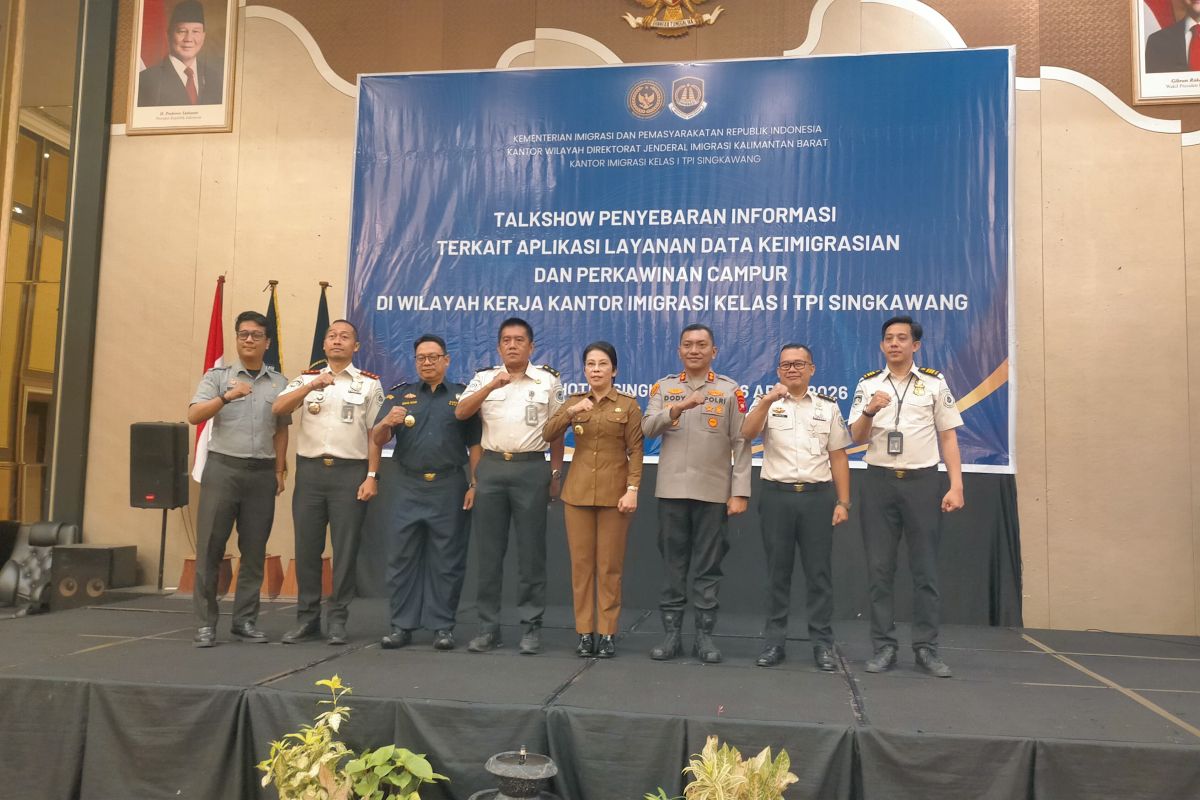
The application is built to create governance of immigration data services that ensures the confidentiality and security of data, while providing effective and efficient services in accordance with legal regulations.
Singkawang (ANTARA) - The Directorate General of Immigration ensures that the confidentiality and security of public data remains protected through the development of an immigration data services application amid digital transformation in public services.
Head of the Immigration Data Services Team at the Immigration Information Technology Directorate, Angga Adwiyantara, stated that the application is designed to guarantee the protection of personal data in every process of requesting and presenting immigration data.
“This application is built to create governance of immigration data services that ensures confidentiality and data security, while providing effective and efficient services in accordance with legal regulations,” said Angga during a talk show on disseminating information about the immigration data services application and mixed marriages held by the Class I TPI Immigration Office in Singkawang on Monday.
He explained that the application features five main types of services, namely visa data, crossing data, residence permit data, passport data, and deportation data.
“All these services are integrated into one system that facilitates access while still maintaining information security,” he said.
The Mayor of Singkawang, Tjhai Chui Mie, welcomed the presence of the application as it is seen to facilitate the public, especially in handling mixed marriage administration.
“This event is very beneficial because it utilises technology to assist the public in administrative handling, particularly related to international marriages,” he said.
He hopes that the presence of the application can accelerate administrative processes while providing legal protection for the public.
In addition, Tjhai also emphasised the importance of utilising technology to prevent potential human trafficking crimes that often disguise as marriages.
“We hope that the marriages that occur are truly valid and not exploited for illegal activities. With this system, supervision can also be more optimal,” he said.