
Integrated Digital Cattle Farming Realises Energy-Independent and Sustainable Economy Village
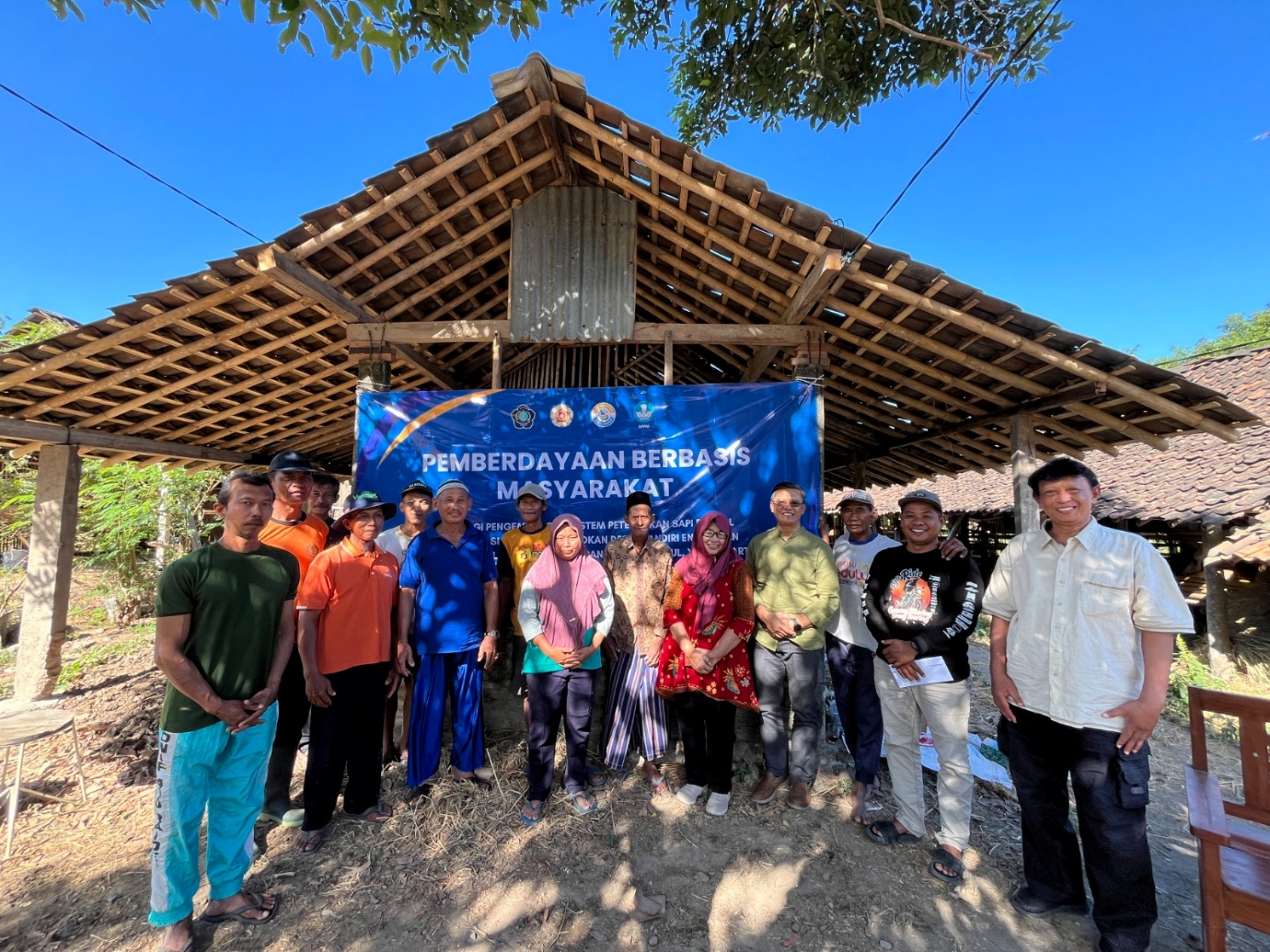
Cattle farming is one of the community’s economic potentials that can be developed to strengthen food security while increasing farmers’ incomes. However, conventional livestock management faces various obstacles, ranging from feed supply, high labour requirements, and livestock waste processing, to the suboptimal utilisation of waste as an energy source and economically valuable product.
These conditions were the focus of the 2026 Community Partnership Empowerment Programme (PKM) in Bintaran Wetan, Bantul, Yogyakarta, together with the Sumber Mulyo Livestock Farmers Group. The programme, themed ‘Strategy for Developing an Integrated Digital Cattle Farming System in Realising an Energy-Independent and Sustainable Economy Village in Bintaran Wetan Bantul Yogyakarta’, is part of the AKPRIND University Indonesia PKM Grant Programme funded by the Directorate of Research and Community Service (DPPM), Directorate General of Higher Education, Research, and Technology, Ministry of Higher Education, Science, and Technology of the Republic of Indonesia for the 2026 fiscal year.
The implementing team consists of Catur Iswahyudi, Ambar Pertiwiningrum from Gadjah Mada University (UGM), and Ganjar Andaka. The collaboration combines competencies in digital technology, engineering, waste processing, fermentation, and appropriate technology to answer the real needs of the community.
The programme is directed at integrating appropriate technology, digitalisation of livestock management, feed processing, waste management, fermentation of organic materials, and biomass utilisation. This approach is expected to increase production efficiency, reduce farmers’ workload, and create a circular economic system at the group level.
One of the technologies applied is a grass chopping machine. The machine is used to accelerate the feed supply process by chopping grass into a more uniform size so that it is easier to mix and feed to cattle. The application of the machine is expected to save time, reduce manual work, and increase feed supply efficiency.
In addition, the programme applies a compost mixer machine to process cow dung, feed residue, and other organic materials. This machine helps produce a more homogeneous mixture of materials so that the composting process can take place more effectively. The processed results can be utilised as organic fertiliser to support agricultural activities and have the potential to be developed into economically valuable products.
Another technology is a fermentation tank used to support the processing of organic materials in a more controlled manner. The fermentation tank is part of an integrated livestock waste management system, so that waste which previously had the potential to cause pollution can be processed into a useful resource.
Ambar Pertiwiningrum from Gadjah Mada University (UGM) emphasised the importance of integration between livestock farming and waste management. According to her, cow dung should not only be viewed as waste, but can become raw material for producing organic fertiliser and renewable energy sources.
‘Livestock farming can be part of a circular economic system. Cow dung is processed, the results can be reused for agriculture, while the biomass and residue can be developed into energy sources and economically valuable products,’ Ambar explained.
Meanwhile, Catur Iswahyudi strengthened the digitalisation aspect. The digital system is directed at helping the group record livestock data, feed requirements, production, waste management, documentation, and marketing. Data-based management is expected to help farmers make more precise decisions while improving the group’s business governance.
Ganjar Andaka added that the technology applied must suit the community’s needs, be easy to use, easy to maintain, and provide real benefits. Therefore, the application of the machines is accompanied by training and mentoring so that group members are able to operate and maintain the equipment independently.
In the implementation of the PKM, the Sumber Mulyo Livestock Farmers Group received socialisation, training in machine use, feed processing practice, compost mixer operation, fermentation tank management, waste processing, and mentoring in digital livestock management.
The programme is also directed at supporting an energy-independent village through the utilisation of livestock biomass. Properly managed cow dung has the potential to become raw material for renewable energy. Thus, the livestock system can produce broader benefits, not only in the form of livestock, but also fertiliser, energy, and other derivative products.
The synergy between AKPRIND University Indonesia, Gadjah Mada University (UGM), and the Sumber Mulyo Livestock Farmers Group is a strength in the programme’s implementation. Universities provide technological support, human resource capacity building, mentoring, and evaluation, while the partner becomes the main implementer of technology application in the field.
Through the application of grass chopping machines, compost mixer machines, fermentation tanks, and digital-based livestock management systems, this programme is expected to increase productivity, reduce waste, strengthen the group’s economy, and build an efficient, environmentally friendly, and sustainable livestock system.
Ultimately, this PKM is expected to become a model of community empowerment that integrates livestock farming, appropriate technology, digitalisation, circular economy, and renewable energy, so that Bintaran Wetan can develop towards a village that is increasingly energy-independent, productive, and has a sustainable community economy.