
Integrated control measures needed to prevent health impacts of dengue
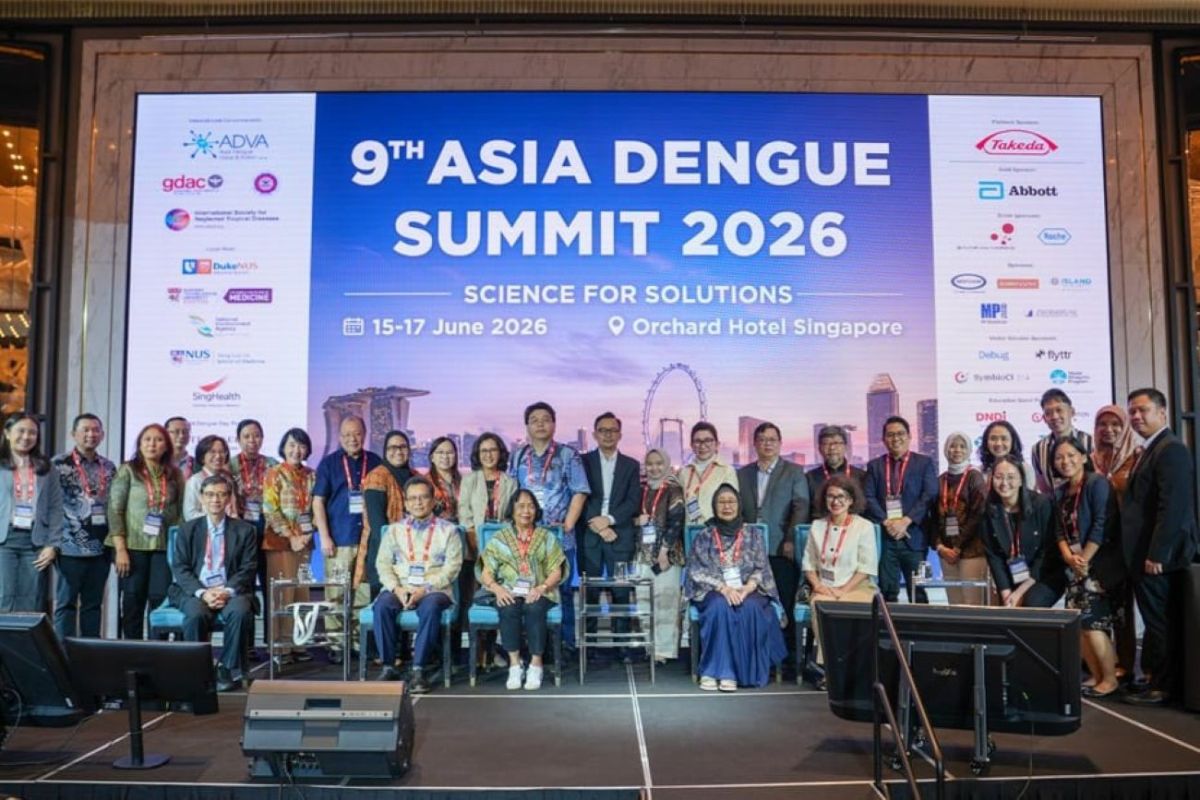
Jakarta (ANTARA) - The Chairman of the Together Coalition (Kobar Lawan Dengue), Dr H. Suir Syam, stated that dengue control requires the involvement of various parties because the disease affects not only health but can also disrupt activities and the financial condition of families.
“Dengey remains a serious health issue as it continues to claim lives every year, but this is not an uncontrollable disease,” he said in a statement from Takeda in Jakarta on Thursday.
According to Suir Syam, prevention needs to become part of public habit through the ‘3M Plus’ mosquito nest eradication method, early detection, vector control, and continuous education.
According to a Takeda press release received in Jakarta on Thursday, the impact of dengue on families is reflected in a study by the Centre for Health Financing Policy and Insurance Management (Pusat KPMAK) at Gadjah Mada University (UGM), which estimates the economic burden of dengue in Indonesia will reach 550.9 million US dollars, or nearly Rp9 trillion, in 2024.
Senior UGM researcher Dr Diah Ayu Puspandari stated that the costs arising from dengue are not limited to medical treatment alone.
“JKN (National Health Insurance) has not eliminated the economic burden at the household level. Patients covered by JKN still incur out-of-pocket expenses averaging between Rp1.09 million and Rp1.33 million per episode,” she said.
Meanwhile, for uninsured patients, the costs to be borne are estimated to reach between Rp4.27 million and Rp5.60 million per episode.
Diah noted that this burden can be even heavier for low-income families, as a single episode of dengue can absorb a large portion of a household’s monthly expenditure.
Dengue can also disrupt daily activities, including causing children to miss school and forcing parents to leave work to care for sick family members.
The public also needs to pay attention to stagnant water around homes and conduct regular larvae monitoring.
In addition to environmental control, dengue prevention can be strengthened through various health innovations, including Wolbachia technology and dengue vaccination, in accordance with government policy.
Suir Syam stated that dengue prevention requires the joint role of the government, healthcare workers, academics, the business world, media, civil society organisations, and the community.
“It is time for us to view prevention as an investment, not merely a cost,” he said.