
Insurance Rates Fall, Giving Corporates a Chance to Reassess Risk Costs
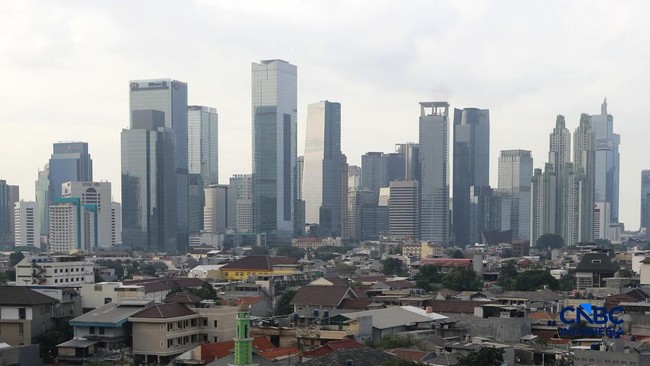
Global commercial insurance rates fell 5% in the third quarter of 2026, while Asia recorded a 6% decline. For Indonesian companies, the conditions create an opportunity to negotiate premiums and improve asset protection.
However, the right strategy is not simply to seek the cheapest insurance. Companies should ensure that every rupiah paid in premiums buys cover commensurate with their business risks.
Insurance costs are one component of risk management that often draws companies’ attention, particularly businesses with substantial assets, production facilities, distribution networks or significant reliance on technology.
Amid pressure to improve efficiency and maintain profitability, changes in global commercial insurance prices are worth monitoring, especially for company management responsible for risk control and finance.
Marsh’s Global Insurance Market Index for the third quarter of 2026 indicates that the commercial insurance market remains in a soft-market phase. The global composite rate fell 5%, extending the downward trend to nine consecutive quarters. The decline was more moderate than the 6% contraction recorded in the previous quarter.
Asia, however, showed a different pattern. The regional composite rate fell 6% in the third quarter of 2026, a steeper decline than the 5% drop in the second quarter. Property rates in Asia fell 7%, while the global property rate declined 10%.
For companies, the trend creates room to reassess the cost of transferring risk, review insurance programme structures and improve the quality of cover. However, regional figures do not guarantee that Indonesian companies will secure premium reductions of the same scale.
Marsh attributes the global rate declines to abundant insurer capacity, strong financial positions among insurance companies, lower reinsurance costs and higher investment returns. Together, these factors have intensified competition for business.
In these conditions, insurance buyers may gain more than lower premiums. Marsh says that in some policy renewals, clients have also had the opportunity to increase coverage limits, broaden cover, lower deductibles and improve policy terms.
Companies should use this opportunity to assess whether their insurance budgets are efficient and whether the protection they buy genuinely matches their business exposures.
Indonesia’s market
Marsh’s latest report shows that Indonesia’s insurance market has been relatively resilient to downward rate pressure compared with several other Asian countries. Nevertheless, insurers in Indonesia face challenges in maintaining profitability amid abundant capacity and price competition.
In the third quarter of 2026, commercial insurance rates in Indonesia fell by just 2%, easing from a 3% decline in the previous quarter. This suggests that price competition in Indonesia has been more contained than in several other markets in the region.
By comparison, commercial insurance rates fell 13% in South Korea, 10% in Malaysia, 15% in Taiwan and 8% in Thailand. Singapore and Hong Kong each recorded declines of 6%. The differences show how insurance-market dynamics in Asia are increasingly shaped by each country’s risk characteristics, underwriting capacity and competitive conditions.
The downward trend in Indonesia has eased over recent quarters. Composite rates fell 5% in both the fourth quarter of 2025 and the first quarter of 2026, before the decline slowed to 3% in the second quarter of 2026 and 2% in the third.
Business lines
Property insurance is among the segments experiencing substantial rate pressure globally. In the third quarter of 2026, property rates fell 10% globally, 7% in Asia and 3% in Indonesia. The entry of capacity from Lloyd’s syndicates, managing general agents (MGAs) and international markets has added to competition.
Marsh says exposure to natural disasters remains the main constraint on property insurance capacity. This is particularly relevant to Indonesia, given its exposure to earthquakes, floods and other natural disasters.
Rate declines in casualty insurance have been more moderate. Global casualty rates rose 1%, while rates fell 3% in Asia and 2% in Indonesia. For Indonesian companies, this creates an opportunity to develop liability cover for manufacturers, construction firms, transport companies and other corporate sectors.
Meanwhile, rates for financial and professional lines fell 3% globally in the third quarter of 2026, 6% in Asia and 3% in Indonesia. The declines give companies an opportunity to obtain more competitively priced cover for directors’ liability, professional claims and financial institution risks. However, lower rates do not necessarily mean that risk exposures have fallen.
Finally, cyber insurance rates fell 4% globally, 6% in Asia and 3% in Indonesia. In both Asia and Indonesia, the pace of decline in the third quarter of 2026 slowed from 8% in the previous quarter. Cyber insurance is increasingly relevant in Indonesia as banking, financial services, e-commerce, telecommunications and digital infrastructure become more digitised.
Preparing for 2027
As companies prepare their 2027 budgets, they should avoid assuming that commercial insurance rates will continue to fall. Although global markets remain competitive, shifts in reinsurance capacity, rising claims or a major catastrophe could change conditions in particular business lines.
Companies should draw up budgets using several scenarios, taking into account changes in asset values, risk profiles, required coverage limits, claims experience and the outcome of policy renewal negotiations.
Planning should also cover potential business interruption costs and new protection needs, including cyber risks. This would enable companies not only to optimise insurance spending but also to reduce potential losses that could disrupt cash flow and operations.
For multinational corporations, cross-country comparisons can help clarify market trends. Regional benchmarks, however, should be adjusted to reflect Indonesian risk conditions and policy terms.
Ultimately, an effective insurance strategy is not necessarily one that secures the lowest premiums. It is one that optimises costs without creating gaps in cover that could threaten cash flow, assets and business continuity.
Source: jawawa.id (https://jawawa.id/newsitem/insurance-rates-fall-giving-corporates-a-chance-to-reassess-risk-costs-1793688715)
Originally published by CNBC Indonesia (https://www.cnbcindonesia.com/research/20261103113347-128-781834/tarif-asuransi-turun-saatnya-korporasi-menghitung-ulang-biaya-risiko), translated from Indonesian