
Insurance Industry Growth Is Slow; LPS Says Public Trust Must Be Built
YOGYAKARTA — Indonesia’s insurance industry is growing relatively slowly compared with its ASEAN neighbours, including the Philippines, Malaysia, Thailand and Singapore. The Financial Services Authority (OJK) has cut its forecast for growth in insurance-industry assets by the end of 2026 to 2–4%, from its previous estimate of 5–7%.
According to lps.go.id, factors holding back the industry include a number of cases involving insurance companies that have eroded public confidence in insurers and the industry as a whole. Companies whose licences have been revoked or that have faced major problems include Asuransi Jiwasraya, AJB Bumiputera 1912, Asuransi Wanaartha Life, Asuransi Kresna Life and PT Berdikari Insurance, whose licence was revoked in January 2025. They were closed because of solvency problems and failures to meet payment obligations.
Nevertheless, Muhamad Yusron, director of the Deposit Insurance Corporation’s (LPS) Policy Claims Resolution Group, said public trust in the insurance industry must be built. He is optimistic that confidence will improve with the introduction of the Insurance Policy Guarantee (PA) programme. Following amendments to the Financial Sector Development and Strengthening Law (P2SK), the LPS is preparing to activate the scheme, which is targeted to take effect in July 2027.
Yusron said the LPS is currently focused on helping the public understand the insurance guarantee scheme while strengthening confidence in the industry.
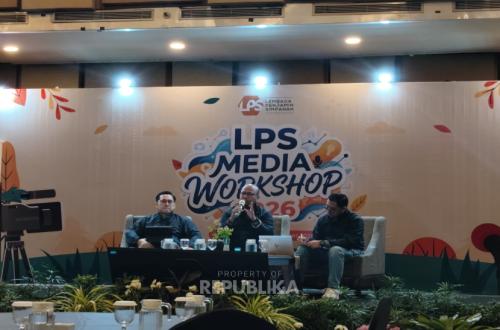
“There are two main objectives of this insurance policy guarantee. The first is to protect insurance customers, while the second—and one with a substantial impact—is to build public trust in the insurance industry,” Yusron said at the LPS Media Workshop 2026 in Yogyakarta on Friday, 6 November 2026.
“People need to know that, with an appropriately designed membership scheme, they do not need to worry if their insurance company fails, because their protection will not simply disappear,” he added.
Yusron said that if public confidence in Indonesia’s insurance industry grows, the main effects will be a significant increase in national insurance penetration and economic growth, ultimately strengthening the stability of Indonesia’s financial system.
He said the amendments also present several implementation challenges, including how to manage the transition when some insurers do not meet the membership requirements at the outset.
“A transparent and measured transition period is therefore needed to give insurers sufficient time to meet the requirements while maintaining public trust,” he said.
Yusron stressed that the LPS would ensure a transparent and orderly transition to insurance policy guarantees, supported by adequate industry readiness. During registration, for example, the LPS will focus on several stages, including the phased enrolment of insurance companies in the policy guarantee programme.
Insurers that need to strengthen their financial position will be given a transition period to improve their finances and operational readiness, in coordination with the OJK. The period will be around two months. If an insurer is not financially sound after that time, it will not yet be eligible to join the programme, but may repeat the process in a subsequent period.
Second, the timeframe, membership requirements and targets will be clearly set for each stage. “The LPS will also continue to strengthen its communications strategy on membership requirements, transition provisions and membership status for insurers, relevant authorities and the public, in order to manage expectations and maintain public trust,” he said.
One method the LPS plans to use to protect insurance customers if a company fails is the transfer of insurance policies, or the transfer of a policy portfolio. This involves moving policies or coverage from a failed insurer to a financially sound one, protecting customers’ rights so that their insurance cover and policy benefits continue without interruption.
“For example, an insurance customer may be waiting at a hospital and find, when it is time to pay, that their insurer has closed. At the same time, using the policy transfer method, we can move the policy to a sound insurer, so the customer’s claim or coverage can be honoured. That is how this programme will provide reassurance to policyholders,” he said.
The public should understand that the main purposes and functions of policy transfers include keeping policies active so that customers do not lose the insurance benefits they already have. They also preserve policies when an insurer fails by transferring them to a sound company.
Aroma Patria, director of the LPS’s Insurance Resolution and Investor Relations Group, said a key issue in drafting the rules on programme membership was answering the public’s questions about the level of protection and the programme’s effectiveness once it is activated.
“Under the design of the Insurance Policy Guarantee programme, participants are not members of the public directly, but insurance companies and sharia insurance companies providing general and life insurance. Social insurance, compulsory insurance programmes and reinsurance are excluded,” she said.
She said both the industry and the public should pay attention to the membership rules. Although the P2SK Law requires all insurance companies to join the guarantee programme, membership will not take effect automatically.
First, a company must meet a specified level of financial soundness before it can be designated a participant in the insurance policy guarantee scheme. The LPS will set the required standard in coordination with the OJK, using each company’s Risk-Based Capital calculation.
The use of a financial-soundness threshold is also considered best practice in other countries that operate insurance policy guarantee schemes.
“By requiring a certain level of financial soundness, the programme is expected to avoid the risk of participant failures in the early stages of implementation. Setting this requirement is also important for the sustainability of the benefits provided by the insurance policy guarantee programme,” she said.
Source: jawawa.id (https://jawawa.id/newsitem/insurance-industry-growth-is-slow-lps-says-public-trust-must-be-built-1794217888)
Originally published by Republika (https://rejogja.republika.co.id/berita/to894s291/pertumbuhan-industri-asuransi-lambat-lps-kepercayaan-publik-harus-dibangun), translated from Indonesian