
Insurance Firms Allowed to Invest Up to 40% in Shares, Capped at 10% per Issuer
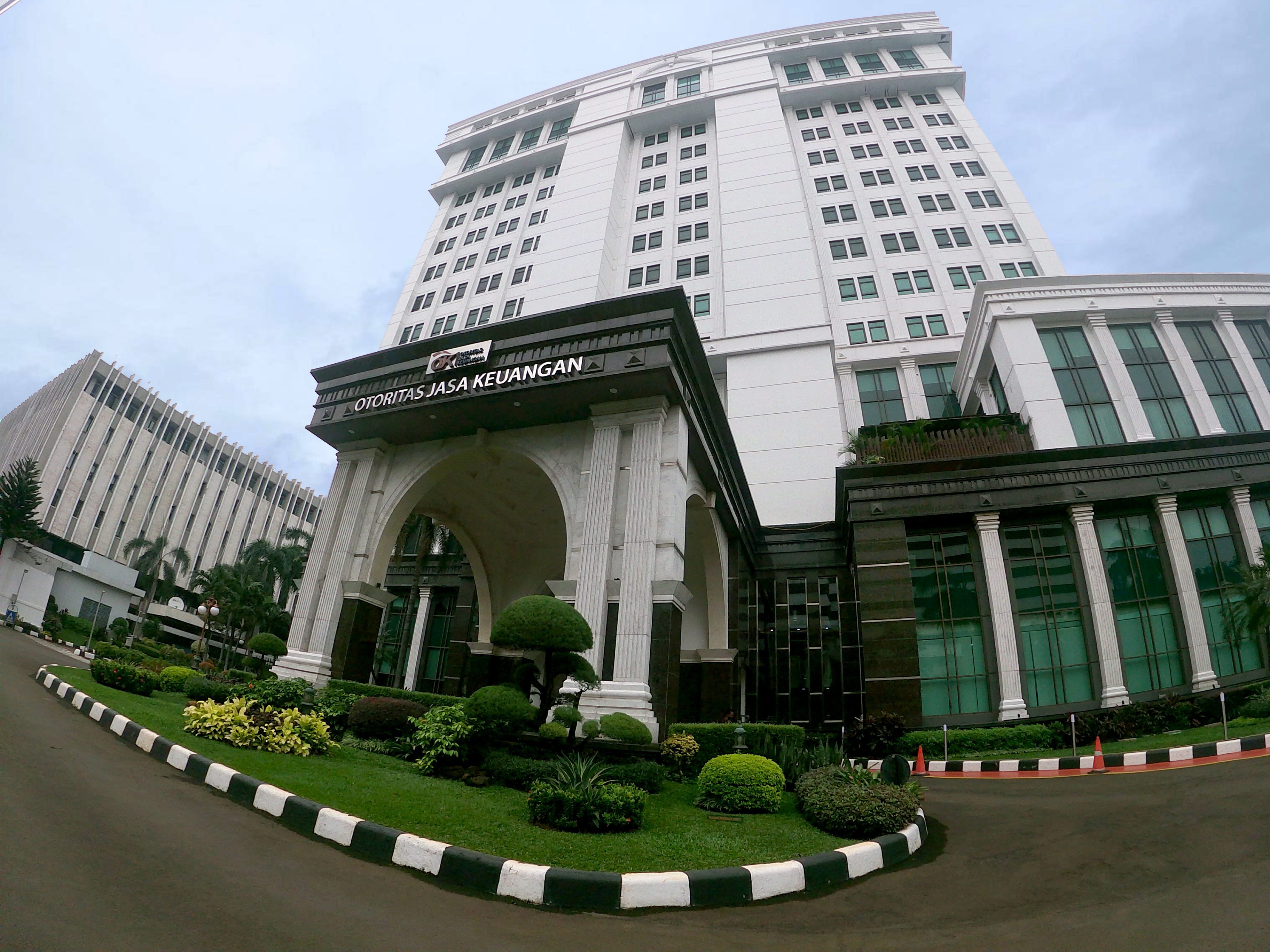
Insurance and reinsurance companies have considerable room to place investment funds in the Indonesian stock market. Under Financial Services Authority Regulation (POJK) No. 26 of 2025 on Asset and Liability Management for Insurance Companies and Reinsurance Companies, investment in shares listed on a stock exchange may reach a maximum of 40% of the company’s total investments. However, to uphold the prudential principle and prevent risk concentration in a single company, investment in the shares of one issuer is capped at a maximum of 10% of total investments.
This provision is important to correct perceptions regarding the share investment limits for insurance companies, which have recently been linked to figures of 8% and 20%. Under the regulation currently in force, the share investment limit for insurance companies is neither 8% nor 20% of the total investment portfolio. POJK 26/2025 provides room for overall share investment of up to 40%, with a concentration limit on a single issuer of 10%.
Accordingly, if an insurance company has total investments of Rp100 trillion, under the regulation it may place a maximum of Rp40 trillion in shares listed on the exchange. However, placement in the shares of a single issuer may not exceed Rp10 trillion, or 10% of its total investments. This limit means insurance companies still have substantial room to enter the stock market, while at the same time being required to diversify so that investment risk is not concentrated in one issuer.
POJK 26 of 2025 was enacted on 10 November 2025 and promulgated, taking effect simultaneously, on 24 November 2025. The regulation replaces POJK No. 71/POJK.05/2016 on the Financial Health of Insurance Companies and Reinsurance Companies and its amendments, including POJK No. 5 of 2023.
OJK issued the new regulation, among other reasons, to strengthen investment governance, create a healthier industry ecosystem, and optimise the benefits of asset management for policyholders. The rule also expands the range of investment instruments available to the insurance industry, including placement in exchange-traded funds (ETFs), including gold ETFs.
Therefore, the discourse on raising the share investment limit to 20% needs to be placed in the proper context. The 20% figure cannot simply be interpreted as meaning that the total share investment limit for insurance companies has been raised from 8% to 20%. The OJK regulation already in force actually provides room for share investment of up to 40% in aggregate, while the limit on investment in the shares of a single issuer is 10%.
The provisions concerning insurance companies also cannot be directly applied to pension funds or BPJS Ketenagakerjaan. Pension funds have their own investment regulatory regime, including through POJK No. 27 of 2023 on the Operation of Pension Fund Businesses. Meanwhile, the asset management of BPJS Ketenagakerjaan and the Employment Social Security Fund (DJS) is subject to separate government regulations, including Government Regulation No. 99 of 2013 and its amendments, as well as the latest provisions in Government Regulation No. 27 of 2026.
This distinction is important as the government encourages a greater role for domestic institutional investors in the capital market. Insurance companies, pension funds, and BPJS Ketenagakerjaan are all institutional investors with large long-term funds under management, but each has different liability characteristics, risk profiles, and investment limits.
With room for share investment of up to 40%, the issue for the insurance industry is ultimately not merely how large a limit the regulator provides. The more important challenge is how insurance companies utilise that room prudently by selecting quality issuers with strong fundamentals, adequate liquidity, and suitability to the character of their obligations to policyholders.