
Insufficient E-Toll Balance Causes 21,000 Vehicles to Trigger Long Queues at Toll Gates During Eid Travel
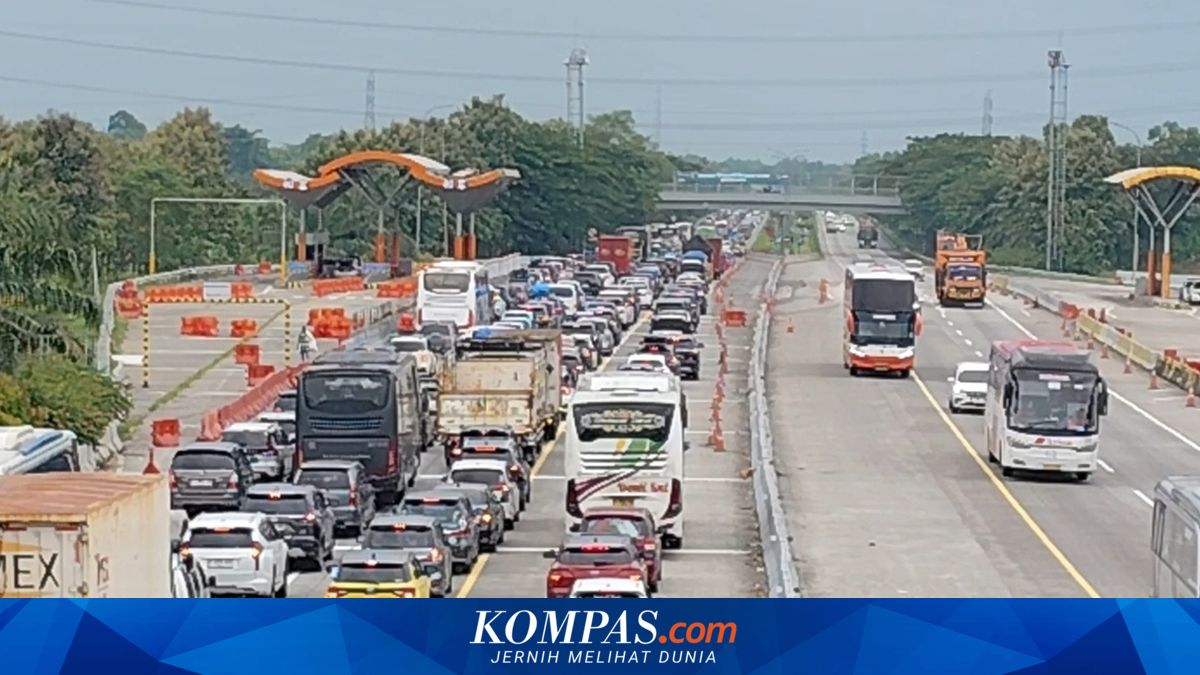
JAKARTA, KOMPAS.com - Traffic congestion at toll gates during the Eid al-Fitr outbound and return flows in 2026 has once again drawn attention, following reports of 21,000 vehicles with insufficient e-toll balances at toll gates.
The President Director of PT Jasa Marga (Persero) Tbk, Rivan A. Purwantono, stated that 21,000 vehicles had insufficient e-toll balances at the Kalikangkung Toll Gate (GT).
The lack of sufficient e-toll balance forced many drivers to top up at the toll gate, extending service times beyond the norm.
This additional process caused significant delays, ultimately leading to long queues of vehicles at the toll gates, particularly during high-traffic periods such as outbound and return Eid travels.
“With insufficient e-toll balances resulting in high top-up activity at toll gates, this will cause considerable delays and queues at the toll gates,” said Rivan in a press statement on Saturday (28/3/2026).
The data comes from an evaluation of the period from H-10 to H+1 of the 2026 Eid al-Fitr holiday, or 11-22 March 2026.
This issue could also occur during this year’s Eid return flow. Therefore, Jasa Marga advises road users to anticipate their return journey by ensuring sufficient e-toll balances before entering the toll road to avoid vehicle queues and maintain smooth traffic flow.
Insufficient e-toll balances among drivers during Eid outbound and return travels often cause congestion at toll gates stretching for tens of kilometres. Multi Lane Free Flow (MLFF) technology is seen as a potential solution.
“In the current card-based conventional system using e-toll, vehicles must stop for tap-in transactions. Each vehicle requires about 4-5 seconds of service time, which increases dramatically if there is an insufficient balance,” said Anton.
This frequent issue of insufficient e-money balances often prompts intervention from toll road staff to assist with top-ups. Consequently, the variability in service times becomes the main cause of long queues.
According to him, MLFF technology changes the tap-in mechanism by implementing a contactless and non-stop payment system. Thus, vehicles can travel freely (free flow) without interruptions like those in tap-in payment methods using e-money.