
Institutionalising Bank Indonesia
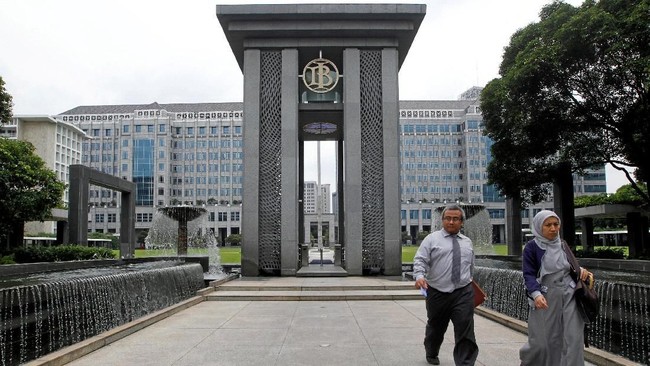
The President has submitted a presidential letter regarding the nomination of the Bank Indonesia Governor to the DPR, numbered R-37 dated 10 August 2026. In the letter, President Prabowo Subianto proposed one name for the position of Bank Indonesia Governor, namely Destry Damayanti, one name for Senior Deputy Governor, namely Aida S. Budiman, and two names for Deputy Governor, namely Solikin M. Juhro and M. Anwar Bashori.
The DPR will conduct a fit and proper test on 26-27 August 2026. Because the President only proposed one name for each position and the current political configuration in the DPR provides majority support to the government, the room for choice in the process is relatively limited. However, institutionally, approval remains part of the DPR’s fit and proper test process.
While waiting for that process, we can reflect on the resignation of the Bank Indonesia Governor on Monday, 27 July 2026. This phenomenon is interesting because after the resignation of the Bank Indonesia Governor, the Jakarta Composite Index (IHSG) fell by 10.65 points, or 0.17 percent, to 6,185.78. At the same time, the rupiah also weakened against the US dollar to Rp18,009, down 46 points or 0.26 percent compared with the previous close. The Bank Indonesia JISDOR rate also weakened to around Rp17,995 per US dollar. The rupiah’s depreciation even continued in the following trading session.
This is interesting: both markets moved in the same direction. The stock market weakened, while the foreign exchange market also put pressure on the rupiah. This response shows that the resignation of a central bank governor is not read merely as an administrative change, but also as information about a possible change in the direction of monetary policy and the level of certainty going forward.
The market is actually conveying a message far more important than the rise or fall of these two economic indicators. The message is that Indonesia’s problem is not solely the weakening of the IHSG and the exchange rate, nor the change at the top of the central bank. What needs to be observed is the extent to which market confidence still attaches to a particular figure. When an official changes suddenly, the market immediately questions who the replacement is, what their leadership character is like, and whether the policies that have been trusted so far will continue.
Some observers do link the weakening of the IHSG and the rupiah to the central bank governor’s resignation. That explanation is reasonable, but it does not mean that all market movements can be explained by a single event. At the same time, the market is also facing global uncertainty, expectations regarding the Federal Reserve’s interest rate policy, and geopolitical risks. Therefore, the Bank Indonesia Governor’s resignation is more appropriately viewed as one factor that amplifies market sensitivity to existing risks.
This is where the issue becomes more interesting. If the market only read economic fundamentals, a change of official should not automatically alter the assessment of all financial assets. A strong institution should be able to provide policy continuity even when the figure leading it changes. But when a change of figure immediately adds a risk premium, it means the market is not only assessing policy. The market is also assessing who is trusted to implement that policy.
The market has its own way of responding to and reading risk. Equity investors buy expectations of future profits. When uncertainty rises, they tend to reduce risk through selling. Meanwhile, the foreign exchange market is more sensitive to a combination of monetary policy credibility, capital flows, external conditions, and perceptions of economic stability. Therefore, the weakening of the rupiah together with the IHSG correction can be read as a signal that uncertainty is not only occurring on the trading floor but is also spreading to perceptions of macroeconomic stability.
This phenomenon reminds us that financial markets are not a single space moving in unison with identical mechanisms. The stock market, bond market, and foreign exchange market have different assessment mechanisms. In international macroeconomics, the three are indeed interconnected, but they do not always provide the same response to an event. Therefore, when several markets move together after a political or institutional shock, we need to investigate more deeply. Is the market anticipating a fundamental change, or is it raising the risk premium because of leadership uncertainty?
It is in this context that the planned fit and proper test for Bank Indonesia Board of Governors candidates becomes important. Public attention should not stop at the question of who will occupy the Bank Indonesia Governor’s seat. That question is important, but it is not the most decisive. What is far more important is whether, after the leadership change, the market still believes that Indonesia’s monetary policy will run within a consistent, credible, and independent framework.
The candidate’s name does matter. Track record, competence, experience, and understanding of financial markets will certainly be considerations for investors. However, if market stability depends too heavily on an individual’s reputation, then every change of official will always create new room for speculation. Countries with mature institutions do not allow policy credibility to change every time their officials change.
This is where the biggest homework lies for the government and Bank Indonesia. Economic stability cannot be sufficiently maintained through market intervention or large foreign exchange reserves. Stability must also be built through consistent communication, transparent governance, and a predictable succession process. The market always appreciates certainty, even when that certainty is…