
Instant Dreams That Burn Savings: Behind the Iron Curtain of Cross-Border Gambling
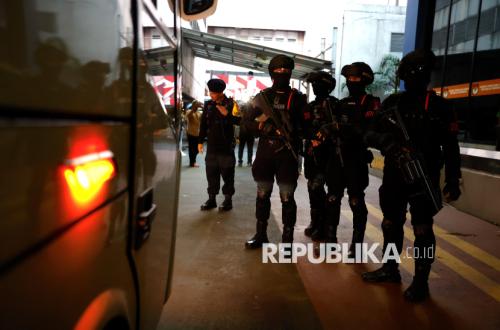
REPUBLIKA.CO.ID, JAKARTA – The lights on the 20th and 21st floors of an office building in the Hayam Wuruk area, West Jakarta, remained on as usual. From the outside, nothing seemed suspicious. People came and went like ordinary office workers, computers were on, phones rang, and conversations took place quickly in various Southeast Asian languages. Everything looked normal, at least until a joint team from the Indonesian National Police’s Criminal Investigation Unit (Bareskrim) and the Jakarta Metropolitan Police entered on May 7, 2026, and discovered that behind the walls of the modern office, a cross-border online gambling industry was operating almost non-stop. A total of 321 people were arrested, 320 of whom were foreign nationals from Vietnam, China, Myanmar, Laos, Thailand, Malaysia, and Cambodia. They were not a group of freelancers moving sporadically, but part of a well-organized system. Some worked as telemarketers, customer service representatives, administrators, and even debt collectors. Their way of working resembled a modern digital company, complete with division of tasks and an organized operational structure. The only difference was that the product they sold was online gambling, which is prohibited in Indonesia. The raid revealed a reality that had long been only vaguely visible, that the online gambling industry had grown into a transnational economic network operating with the logic of a modern corporation. They rented legal buildings in the city center, exploited loopholes in supervision, and then operated dozens of gambling sites from behind air-conditioned office spaces. Investigators found about 75 domains and online gambling sites that were managed systematically. These domains were designed with a combination of specific characters to avoid automatic blocking. In the digital world, this game is almost like a race with no finish line, as the state tries to close one door, while dozens of other doors appear almost simultaneously. The police are now working with the Financial Transaction Reports and Analysis Centre (PPATK) to trace the flow of funds and hunt down the main controllers of the network. It would be naive to think that such a large operation could stand alone without capital, technology, and a transnational network. Moreover, the only Indonesian citizen who was arrested had a history of working in Cambodia, a country that has been known as one of the main hubs of the Southeast Asian online gambling industry in recent years. This detail makes the Hayam Wuruk case seem like more than just a routine raid, but a small piece of a much larger regional network. However, the problem of online gambling does not stop at an office in West Jakarta. Almost at the same time as the disclosure of this case, the Minister of Communication and Digital Affairs, Meutya Hafid, conveyed other data that was no less worrying. Nearly 200,000 Indonesian children have been exposed to online gambling, and about 80,000 of them are even under the age of 10.