
Insights into the Cikarang-Karawang KRL Project
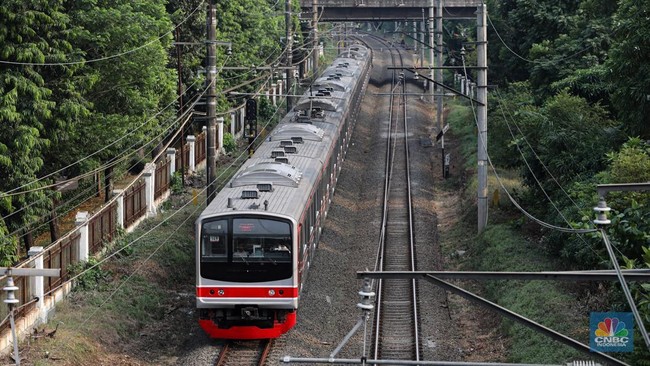
The plan to electrify the Cikarang-Cikampek railway line appears to be gaining momentum, as the government begins holding meetings with relevant stakeholders to discuss the electrification of that route.
The West Java Provincial Government, through its Provincial Transportation Department, organised a meeting to discuss the planned development of the electrification of the Cikarang-Karawang to Cikampek railway line, together with the Railway Engineering Office of the Directorate General of Railways Jakarta and Banten Region.
This activity aligns with the programme from the National Railway Network Development Coordination Meeting organised by the Coordinating Ministry for Infrastructure and Regional Development on 22 April at Tanah Abang Station.
“The electrification of the Cikarang-Cikampek line is a follow-up to the Memorandum of Understanding between the Ministry of Transportation and the West Java Provincial Government. There is considerable demand and movement from the community in the Cikarang area and surroundings for the availability of mass public transport based on KRL,” said the West Java Transportation Department in its presentation at the meeting, quoted from Instagram @btpjakarta, Saturday (9/5/2026).
The coordination meeting emphasised the importance of accelerating the development of rail-based transportation networks through synergy across ministries, local governments, and business entities. In line with that directive, the discussion on the Cikarang-Cikampek line electrification forms part of concrete efforts to improve mass transportation services in the Jakarta agglomeration area and its surroundings.
Meanwhile, the Directorate of Railway Traffic and Transportation at the Ministry of Transportation stated that the electrification of the Cikarang-Cikampek line has been included in the Strategic Plan of the Directorate General of Railways for 2025-2029.
“The electrification of the Cikarang-Cikampek line is one of the enhancement activities that has been included in the DJKA Strategic Plan for 2025-2029, planned to be implemented and completed by the end of 2029,” said the Directorate.
Currently, the electrification plan has entered the review stage of the Detailed Engineering Design (DED) for the Cikarang-Cikampek electrification from 2011.
However, after more than a decade and with regional developments, increased transportation needs, and changes in technical standards, that document is deemed no longer relevant.
In the DED preparation stage, the focus of activities includes the technical design of various infrastructure components, such as the construction of traction substations, installation of overhead catenary systems, station upgrades, and the development of depots including stabling areas.
Through this DED preparation, it is hoped that all technical, operational, financial, and intermodal integration aspects can be designed comprehensively to support smooth implementation in the construction phase.
Meanwhile, based on passenger data for the Cikarang-Cikampek line from the Jakarta Operational Region 1, the number of users reaches 85.9 million people per year, with an average of 235,000 per day.
The number of users of the KA Commuter Line Local Walahar Express on the Cikarang-Purwakarta route increased to more than 4 million in 2025, from 2.1 million people in 2022.
For the KA Commuter Line Local Jatiluhur on the Cikarang-Cikampek route, the number of users rose to 1.2 million people in 2025, from 219,000 people in 2022.
In the first quarter of 2026, more than 346,000 users have been recorded utilising this railway service.
With the planned electrification between Cikarang-Karawang, it is expected to improve services for railway users.
In addition to discussions on the planned enhancements on the Cikarang-Cikampek line, on this occasion, PT Jababeka Infrastruktur expressed its intention to develop Lemah Abang Station, starting from providing park-and-ride facilities to plans for developing the area concept using a Transit Oriented Development (TOD) scheme.
The Cikarang Industrial Area contributes significantly to the National Gross Domestic Product. However, the efficiency of this area is degraded by connectivity issues.
“The growth of the industrial area to the east (Jababeka Phase II, Deltamas, GIIC) is not matched by the extension of the reach of rail-based mass transit. The development of Park and Ride at Lemah Abang utilises Jababeka land to respond to the extension of the Commuter Line (KRL) as an acceleration activity and existing station for platforms,” said Jababeka Infrastruktur.