
Inside the East’s Largest Wastewater-to-Clean-Water Treatment Plant
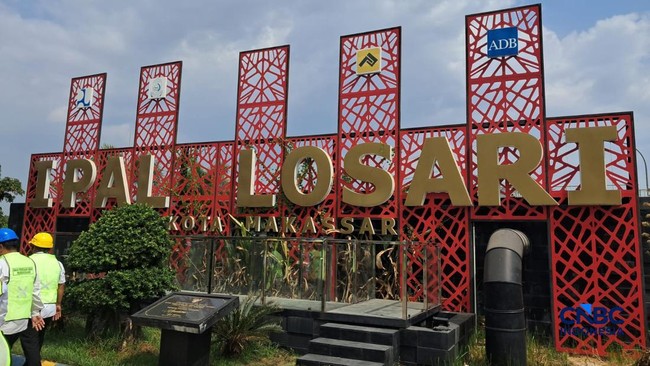
Makassar’s Losari Wastewater Treatment Plant (WWTP) is the largest sanitation facility in eastern Indonesia and received construction funding from the Asian Development Bank (ADB).
Construction began in 2019, and the facility was inaugurated by President Joko Widodo in 2024. It is connected to 14,000 sanitation networks and can process 1,200 cubic metres of wastewater into clean water each day.
The Rp1.2 trillion project received around Rp672 billion in ADB loan funding. It has the capacity to treat wastewater from four districts in Makassar, with a design capacity of 16,000 cubic metres per day.
During a review of the project on Wednesday, 21 October 2026, ADB Country Director for Indonesia Bobur Alimov said the plant’s installed capacity left considerable scope to expand wastewater management for nearby residents, as it currently treats only 1,200 cubic metres a day.
“The plant is not yet operating at full capacity. If we add more connections, there is very significant potential for further expansion,” Bobur said.
He said Indonesia’s growing cities and rising populations needed sanitation facilities capable of keeping pace with increasing volumes of wastewater. Without such facilities, public health and the environment would also be affected.
“Investment in sanitation is not just about infrastructure; it is also about public health, environmental protection and making cities more liveable,” Bobur said.
He added that the ADB, as a development partner to Indonesia, would continue to support the development of wastewater treatment facilities.
“I hope every city in Indonesia will have this kind of facility, and that we will no longer see wastewater [polluting the environment]. Our planet has a remarkable ability to recover by itself, so we need to help that recovery process and stop polluting the environment further,” he said.
The Losari WWTP is part of the ADB’s Metropolitan Sanitation Management Investment Programme (MSMIP). In addition to Makassar, the sanitation facilities programme covers Jambi and Pekanbaru, with total costs equivalent to US$301.81 million.
Of the total project cost, the ADB provided US$79.36 million. Co-financing included US$35.45 million from the ASEAN Infrastructure Fund and a US$47.65 million grant from the Australian Government. The Indonesian Government contributed US$139.35 million.
The project responds to low levels of urban wastewater disposal by expanding access to safe wastewater collection and treatment services, while strengthening institutional capacity for long-term operations and maintenance.
Three wastewater treatment plants in Jambi, Makassar and Pekanbaru, with a combined design capacity of 31.7 megalitres a day, are now operating, alongside 159.4 kilometres of installed sewerage network.
As connections are expanded from the current 1,475 households and 147 commercial properties, the system is expected to serve more than 34,000 households and 10,400 commercial properties.
The project prioritises low-income households and women-headed households by providing access to subsidised tariffs and free connections for domestic wastewater disposal.