
Inside Jurong Rock Caverns, Saudi Arabia’s Oil Storage Facility 150 Metres Beneath Reclaimed Singapore
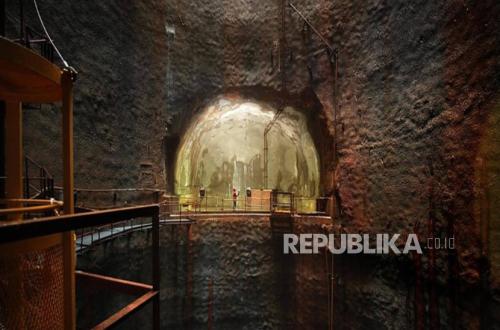
SINGAPORE — About 150 metres beneath Jurong Island in Singapore, caverns have been carved into granite rock below the seabed. This is where Jurong Rock Caverns (JRC), the largest and first underground oil storage facility in South-east Asia, is located.
The caverns came into the spotlight this week following an agreement between the Singapore government and the Kingdom of Saudi Arabia at Singapore International Energy Week (SIEW) 2026. The announcement came two days after Indonesia’s Energy and Mineral Resources Minister Bahlil Lahadalia said Indonesia would reduce gas supplies to Singapore in response to domestic industry needs.
Bahlil’s statement came close to remarks by several Singaporean ministers concerning an investigation into 10 Indonesian companies based in the city-state, suspected of involvement in forest fires that caused haze to blanket Singapore for several days last week.
“Today, Saudi Arabia and Singapore announced their joint intention to establish an arrangement for Saudi crude oil,” Singapore’s Minister for Energy and Trade and Industry, Tan See Leng, said at the Singapore Energy Lecture 2026, according to Anadolu Agency.
Tan said the arrangement would strengthen the resilience of the supply chain for Saudi crude in South-east Asia while supporting Singapore’s energy security in the event of supply emergencies. Saudi Energy Minister Prince Abdulaziz bin Salman, in a recorded video played at the conference, said bringing supplies closer to key Asian markets would make the supply network more flexible and support security of supply and Singapore’s preparedness. “We see the potential for this collaboration to grow further,” Abdulaziz said.
Saudi Arabia has been seeking storage space overseas. Earlier this month, Saudi Aramco chief executive Amin Nasser said Riyadh was negotiating with several foreign governments to secure access to storage facilities for the company.
The challenge is complex. Global energy markets have come under heavy pressure in recent months amid the crisis in the Strait of Hormuz involving Iran and the United States. The strait is a key route for international oil shipments from refineries in the Arab region. The situation has been further aggravated by Houthi attacks on Saudi Arabian airports and energy infrastructure.
Singapore has been pursuing underground storage for a long time. The project was initiated in 2014, but the country’s vision for oil and gas storage had taken shape earlier, driven by its heavy reliance on imported energy.
Jurong Rock Caverns is located in the petrochemical and refining complex in southern Singapore. According to the website of JTC, the government agency that owns the facility, the underground caverns can hold up to 1.47 million cubic metres of liquid hydrocarbons, including crude oil and condensate. That is equivalent to about nine million barrels of oil, Bloomberg reported.
JRC is Singapore’s deepest underground public works project to date. It comprises four caverns with a capacity of 330,000 cubic metres each and one with a capacity of 150,000 cubic metres. Together, they can store 1.47 million cubic metres, or about nine million barrels, of crude oil, condensate, gas oil and naphtha.
Each cavern is about 27 metres high, roughly the height of a nine-storey building. More than 3.5 million cubic metres of rock were excavated to build the facility, along with nine kilometres of tunnels beneath Banyan Basin. “They are about nine storeys high, unlined rock caverns, with water constantly seeping through the cracks. There is nothing else like this,” Alan Ling, principal project manager in JTC’s Infrastructure Projects Division, said on the agency’s official website.
Jurong Island itself was created through reclamation in the 1990s, when Singapore filled in and joined seven small islands off its southern coast. Its area was expanded threefold from an original 1,000 hectares. More than 100 global companies now operate there, from refineries to petrochemical plants.
At the opening of JRC in 2014, Prime Minister Lee Hsien Loong said companies had invested more than S$47 billion on the island. Lee acknowledged that building underground storage for oil and condensate cost about 30 per cent more than reclaiming new land, and also carried significant risks.
The project nevertheless went ahead because it freed up 60 hectares of surface land for higher-value facilities. “Sixty hectares is enough to accommodate up to six petrochemical plants,” Lee said.
Source: jawawa.id (https://jawawa.id/newsitem/inside-jurong-rock-caverns-saudi-arabias-oil-storage-facility-150-metres-beneath-reclaimed-singapore-1793188361)
Originally published by Republika (https://news.republika.co.id/berita/tnm63d475/mengenal-jurong-rock-caverns-gudang-minyak-saudi-150-m-di-bawah-tanah-singapura-hasil-reklamasi), translated from Indonesian