
Inside Danantara’s Financial ‘Engine Room’: From Assets to Profits
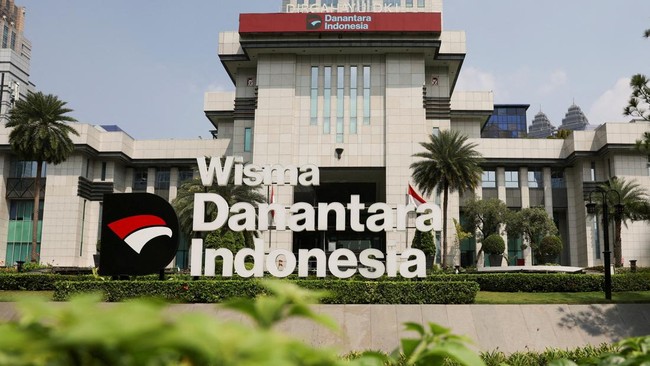
Jakarta, CNBC Indonesia — The Nusantara Investment Management Agency (BPI Danantara) released its first consolidated financial statements for the 2025 financial year on Wednesday (25 November 2026).
The report consolidates more than 1,000 state-owned enterprises (SOEs) and their subsidiaries, and received an unqualified opinion from Indonesia’s Audit Board (BPK).
Danantara Indonesia chief executive Rosan Roeslani said the agency posted net profit of Rp203.4 trillion for the audited nine-month period from April to December 2025, as the transfer of ownership of SOE shares was only completed in March 2025.
On a pro forma 12-month basis for January to December 2025—unaudited, as noted in Note 30—Danantara’s net profit reached Rp259.6 trillion.
“For the first time, the performance of Danantara Indonesia’s entire portfolio is presented in a single audited consolidated financial statement. The results show a large-scale portfolio capable of generating profitability and healthy cash flow,” Rosan said.
Income statement: net margin reaches 8.4%
Consolidated operating revenue for the nine-month period was Rp2,385.2 trillion, rising to Rp3,073 trillion on a pro forma 12-month basis.
Earnings before interest, tax, depreciation and amortisation (EBITDA) stood at Rp552.5 trillion for nine months and Rp704.7 trillion for 12 months, with the EBITDA margin remaining in the range of 22.9% to 23.2%.
A closer look at the 12-month figures indicates that depreciation and amortisation expenses were around Rp184.6 trillion, based on the difference between EBITDA and operating profit. This is unsurprising given the capital-intensive SOE assets in the energy, infrastructure and telecommunications sectors.
After accounting for around Rp152.7 trillion in interest expenses and non-operating items, as well as implied income tax expenses of Rp107.8 trillion, the pro forma net profit margin was 8.4%.
Assets total Rp11,607 trillion; Himbara loans account for a third
Danantara’s consolidated assets stood at Rp11,607 trillion as at 31 December 2025, up 5.0% from the initial consolidation position on 31 March 2025. The figure represents net carrying value after accounting-policy alignment, data reconciliation and the elimination of inter-SOE transactions to avoid double counting.
With the Himbara state-owned banks fully consolidated, loans and financing receivables were the largest financial asset, amounting to Rp3,998.9 trillion. That was up 7.2%, or Rp267 trillion, between March and December 2025, equivalent to 34.5% of total assets and 47% of Indonesia’s total domestic loans.
Asset growth was also supported by an 11.1% increase in the securities investment portfolio to Rp1,485.9 trillion, or 12.8% of total assets. Excluding those two financial asset categories, the remaining consolidated assets amounted to around Rp6,122.2 trillion, with SOE fixed and productive assets increasing by Rp400.7 trillion over the same period.
Total equity rose 5.6% to Rp2,980 trillion. On this basis, the pro forma 12-month return on equity (ROE) was 8.7%, while the debt-to-equity ratio (DER) remained at 0.54 times.
Cash flow of Rp563.1 trillion, tax of Rp567.2 trillion and 91.4% drop in state capital injections
Profitability was also supported by net cash from operating activities of Rp563.1 trillion over the nine-month period. BPI Danantara managing director of finance Arief Budiman said the Danantara ecosystem also collected Rp143 trillion in dividends during 2025.
Of that amount, Rp11.8 trillion was paid into the state treasury. The ecosystem also contributed Rp567.2 trillion in tax payments, in addition to Rp110 billion in corporate income tax paid by BPI Danantara’s parent entity.
As internal funding capacity has strengthened, SOEs’ reliance on state capital injections (PMN) from the state budget has fallen sharply—by 91.4% in four years—from Rp54.6 trillion in 2022 to just Rp4.7 trillion in 2025.
2026 transformation drive and market scrutiny
In 2026, Danantara is pursuing two main pillars. Through Danantara Asset Management (DAM), 364 of approximately 1,074 SOE entities had been streamlined by October 2026, towards a target of 250 to 300 entities, with potential annual efficiency savings of up to Rp50 trillion.
Early improvements include an increase of 20 serviceable aircraft at Garuda Indonesia, bringing its fleet to 104 as at September 2026, and Krakatau Steel’s return to profit: from a US$105.38 million loss in the first half of 2025 to a US$10.94 million profit in the first half of 2026.
On the investment side, Danantara Investment Management (DIM) managed around Rp162 trillion in total investment assets as at October 2026, including Rp60.6 trillion in public investments. Its target for private investment placements in 2026 is US$3.8 billion, or around Rp69 trillion.
Danantara is also working on more than 20 downstreaming projects worth Rp225 trillion, waste-to-energy processing programmes in 33 regions worth Rp40 trillion to Rp50 trillion, the acquisition of Novotel Thakher Makkah—with 1,461 rooms and 4.4 hectares of land—and the purchase of a 25% stake in JBS’s protein business in Australia and New Zealand.
Despite its solid initial foundations, markets and rating agencies such as Fitch Ratings are monitoring Danantara’s distinctive structure: it was formed through the consolidation of existing SOEs, rather than from fiscal surpluses or commodity revenues, as is typical of traditional sovereign wealth funds.
Analysts say governance discipline and caution over contingent-liability risks will be the main tests in ensuring Danantara boosts the productivity of state assets rather than becoming a vehicle for off-budget government spending.
Source: jawawa.id (https://jawawa.id/newsitem/inside-danantaras-financial-engine-room-from-assets-to-profits-1795679512)
Originally published by CNBC Indonesia (https://www.cnbcindonesia.com/research/20261125160239-128-788419/mengintip-dapur-keuangan-danantara-dari-aset-hingga-laba), translated from Indonesian