
Innovation and Continuous Improvement as Foundations for National Competitiveness
Separately, a report stated that 16 Indonesian nationals were found dead after drowning in the waters of a neighbouring country.
PT Panasonic Manufacturing Indonesia (PMI) organised a Grand Assembly on 19 May 2026, marking a moment to strengthen patriotism and implement the Pancasila Industrial Relations in practice. The ceremony, held solemnly within the company, was not merely a routine but a symbol of synergy between the government, industry players, and workers.
The event was attended by a number of national figures, including the Minister of Manpower of the Republic of Indonesia, Prof. Yassierli, Special Staff to the Minister of Manpower Indra, and national industry figures Rachmat Gobel and Arif Gobel. The presence of these leaders underscored the importance of cross-sector collaboration in maintaining economic stability and workers’ welfare.
This Grand Assembly carries historical significance as it coincides with Industrial Relations Month and the series of commemorations of Gobel Membangun Negeri’s seven decades. Gobel Group’s 70-year journey stands as tangible evidence of the private sector’s contribution to national development and the sustainable empowerment of the local workforce.
In the ceremony, the President of FSPPG Djoko Wahyudi acted as the Inspector of the Ceremony. He stressed that national values must form the main foundation in creating a conducive and harmonious working environment.
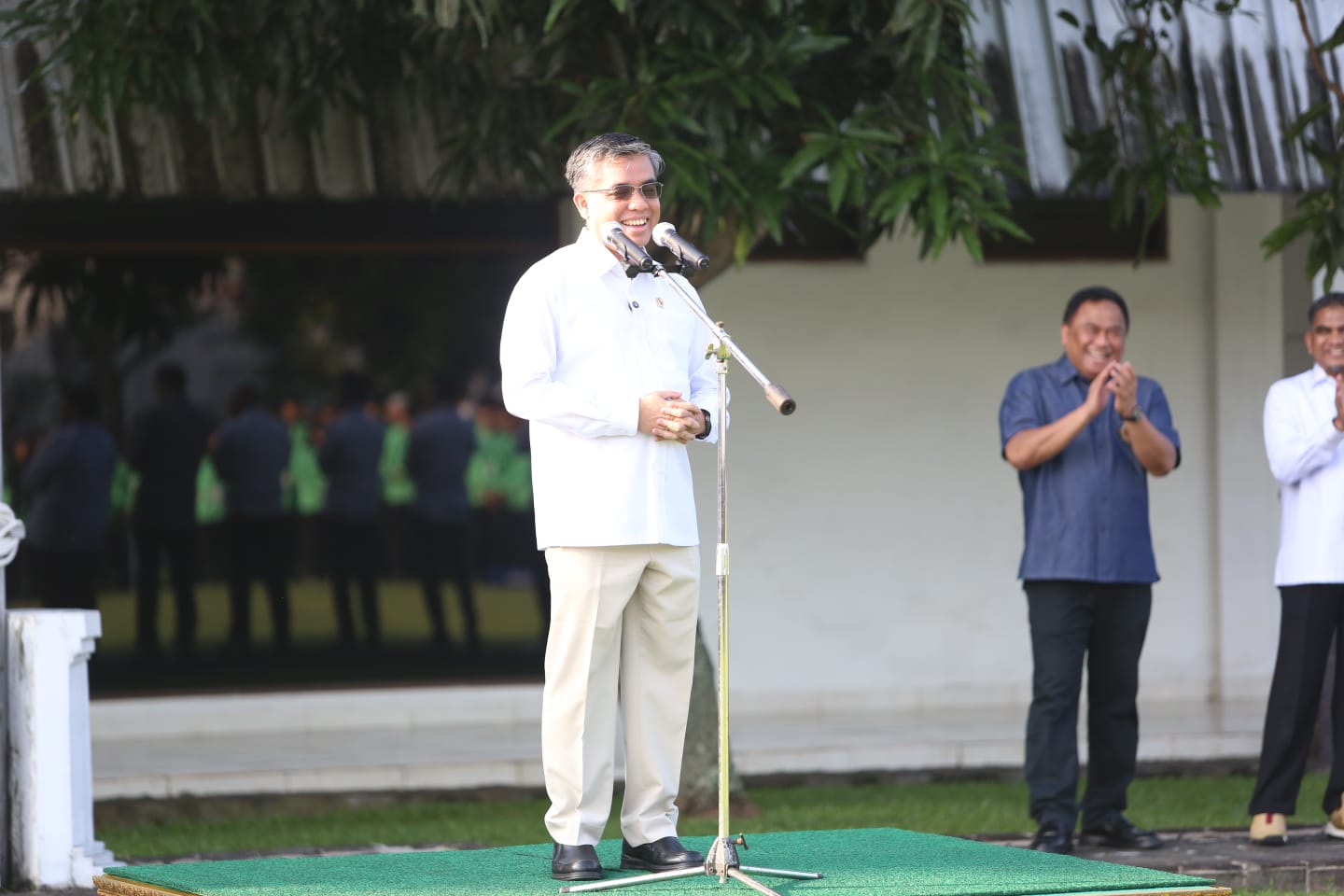
In his address, Minister Yassierli highlighted the importance of innovation as a pillar of competitiveness. According to him, Pancasila Industrial Relations should be capable of driving productivity through enhancing human resources (HR) competencies and rapid adaptation to technology. A work culture that responds to changes in the era becomes the key to ensuring the national industry remains relevant in the global market.
On the other hand, Rachmat Gobel expressed appreciation to the Ministry of Manpower for its support of industrial stability. However, he also offered strategic notes on the importance of government protection for domestic industry. He urged firm action against illicit product circulation that damages the local market ecosystem and threatens consumer safety.
As a routine monthly activity, PMI’s Grand Assembly always includes the raising of the Red and White Flag, recitation of Pancasila, and a moment of silence. This tradition aims to continuously nurture patriotism in every employee.
After the ceremony, Minister Yassierli, accompanied by PT PMI Vice President Daniel Suhardiman, reviewed various company facilities. The review covered the EBE.Edu Library as a literacy hub for employees, welfare facilities, and an Industrial Relations exhibition. The event concluded with a tree-planting ceremony as a symbol of the company’s commitment to environmental sustainability.
Through this agenda, PT Panasonic Manufacturing Indonesia proves that strong industrial relations are not merely about formal policy, but about building a corporate culture that upholds togetherness and the noble values of Pancasila. (H-2)
Prodia Education and Research Institute (PERI) held the Prodia Science Award 2026 to recognise biomedical research and innovations in preventive health in Indonesia.
‘Inovasi Muda’ collaborated with Universitas Ciputra to host the Indonesia Green Jobs Initiative Competition 2026 with the theme Green Innovation for Indonesia’s Future Economy.
Nutrilite™ Gut was launched as part of Amway’s commitment to help Indonesians be more aware, proactive, and preventive in maintaining metabolic health.
The report also stated that China’s Digital Development Index reached 170.1 in 2025, up 12.99% year on year.
BRICS Industrial Innovation Contest 2026 officially opened in Jakarta. The event presents Indonesian innovators with opportunities to access international markets and strengthen the economy.
Indonesia Sustainability 360 Forum 2026 officially began. This strategic forum connects policy, business, and innovation for the transformation of the green economy.
In this context, vocational education should be a strategic solution. However, to understand how vocational training should function, one needs to look at global best practices.
This strategic step has been taken to capture global investment opportunities and spur regional transformation toward Special Economic Zones (KEK).
Graduates are also equipped with integrity, care, and adaptability to face the professional world.
Deputy Minister for MSMEs Helvi Moraza emphasised the importance of strengthening the enterprise ecosystem, supply-chain connectivity, and digitalisation of services to empower MSMEs.