
Inlacin Receives Gold Accreditation from Empowered By Evidence
Jakarta, CNBC Indonesia – Many natural health products (herbal medicines) are sold without clinical trial evidence, and some even contain illegal medicinal chemicals. This is a serious concern, making it important for the public to understand and obtain detailed information about the medicines they use.
In the healthcare industry, Indonesia’s National Agency of Drug and Food Control (BPOM) and independent organisations assess natural health products on the basis of clinical evidence. One such organisation is Empowered By Evidence (EBE).
EBE is an independent, non-profit organisation incorporated in New York, United States. In addition to assessing natural health products based on clinical evidence, it examines whether products can be reproduced and whether the product studied is equivalent to the one sold.
Alongside clinical evidence, EBE assesses the quality of botanical ingredients, the standardisation of manufacturing processes, consistency between batches and product reproducibility. EBE is rigorous in evaluating the quality of natural health products. Nigel Pollard, chair of EBE’s board of directors, said such products were complex. Because they are derived from nature, their composition can differ substantially between brands and even between batches of the same product.
Preparations made from the same plant can also vary, depending on the source of the material, extraction process, production controls and standardisation. Scientific evidence must therefore be obtained by studying the finished product itself.
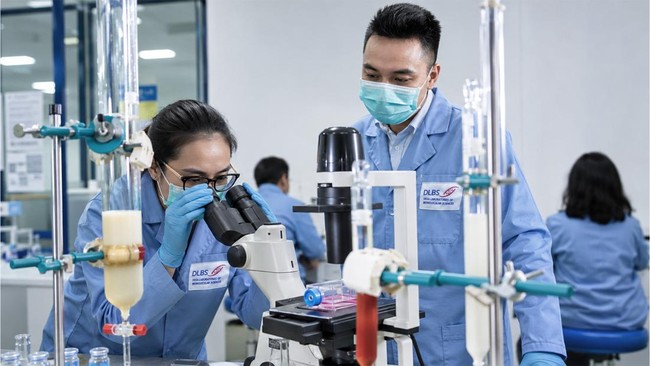
One Indonesian herbal medicine brand has received recognition from EBE: Inlacin®. The natural medicine was developed by Dexa Laboratories of Biomolecular Sciences (DLBS). Inlacin® received Gold Accreditation from EBE following an independent assessment of its scientific evidence.
EBE assessed clinical trials conducted directly on the product, together with data on reproducibility and quality equivalence.
“It is not easy to choose natural health products that are genuinely science-based. Consumers and healthcare professionals therefore need independent assessments, open education and access to scientific evidence for each product. This accreditation makes it easier for them to identify products that have been clinically tested and have demonstrated results,” Nigel said, as quoted on Wednesday (18 November 2026).
Inlacin® (DLBS3233) is a patented phytopharmaceutical produced to pharmaceutical standards. It has been evaluated in more than 22 published scientific studies. Dexa Medica currently markets Inlacin® in Indonesia, the Philippines and Cambodia, and plans to introduce it in several other countries.
Meanwhile, Professor Theo Dingermann of Goethe University Frankfurt in Germany said the value of an accreditation also depended on who conducted the assessment.
“Tradition and reputation need to be supported by evidence. Trust in natural medicines must be built on evidence for each product. EBE accreditation is meaningful because it is assessed by experts with no commercial interest in the outcome. Its criteria are published and applied consistently to every applicant. Doctors prescribing these products and consumers can trust the credential without having to review all the scientific evidence themselves,” Dingermann said.
PCOS viewed through hormones and metabolism
The accreditation comes as scientific understanding and terminology for polycystic ovary syndrome (PCOS) are evolving. The newer term polyendocrine metabolic ovarian syndrome (PMOS) is used to describe more precisely the links between endocrine, metabolic and ovarian factors, including the role of insulin resistance in many patients.
DLBS Executive Director Professor Raymond Tjandrawinata explained that during the transition, PCOS and PMOS could continue to be used alongside one another in scientific literature, clinical practice and health communications.
This broader endocrine and metabolic perspective is consistent with research into Inlacin®. The evidence-based natural medicine was developed by DLBS from the standardised bioactive fraction DLBS3233.
Inlacin® has been studied in clinical research related to insulin resistance and glucose metabolism disorders, including among women diagnosed with PCOS.
“Developments in the understanding of PCOS show that the condition needs to be viewed through both endocrine and metabolic perspectives. This is consistent with the scientific basis for developing Inlacin®. In our development programme, we studied insulin sensitivity alongside a range of metabolic and reproductive parameters,” Professor Raymond said.
Clinical research on DLBS3233
One source of clinical evidence for DLBS3233 is a six-month, randomised, double-blind, controlled study involving 124 women with insulin resistance and PCOS.
Researchers compared DLBS3233 at 100mg once daily with extended-release metformin at 750mg twice daily.
Insulin resistance improved significantly from baseline in both the metformin and DLBS3233 groups, as measured by the Homeostatic Model Assessment for Insulin Resistance (HOMA-IR). Overall, the effects were comparable across the metabolic and reproductive parameters assessed.
However, the non-inferiority test specified in advance produced inconclusive results. The findings therefore need to be considered alongside the study design and the wider clinical context.
The incidence of adverse effects was lower in the DLBS3233 group than in the extended-release metformin group. Most adverse effects were mild and had resolved by the end of the study.
These findings form part of a broader DLBS3233 research programme covering prediabetes, type 2 diabetes mellitus, insulin resistance and endocrine-metabolic health.
Inlacin® works as an insulin sensitiser. It helps the body respond to insulin naturally, enabling glucose to move from the blood into cells, where it is used for energy.
Clinical studies indicate that Inlacin® helps the body manage glucose with a low risk of hypoglycaemia. As insulin resistance can also play a role in hormonal disorders, improved insulin sensitivity may help support a more balanced hormone profile and more regular menstrual cycles in women with PMOS.
Raw materials and manufacturing process
Inlacin® is made from standardised botanical ingredients derived from cinnamon (Cinnamomum burmannii) and banaba (Lagerstroemia speciosa). DLBS controls the extraction, fractionation, standardisation and pharmaceutical manufacturing processes. The aim is to ensure that the formulation on the market remains the same as the one evaluated in clinical research.
As part of EBE accreditation, independent assessors examine the link between the clinical evidence and the formulation being marketed. This is an important element of the assessment. EBE evaluates the quality of plant materials, standardisation of manufacturing processes, batch-to-batch consistency and the status of the product’s clinical trial data.
“Independent assessment is extremely important for natural medicines. Claims about ingredients are often made without showing that the formulation being sold is the same as the product studied clinically. The assessment of Inlacin® examined the depth and strength of its scientific evidence, as well as how consistent and reproducible its manufacturing process is,” he said.
How EBE assesses products
EBE’s accreditation process was designed by a team of global experts to be independent, rigorous and transparent. Products that receive accreditation have been tested in clinical research.
Manufacturers must also demonstrate that the batches currently on the market are equivalent to the product studied.
Based on documents provided by manufacturers, independent experts assess a range of product characteristics, including the quality of plant materials used in extracts, the standardisation of manufacturing processes to ensure consistency between batches, and the status of clinical trial data.
The process is overseen by EBE’s Expert Advisory Board, whose members are appointed according to their expertise. They have not worked with the product being assessed or its competitors for at least the past three years.
EBE does not sell natural health products or their raw materials, nor does it provide consultancy services to brand owners. It also receives no direct financial benefit from sales of accredited products.
Indonesian natural medicine for the global market
DLBS has long developed evidence-based natural medicines using modern bioscience, standardised manufacturing and clinical validation. EBE’s Gold Accreditation reinforces that commitment.
The recognition is also part of Dexa Group’s efforts, through DLBS, to bring Indonesian biodiversity-based scientific capabilities and pharmaceutical innovation to the international healthcare community.
Some of the cinnamon and banaba used in Inlacin® comes from farmers near Mount Kerinci in Jambi. Using Indonesia’s biodiversity, DLBS developed Inlacin®, which is now marketed in Indonesia, the Philippines and Cambodia. The company plans to expand its reach to several other countries.
Source: jawawa.id (https://jawawa.id/newsitem/inlacin-receives-gold-accreditation-from-empowered-by-evidence-1795571528)
Originally published by CNBC Indonesia (https://www.cnbcindonesia.com/news/20261125075925-4-788150/inlacin-raih-gold-accreditation-dari-empowered-by-evidence), translated from Indonesian