
InJourney Strengthens ASEAN-China Air Connectivity via ACWG-RASA Forum
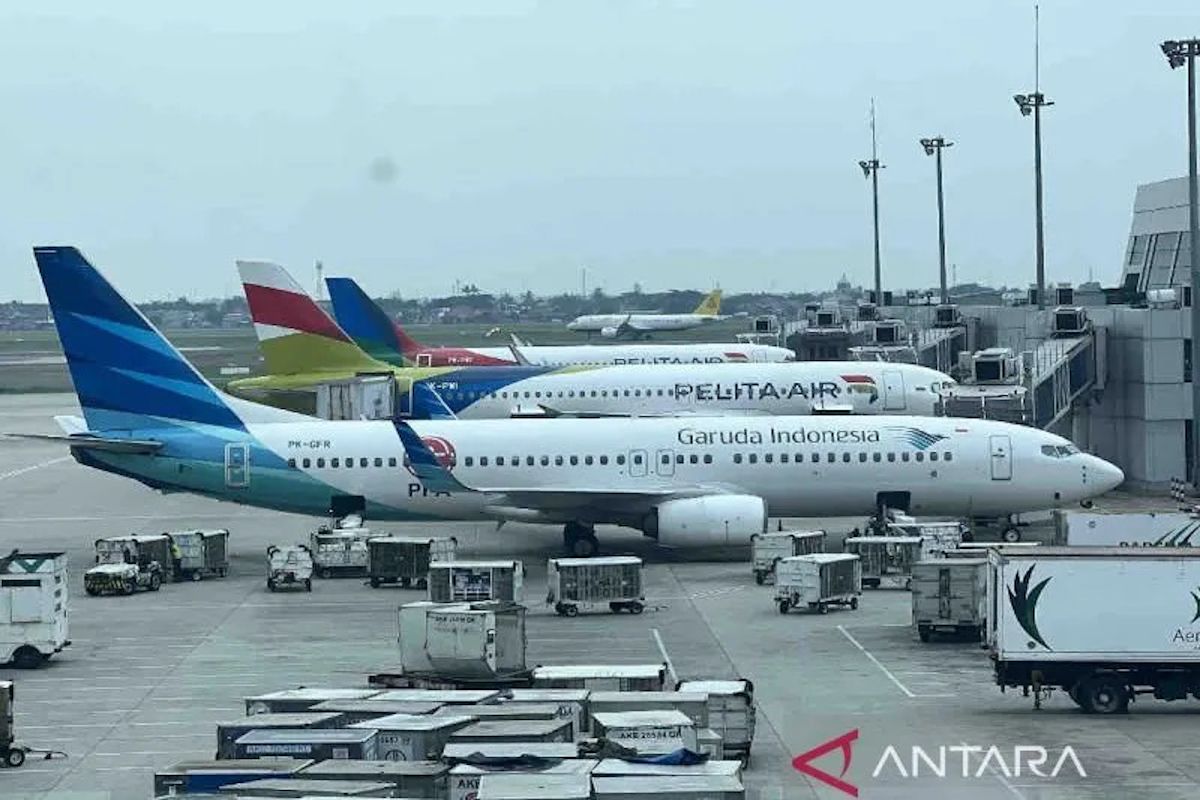
Jakarta (ANTARA) - PT Angkasa Pura Indonesia (Persero), or InJourney Airports, is strengthening air connectivity between Indonesia, the ASEAN region and China through the ASEAN-China Working Group on Regional Air Services Arrangements (ACWG-RASA).
“InJourney Airports is committed to continuously strengthening Indonesia’s air connectivity,” said InJourney Airports President Director Mohammad R Pahlevi in a confirmed statement in Jakarta on Saturday.
He said that at the 17th ACWG-RASA Forum, held in Yogyakarta, InJourney Airports explored international aviation collaborations at the airports it manages.
The meeting, organised by the Ministry of Transportation to strengthen ASEAN-China connectivity, was attended by 61 delegates from member countries.
It was also attended by 127 representatives of airlines, airport operators, aircraft manufacturing and maintenance companies, and aviation associations across ASEAN and China.
“This forum is also an opportunity for us to directly present our airports’ advantages in support of stronger ASEAN-China air connectivity. This step is part of our effort to optimise the airports managed by InJourney Airports,” said Pahlevi.
InJourney recorded that around 1.7 million passengers from China travelled to Indonesia in 2025, arriving either on direct flights or indirectly via other countries.
InJourney Airports Commercial Director Veri Y Setiady added that strengthening ASEAN-China connectivity is one of the company’s main focuses at the ACWG-RASA forum, in line with the continuously rising demand for flights from and to China to various parts of Indonesia.
He noted that international connectivity at Indonesian airports had reached 40.9 million passengers from 230 countries by December 2025, with a recovery rate of 110 per cent compared with the pre-pandemic period.
“The Asian market contributes 67 per cent of that total, and China is one of the main drivers of this growth,” said Veri.
He added that demand for flights from China to Indonesia is no longer concentrated in Jakarta and Bali.
Based on 2025 indirect passenger traffic data, Java recorded around 992,000 passengers, followed by Bali-Nusa Tenggara with around 525,000 and Sumatra with around 169,000, while Kalimantan, Sulawesi and Papua have also shown smaller but consistent demand growth.
According to him, this distribution shows that Chinese passengers’ interest in Indonesian destinations has become highly diverse geographically.
“This underpins our continued push to strengthen direct ASEAN-China connectivity, not only through major airports but also other airports serving as gateways to various regions,” Veri explained.
Through the ACWG-RASA forum, InJourney Airports is promoting six airports: Yogyakarta International Airport (YIA), Zainuddin Abdul Madjid International Airport in Lombok, Minangkabau International Airport in Padang, and Sultan Mahmud Badaruddin II International Airport in Palembang.
Also promoted are Sultan Hasanuddin International Airport in Makassar and Sam Ratulangi International Airport in Manado, as part of efforts to expand direct ASEAN-China connectivity points.
The six airports are also connected to networks of surrounding airports, including Kendari, Palu, Gorontalo, Ternate, Ambon, Sorong, Timika, Jayapura, Kupang and Labuan Bajo, so the potential for stronger connectivity can reach a much wider region.
“We are grateful for the quite positive response from the delegates and airlines, which will be followed up in more detail at subsequent meetings,” said Veri.
As the world’s fifth-largest airport operator, serving 162 million passengers across 37 airports, InJourney Airports will continue to optimise the potential of its managed airports to strengthen Indonesia-China connectivity while contributing maximally to the national economy and tourism.