
Initially Curious, German Doctor Adopts Indonesian Shaman's Knowledge
Initially Curious, German Doctor Adopts Indonesian Shaman’s Knowledge
Jakarta, CNBC Indonesia — Curiosity led a German doctor down an unusual path. He delved into the traditional healing practices of Indonesian shamans, which were widely trusted by the local population at the time.
This story began when a German doctor named Friedrich August Carl arrived in the Dutch East Indies in the 19th century. Rather than relying solely on modern medical knowledge, he became interested in local healing methods considered unscientific.
He began observing shamans directly at work, from diagnosing symptoms to preparing herbal concoctions. His interest stemmed from a simple observation: many patients recovered after treatment by shamans.
Carl wondered why these methods worked, despite not aligning with the medical science he had studied. After all, modern medicines were scarce in the Dutch East Indies, unlike in Europe.
Such questions were pondered by many other European doctors as well. Even earlier, European doctors felt competed against by shamans. According to Hans Pols in Merawat Bangsa (2018), this rivalry arose due to issues of access to treatment.
Doctors were typically only available in urban areas, far from where most residents lived in rural regions. Moreover, doctors’ fees were more expensive. Additionally, people were still gripped by fears of modern treatment procedures, which remained very foreign. Given these considerations, the majority naturally preferred seeking treatment from shamans.
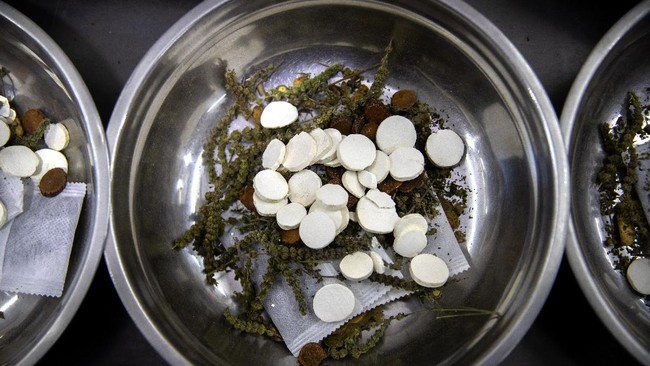
Driven by immense curiosity, Carl meticulously observed shamanic practices. As explained by Hans Pols in “European Physicians and Botanists, Indigenous Herbal Medicine in the Dutch East Indies, and Colonial Networks of Mediation” (2008), Carl saw that shamans attempted to diagnose illnesses based on symptoms, then provided incantations and herbal medicines.
For Carl, the core of these treatments lay in the herbal medicines. The incantations were mere accompaniments, with the key being the use of herbs sourced from local plants.
Nevertheless, these herbal medicines were based only on habits and experiences, not on insights and knowledge, thus requiring validation through scientific research.
On this basis, Carl also researched the herbal medicines used by shamans or the general public, producing scientific research outputs.
The German doctor then sought information on herbal medicines. He asked ordinary people, traders, patients, and even his own wife. Not only that, he used himself and patients as experimental subjects until success was proven.
In short, the long journey of uncovering shamanic practices and the use of herbal medicines yielded positive results. He documented everything in a work titled Pratische Waarnemingen Over Eenige Javaansche Geneesmiddelen (Practical Observations on Some Javanese Medicines).
Still citing Hans Pols, the work recorded all existing herbal medicines and juxtaposed them with modern drugs. Additionally, he categorised the medicines by disease according to modern medical science.
Carl’s success then led many doctors in the Dutch East Indies to incorporate herbal medicines into their treatments. It became easier for them to find solutions for modern diseases using herbal remedies.
From this, Friedrich August Carl’s name rose to prominence at the end of the 19th century. He is recorded as the first doctor to create and practise guidelines for Indonesian-style herbal medicine.