
Initial Phase: 3 kg 'Merah Putih' CNG Cylinders to Arrive from China
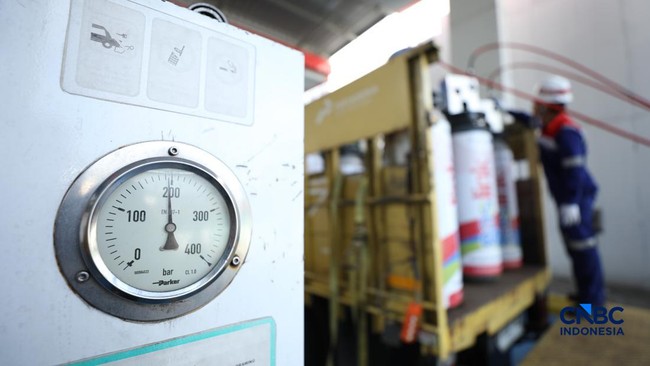
The Ministry of Energy and Mineral Resources (ESDM) has stated that, as an initial prototype for procurement, 3kg Compressed Natural Gas (CNG) cylinders will be imported from China.
The Director General of Oil and Gas at the Ministry of ESDM, Laode Sulaeman, mentioned that approximately 15 units of CNG cylinders will soon undergo technical testing this July before being widely distributed.
“So, this July, prototypes are being prepared for testing. There will be around 15 units. Currently, they are coming from China,” he said when met at the DPR RI Building, Jakarta, on Monday (29/06/2026).
The imported gas cylinders utilise Type 4 technology with composite materials, which are considered significantly lighter than conventional steel cylinders. The government has selected this type of cylinder to meet household needs, ensuring the transition from LPG does not burden consumers with heavy weights.
“The material of these cylinders has reached Type 4. Type 1 is all metal; Type 2 and Type 3 involve mixtures that reduce weight but are still heavy. Therefore, we must create something lighter so that housewives do not feel that the replacement is too heavy,” he added.
Once the prototype units arrive, the government will conduct a series of trials at the Oil and Gas Testing Centre (Lemigas), covering pressure tests and valve safety. Laode emphasised that safety remains the priority before the target for commercial implementation later this year.
“We will test them at Lemigas; there must be pressure tests and, most importantly, assessments of the safety of the valves and the cylinders. One more stage and it can be implemented and distributed this year,” he continued.
Regarding pricing, the government intends for the selling price of ‘Merah Putih’ CNG to be equivalent to the 3kg subsidised LPG to maintain public purchasing power. Although the initial stage relies on imports, the ministry has opened the door for Chinese investors to build production facilities in Indonesia if the use of domestic natural gas reaches a massive scale.
“The price will be the same. Currently, the simulation is to keep it equal, and by doing so, subsidies could decrease by up to 30%. There is an opportunity for domestic production. If the volume becomes massive, we will have the bargaining power to ask them to build here,” concluded Laode.