
Initial Draft of 2027 State Budget: The Direction of Fuel and Electricity Subsidy Policy
The Working Committee (Panja) drafting the initial 2027 State Budget (RAPBN) at the House of Representatives’ Budget Agency (Banggar) has agreed on a number of subsidy policies for the coming year. The committee, comprising the government and cross-commission members of the DPR, confirmed that subsidy reform policies will continue to be implemented to improve targeting, distribution effectiveness, transparency, and accountability. This is done while maintaining the financial health of state-owned enterprises, public purchasing power, and national economic conditions, as quoted from the committee’s report document on Tuesday (30/6/2026).
The agreed direction of energy subsidy policy for 2027 is as follows:
- Fuel and 3kg LPG Cylinder Subsidy Policy
Continuing the provision of fixed subsidies for diesel fuel and price difference subsidies for kerosene. This policy is accompanied by volume control and supervision of eligible groups or sectors, as well as ensuring the allocation of kerosene supply and special distribution in areas that have not effectively and evenly migrated from kerosene to gas. In determining the amount of the fixed diesel subsidy, the government will consider macroeconomic indicator developments, particularly the Indonesian Crude Price (ICP) and the Rupiah exchange rate.
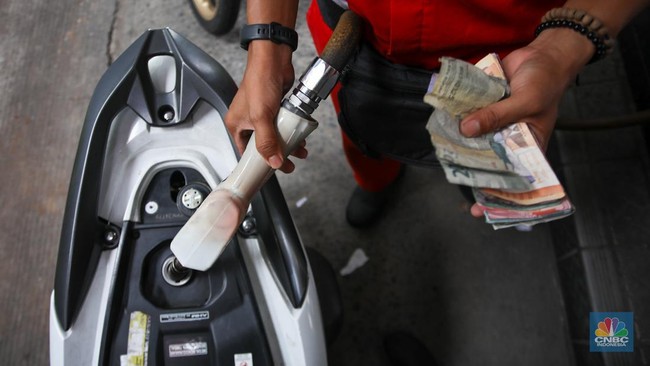
Continuing the targeted fuel subsidy policy. To improve subsidy spending efficiency, the distribution of subsidised fuel will be carried out with consumer registration. To ensure successful consumption control, synergy and coordination between ministries/agencies, local governments, and other relevant institutions are required.
Continuing the transformation of the targeted 3kg LPG subsidy to be based on beneficiaries and integrated with accurate beneficiary data. This policy includes, among other things, technology-based data collection of 3kg LPG users so that users are those who have been registered and listed in the National Socio-Economic Integrated Data (DTSEN). The implementation of this transformation will be carried out in stages, considering data readiness, infrastructure, and the economic and social conditions of the community.
- Electricity Subsidy Policy
Providing electricity subsidies to eligible groups. Eligible customer groups are classified into Households, small businesses and industries, social groups, government groups, and bulk and traction groups in accordance with applicable regulations and by considering the welfare status of the community.
Electricity subsidies for households are provided to poor and vulnerable households in accordance with integrated data (DTSEN). This policy is accompanied by a tariff adjustment for non-subsidised customers. This policy is an effort to improve targeting so that subsidies are given to entitled households.
Encouraging a more efficient and fair energy transition by considering economic, social, fiscal, and environmental aspects. The government is committed to reducing emission impacts through the use of clean and environmentally friendly energy. This is done particularly through the energy transition from fossil-based energy utilisation to new and renewable energy. This policy needs to be implemented carefully, considering various aspects, especially the condition of the electricity sector and fiscal capacity.