
Infrastructure Investment for Oil Pipelines in Gulf States Surges After Hormuz Blockade
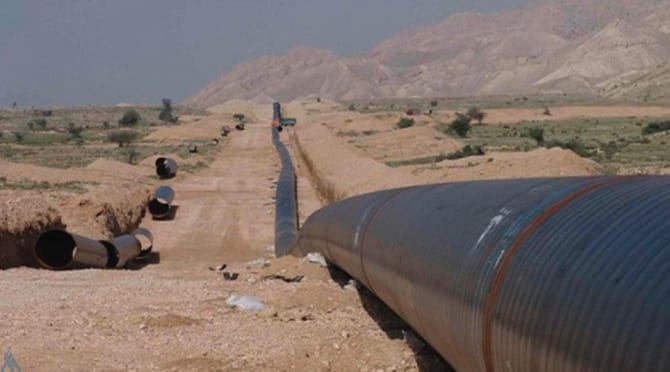
The Iran war has redrawn the global trade map and forced Gulf states to recalibrate their investment strategies, pouring capital into infrastructure ranging from energy pipelines to ports to cope with the fallout from the conflict. The war has exposed the Gulf states’ over-reliance on the Strait of Hormuz, previously a chokepoint for 20% of global oil flows but also for decades a target of disruption threats. With the strait practically blocked for most of the past six months, a wave of multi-billion-dollar investment commitments has emerged as Gulf energy exporters attempt to future-proof their economies now dealing with a severe slowdown.
Trade has been diverted to Saudi Arabia’s Red Sea ports and the eastern ports of the United Arab Emirates, but their capacity is smaller. Gulf governments are seeking ways to create permanent, integrated solutions to avoid using the Strait of Hormuz, according to an industry source who spoke on condition of anonymity due to the sensitivity of the matter.
Ports have emerged as a ‘very important priority’ for Gulf governments, including Saudi Arabia, a second industry source said. ‘If two years ago sport was the big talking point, I think for now, the next one or two years, they will be saying ports, ports, ports,’ the source said of Saudi Arabia. Abu Dhabi’s sovereign wealth fund, L’IMAD, said last week it plans to buy the remaining shares in AD Ports as it overhauls the company’s strategy. AD Ports operates ports in the UAE and around the world, but container handling volumes in the UAE, as well as bulk and general cargo volumes, fell by around two-thirds in the second quarter compared with a year earlier. The company said it was operating ‘amid what may be the most significant challenges in its 20-year history.’
Dubai’s DP World, one of the world’s largest port operators, also saw business decline in the first half. It is planning two container terminals in Fujairah, where the UAE is building a new oil pipeline that will double crude capacity to Fujairah when it comes online next year. DP World is also working on an inland container depot in the UAE. Zin Bekkali, chief executive of UK-based investment management firm Silk Invest, said Gulf governments have the capital to fund some or most of this accelerated infrastructure investment internally. ‘So infrastructure is clearly an area we think will benefit,’ Bekkali said.
Saudi Arabia has accelerated multi-billion-dollar plans to divert oil flows away from the Strait of Hormuz, including expanding crude pipeline capacity to the Red Sea west coast, according to sources cited by Reuters last month. This could potentially help neighbouring countries transport more oil without having to risk the strait.
Beyond shipping disruption, strikes on production facilities in the Gulf have significantly affected oil refineries, aluminium smelters and data centres, among others, while air traffic remains below pre-war levels, impacting tourism and business flows through the region. On the other hand, the war has burnished the reputation of Gulf hubs as safe havens. Qatar’s and Kuwait’s economies are expected to contract by more than 8% this year, according to a Reuters poll, while Saudi Arabia’s economy will grow by 1.4%, after 4.5% growth in 2025.
Qatar, one of the world’s largest exporters of liquefied natural gas before the Iran war, is entirely dependent on the strait to export LNG and also faces massive production shortfalls due to damage to its energy facilities. Kuwait Petroleum Corp is in discussions with Saudi Arabia and the UAE to expand their pipeline systems to accommodate its oil shipments. Iraq is seeking to expand its oil exports through Turkey’s Ceyhan port and aims to begin exporting oil through ports in Baniyas, Syria, and Aqaba, Jordan, involving new pipelines.
There has recently been a slight opening of trade routes in the Strait of Hormuz, but trade remains limited and there are no signs of an end to the conflict between Iran and the US even though hostilities have subsided. Control of the Strait of Hormuz is one of the most contested points of disruption, and various countries are working together to find new ways to reduce dependence on the strait. Turkey and Saudi Arabia plan to build a railway linking the two countries with Jordan and Syria within the next three or four years, Turkey’s transport minister said in June, adding that other Gulf states would join the project.
‘The recent Strait of Hormuz crisis has taught us a very important lesson that this vulnerability is real… and can happen at any time at any chokepoint,’ said Afaq Hussain, former senior fellow at the Middle East Initiative at the Atlantic Council. Building redundancy into trade and transport routes occurs even though it may initially appear uneconomical, he said.
Source: jawawa.id (https://jawawa.id/newsitem/infrastructure-investment-for-oil-pipelines-in-gulf-states-surges-after-hormuz-blockade-1788018614)
Originally published by energyworld.co.id (https://energyworld.co.id/2026/08/29/investasi-infrastruktur-untuk-jalur-pipa-minyak-di-negara-negara-teluk-meningkat-setelah-perang-iran/), translated from Indonesian