
Infrastructure footprints shaping the face of the capital over five centuries
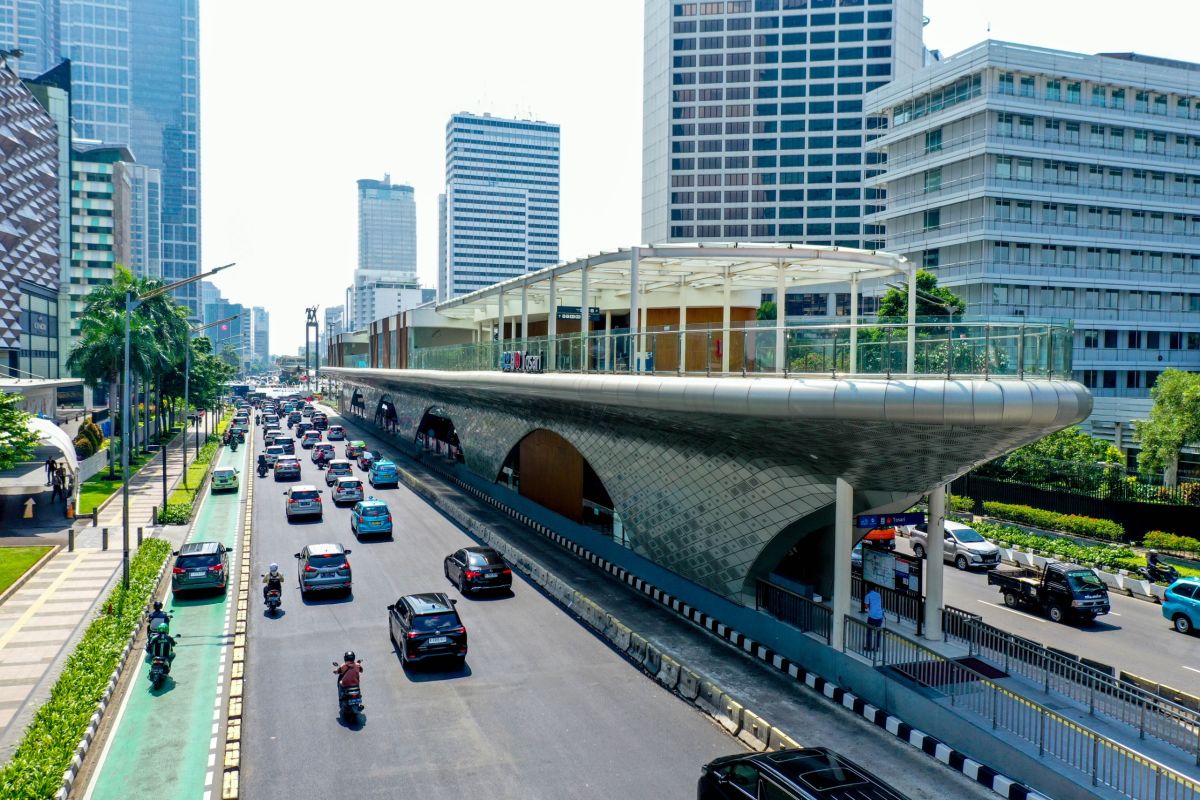
Jakarta — The development journey of Jakarta, which is currently transforming into a modern and sustainable global city, cannot be separated from various infrastructure works that support mobility, connectivity, productivity, and the quality of life of the community.
One project touted to be a major lever for urban connectivity is the Jakarta LRT Phase 1B Velodrome-Manggarability project. This Rp4.1 trillion project, owned by PT Jakarta Propertindo (Perseroda), will connect East Jakarta and Central Jakarta while strengthening intermodal integration at Manggarai Station, the largest transport hub in Indonesia. The presence of this line is expected to further encourage the public to shift to public transport, reduce congestion, increase productivity, and support carbon emission reduction targets in the metropolitan area.
Speaking in May 2026, the Director of Operations II of Waskita Karya, Paulus Budi Kartiko, stated that the construction realisation of the project within Waskita’s scope—covering civil, rail, system, and operational integration—has reached 92.67 per cent. Regarding contributions, Waskita Karya’s footprint in Jakarta’s development began in 1973. For over five decades, the company has delivered various infrastructures that are now part of the community’s daily life, ranging from public transport facilities, skyscrapers, and healthcare facilities to business centres and buildings with historical and social value for the nation.
One work that has become a new icon of Jakarta’s public space is the Transjakarta Tosari Bus Stop. Located in the Bundaran Hotel Indonesia (HI) area, the bus stop, designed to resemble a cruise ship, functions not only as a modern transport hub but also as a favourite destination for enjoying the panorama of central Jakarta. According to Waskita Karya’s Corporate Secretary, Ermy Puspa Yunita, the Tosari stop demonstrates that modern infrastructure must not only be functional but also capable of providing new experiences for the public.
This sentiment is shared by Andre (23), a freelancer at a research firm in Jakarta, who considers the stop an ideal location to enjoy the city’s evening atmosphere while viewing the flow of vehicles from above. Beyond Tosari, several strategic stops such as Dukuh Atas 1 and Cikoko, which are integrated with the LRT Jabodebek network, have also been revitalised to support urban transport transformation. These stops are now equipped with disability-friendly facilities, commercial areas, and more comfortable public spaces as part of efforts to create an inclusive and sustainable transport system.
Not far from the Dukuh Atas 1 stop stands the BNI City Station, which serves as one of the main gateways for commuters travelling to Soekarno-Hatta Airport. Waskita notes that this infrastructure strengthens intermodal integration while supporting the mobility of millions of citizens and business actors annually. Nearby, in Setiabudi, South Jakarta, the Dukuh Atas pedestrian deck is currently under construction. This pedestrian pathway is designed to be safely and comfortably accessible to all users, including persons with disabilities.
Targeted for completion by the end of 2028, this infrastructure will strengthen the integration of six transport modes: MRT Jakarta, LRT Jabodebek, KRL Commuter Line, Soekarno-Hatta Airport Rail, Transjakarta, and Jakarta LRT. Furthermore, on the 499th anniversary of Jakarta on 22 June 2026, the integrated Jakarta International Stadium (JIS)-Ancol infrastructure, which includes the JIS KRL Station and the Pedestrian Bridge (JPO) connecting the Ancol Gate to JIS, was officially inaugurated.