
Industry Urged to Adopt AI and Drones for the New Era of Sustainability Reporting
President University, the University of Southern Queensland (UniSQ), Australia, and Jababeka are encouraging the industrial sector to strengthen sustainability management and reporting through the use of technology, including Artificial Intelligence (AI) and drones.
The collaboration is supported by an Indonesia-Australia cooperation grant worth approximately AUD 42,000 from the Australian Government through the Department of Foreign Affairs and Trade (DFAT), awarded to President University and UniSQ. Running from July to September 2026, the programme brings together higher education, technology, and industry to promote more measurable environmental management.
Sustainability is no longer sufficient to be viewed merely as a company’s effort to reduce the environmental impact of its operations. Companies also need to understand how environmental changes and conditions around them can affect worker health, operations, compliance, reputation, and business continuity. For this reason, a sustainability approach must consider the two-way relationship between companies and the environment.
Sustainability reporting requires accountable data
The need for environmental data is also linked to developments in sustainability reporting in Indonesia. On 3 September 2026, President University held a workshop for industry players on developments in sustainability reporting and the use of technology to support environmental management.
One of the topics covered included PSPK 1 and PSPK 2, Indonesia’s sustainability reporting standards which adopt IFRS S1 and IFRS S2. The ability to generate measurable environmental information has become increasingly important with the application of sustainability-based accounting standards that must be used from 2027.
Prof. Syed Shams of the University of Southern Queensland emphasised the importance of environmental and sustainability disclosure for the business world. “Previous research shows that credible environmental and sustainability disclosure is associated with higher company valuations, lower financing costs, and stronger expectations of future performance,” he explained.
As environmental management requirements develop, industry readiness to understand and apply regulations has become increasingly important. One of these is Minister of Environment/Environmental Control Agency Regulation Number 5 of 2026, which was discussed at the workshop. Istringani, S.T., M.Si., Head of Regulatory Compliance for the Estate (ERC) and Senior Manager for Water and Environment at PT Jababeka Infrastruktur, highlighted the application of this regulation in industrial operations and the importance of ensuring compliance with environmental provisions.
In this context, the use of technologies such as AI and drones can help industry obtain more accurate and measurable environmental data as the basis for sustainability management and reporting.
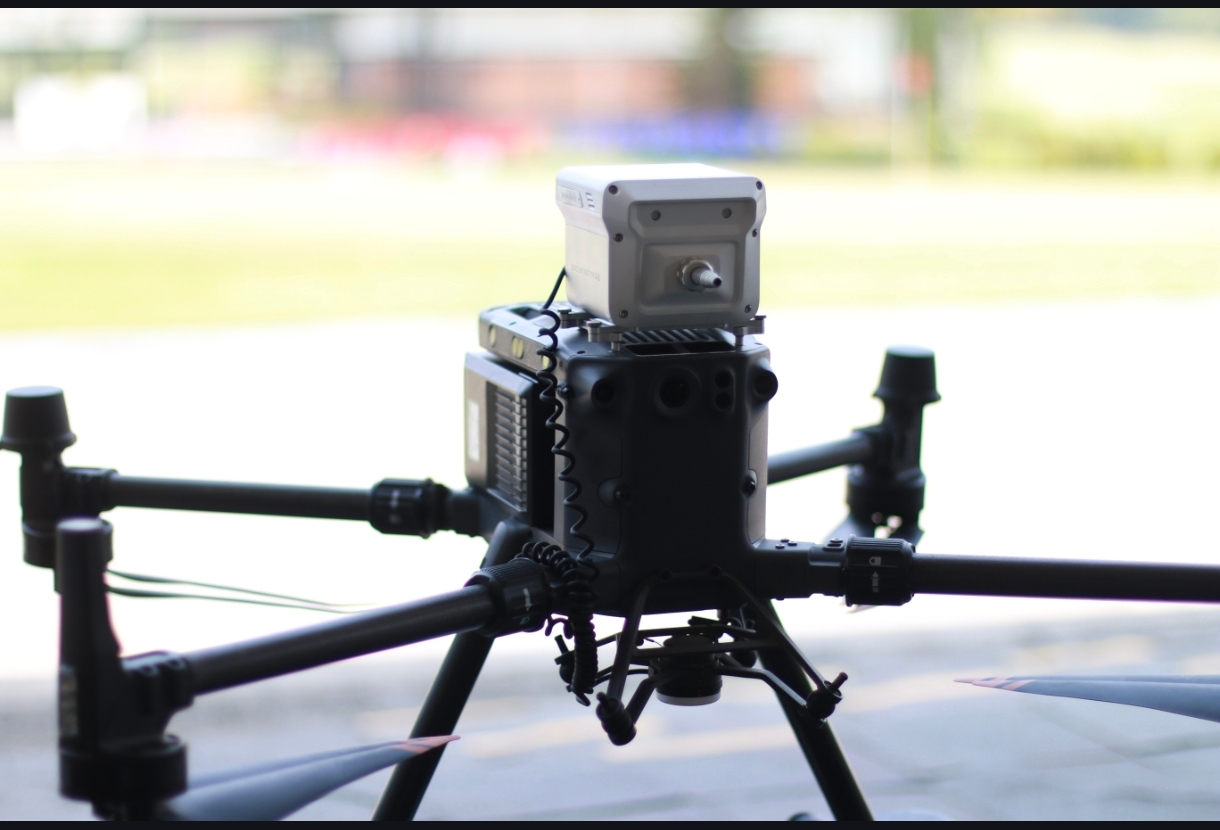
Technological developments allow industry to monitor environmental conditions more broadly and quickly. Small drones can carry gas and particulate sensors to take air samples at various locations and altitudes within minutes. This technology can be used to monitor emissions, pollutant dispersion, air quality, and environmental conditions in hard-to-reach areas.
Unlike fixed monitoring stations, which read conditions at a single point, drones can move across various locations and altitudes to help identify areas with higher pollution levels. With AI support, this data can be analysed to identify patterns and changes in environmental conditions more systematically. This broader and more measurable data helps companies build a stronger basis for assessing environmental risks, making decisions, and supporting sustainability reporting.
Data produced by drones can help industry identify environmental changes and conditions that could potentially affect business activities. Prof. Zahra Gharineiat of the University of Southern Queensland stressed that such data can serve as the basis for taking action and being accountable for environmental management. “Measurable and repeatable data transforms the assumption of good air quality into information that can be used to take action and account for environmental management,” she said.
This data can also serve as a basis for understanding its impact on business decisions. Dr. Supeni Mapuasari, Head of the Accounting Study Programme at President University, explained that climate change can affect companies’ financial conditions, including through risks to operations, assets, investments, and cash flow. “Therefore, measurable environmental data is important so that companies can understand risks, make the right decisions, and link this to sustainability reporting,” she explained.
Introducing new expertise to students
On the education side, the International Young Essay Competition attracted more than 200 teams from 14 countries, followed by a workshop and the announcement of winners on 4 September 2026. The event introduced students to technological developments and sustainability practices increasingly needed in the working world, while offering insight into new fields of expertise they can prepare for before entering professional life.
The collaboration between President University, the University of Southern Queensland, and Jababeka brings together academic expertise, technology, and industry needs to promote data-driven sustainability practices. The use of AI and drones helps companies obtain broader and more measurable environmental information as the basis for risk management, decision-making, and sustainability reporting.
Source: jawawa.id (https://jawawa.id/newsitem/industry-urged-to-adopt-ai-and-drones-for-the-new-era-of-sustainability-reporting-1789444286)
Originally published by Media Indonesia (https://mediaindonesia.com/ekonomi/933502/dorong-industri-gunakan-ai-dan-drone-untuk-hadapi-era-baru-pelaporan-keberlanjutan), translated from Indonesian