
Industry Needs Shift, Product Design Students Urged to Be More Adaptive
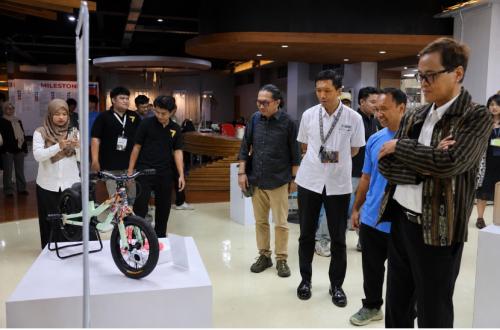
Technological changes, market needs, and the demands of the creative industry mean product design is no longer solely about aesthetics. Designers are now required to understand user needs, develop research-based solutions, and produce goods with added value and market potential. These demands are pushing higher education institutions to strengthen product design learning to bring it closer to industrial issues. One such effort was undertaken by the Product Design Study Programme at Mercu Buana University through the Innovartion #7 and Panen Karya 4 exhibition at the Indonesia Design Development Centre (IDDC), Jakarta, from 3 to 6 August 2026. The exhibition featured dozens of student works developed through approaches encompassing function, aesthetics, technology, ergonomics, sustainability, and local cultural potential. The works on display included furniture, lifestyle products, fashion and accessories, packaging, educational games or board games, and various products based on a human-centred design approach. Junaidi Salam, Head of the Product Design Study Programme at Mercu Buana University, stated that students need the ability to develop ideas while understanding industry needs and technological changes. “This exhibition is not merely a showcase of final coursework, but a space for students to communicate ideas, test concepts, receive appreciation and feedback from the public and practitioners, and build confidence as prospective professional designers. Each exhibited work has a story, process, and innovative value demonstrating the students’ ability to solve various problems through a design approach,” Junaidi said in a press release on Wednesday (12/8/2026). According to Junaidi, this process is crucial so that students do not stop at the ability to produce works, but are also capable of developing designs relevant to user needs and the professional world. The exhibition serves as a space to connect student ideas with input from practitioners and industry players. Holding the exhibition at the IDDC, under the Directorate General of National Export Development at the Ministry of Trade of the Republic of Indonesia, also opened opportunities for students to view design needs from an industry and market perspective. Ari Satria, Director of Export Development for Services and Creative Products at the Ministry of Trade, said collaboration between universities, the government, and industry is necessary to build a design ecosystem capable of enhancing the competitiveness of Indonesian products. The connection with industry was also evident through the series of activities accompanying the exhibition. Besides showcasing works, the event featured a Design Review Talkshow and Professional Practice Experience for IDDC Product Designers, as well as a Packaging Design Clinic with IDDC practitioners. The Packaging Design Clinic discussed export-oriented packaging standards for MSME products. The material provided students with an insight into design requirements that are not only visually appealing but must also consider standards, function, market needs, and opportunities for products to enter wider markets. Agus Budi Setyawan, Dean of the Faculty of Design and Creative Arts at Mercu Buana University, said the exhibition is a form of academic accountability while demonstrating students’ ability to produce works with the potential to be developed into value-added products. Support for product design development also came from associations and universities. The event opening was attended by Imam Setiobudy, Chairman of the Indonesian Industrial Product Designers Alliance (ADPII) DPD Jakarta Chapter; Guguh Sujatmiko, Chairman of the Indonesian Industrial Product Design Study Programme Forum; Ira Handayani Samri, former Chair of the Indonesian Furniture Designers Association (HDMI) and Head of the Product Design Study Programme at Paramadina University. Also in attendance were Mahawira Singh Dillon, President of the Indonesian Board Game Industry Activists Association (APIBGI), and Dhientia Andani, Head of the Product Design Study Programme at Prasetiya Mulya University. Erna Setiany, Vice Rector I for Learning and Research at Mercu Buana University, and Irmulansati Tomohardjo, Vice Rector III for Student Affairs and Cooperation at Mercu Buana University, also stressed the importance of student creativity in producing graduates who are adaptive and globally competitive. For the Product Design Study Programme at Mercu Buana University, technological developments and changing industry needs mean design skills must be continuously updated. Students need to understand the research process, problem-solving, product development, and how to communicate ideas to users and potential industry partners. Through Innovartion #7 and Panen Karya 4, the university seeks to connect the learning process with industry needs. The exhibition also serves as a space for students to test ideas, gain feedback from practitioners, and understand how a design concept can be developed into a product with economic value and market opportunities.