
Industry Ministry to Boost Halal Sector Competitiveness via Halal Indo 2026 Expo
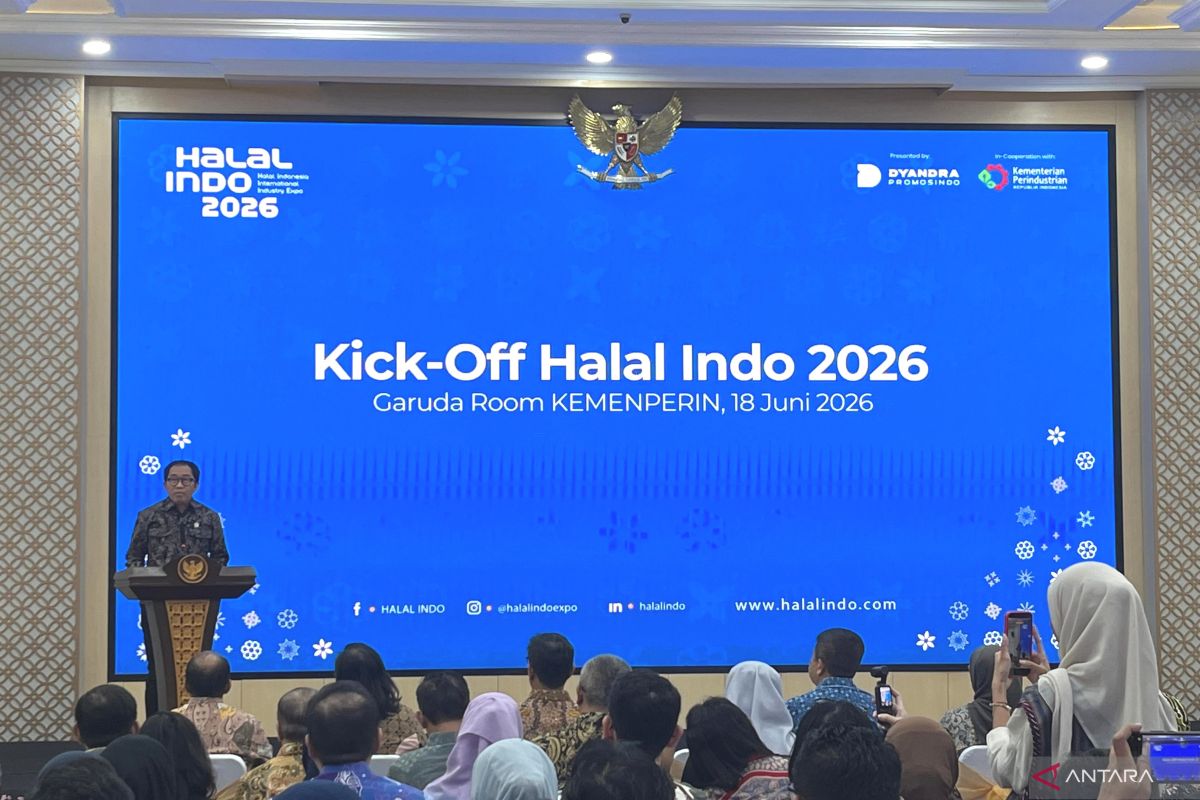
The Ministry of Industry (Kemenperin) is strengthening the competitiveness of the national halal industry through ecosystem reinforcement and market access expansion via the Halal Indo 2026 exhibition, scheduled for 24-27 September 2026 at ICE BSD City, Tangerang, Banten. Vice Minister of Industry Faisol Riza stated during the Halal Indo 2026 kick-off event in Jakarta on Thursday that the halal industry plays a crucial role in supporting national economic growth while improving Indonesia’s position in the Global Islamic Economy Indicator (GIEI). “We continue to accelerate the strengthening of the national halal value chain through upstream to downstream industry development, facilitation of halal certification, strengthening of halal industrial infrastructure, and synergy with various stakeholders. These steps serve as the foundation to enhance the competitiveness of Indonesian halal products in the global market,” he said. According to Faisol, strengthening the halal industry ecosystem is a government priority, particularly ahead of the implementation of the second phase of mandatory halal certification in October 2026. The ministry is therefore enhancing the readiness of the industrial sector through socialisation programmes, mentoring, technical guidance, and halal certification facilitation. These efforts aim to ensure that industry players not only comply with regulatory obligations but also leverage halal certification as an instrument to boost business competitiveness. He explained that the biggest challenge in implementing the second phase of mandatory halal certification lies in the broad scope of industrial sectors required to meet certification obligations and the importance of ensuring comprehensive halal supply chain readiness. Beyond reinforcing industry compliance with halal regulations, the ministry is also paying special attention to Small and Medium Industries (IKM) through various mentoring programmes and halal certification facilitation. These measures are expected to improve product quality, broaden market access, and strengthen the connectivity of IKMs with the national halal industry supply chain. The ministry is also continuing to promote the development of Halal Industrial Estates as supporting infrastructure that enables businesses to meet halal standards more efficiently while increasing the investment appeal of the halal industrial sector. Furthermore, the ministry noted that cumulatively, as of the first quarter of 2026, the number of halal certificates in the halal industry sub-sector has reached 2,662,607 certificates. This achievement is dominated by the halal food industry with 2,314,614 certificates, the halal beverage industry with 338,757 certificates, and the chemical and pharmaceutical sector with 5,590 certificates. Additionally, the number of certified halal products has reached 5,014,222 products. “This achievement reflects the growing commitment of industry players to meet halal standards, while providing halal assurance and increasing public trust, which will ultimately strengthen the competitiveness of national products,” he said.