
Industry Ministry Stresses Strong Optimism Despite Manufacturing Challenges
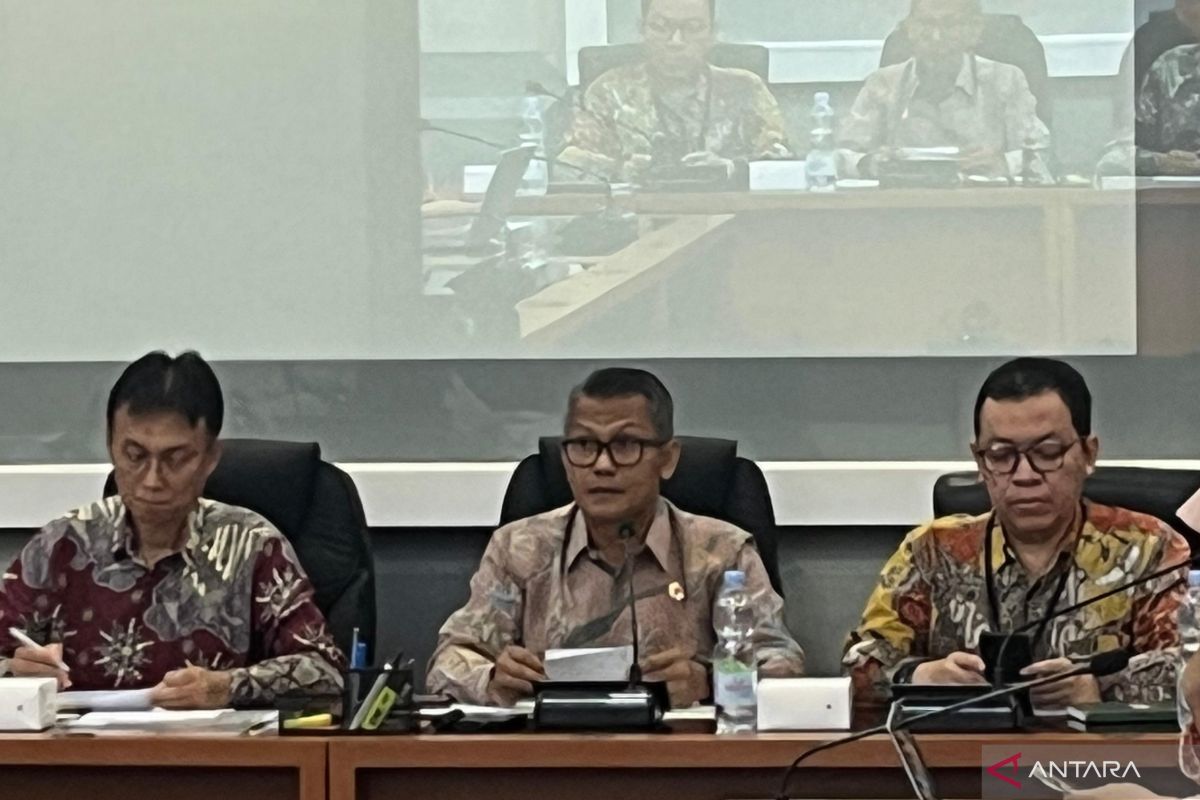
Jakarta (ANTARA) - The Ministry of Industry has emphasised that optimism among national manufacturing players remains intact, even as the sector faces increasingly complex challenges on both the production and demand sides.
Ministry Spokesperson Febri Hendri Antoni Arif stated in Jakarta on Tuesday that this optimism is reflected in the Industrial Confidence Index (IKI) for June 2026, which remained in expansionary territory at 52.90. Despite a 0.66-point slowdown compared to May 2026, the IKI reading above the 50-point threshold indicates that national manufacturing activity is still growing amidst global and domestic economic dynamics.
According to him, industrial conditions in June 2026 were more challenging than the previous month. While pressure in May mainly stemmed from the production side, in June, industry players also began to face a slowdown in demand. “The national manufacturing industry in June faced more complex challenges than the previous month. Pressure was not only felt on the production side but also began to be felt on the demand side. Nevertheless, the industrial sector continues to show strong resilience, so national manufacturing activity remains in an expansionary phase,” Febri said.
He explained that from the production side, the industry is still grappling with rising prices of imported raw materials due to geopolitical conflicts in the Middle East, which have driven up global energy prices. The weakening of the rupiah exchange rate has also increased the cost of procuring imported raw materials, adding to the production burden. Additionally, power outages in several industrial estates during June disrupted production processes, especially for sectors dependent on electricity supply.
“The power outages that occurred in several industrial estates forced some companies to halt their production processes during the disruption. This condition certainly affected the operational efficiency of the industry,” he revealed.
Pressure also came from the rising price of industrial gas, particularly gas from LNG regasification. Therefore, the Ministry of Industry appreciates the efforts of Deputy Speaker of the House of Representatives, Sufmi Dasco Ahmad, who successfully oversaw a reduction in the regasification gas price from 23 US dollars per MMBTU to 13 US dollars per MMBTU. “The reduction in the regasification gas price is a breath of fresh air for the industry, especially for those using gas as an energy source or production raw material. This policy is expected to increase the competitiveness of national industries, especially those included in the Certain Natural Gas Price (HGBT) scheme,” he explained.
On the demand side, the Ministry of Industry observed that rising prices of several household consumer goods and adjustments to non-subsidised fuel prices have begun to affect the public’s purchasing power for manufactured products. However, the government believes this pressure can still be managed, as inflation is expected to remain within the national target of 2.5 percent, plus or minus 1 percent. “We appreciate President Prabowo’s policy of maintaining subsidised fuel prices. This policy makes a significant contribution to keeping inflation under control while preserving people’s purchasing power,” he said.
Amidst these challenges, the export outlook for manufacturing continues to show a positive trend. Demand from several non-oil and gas export destination countries is still increasing, serving as one of the main pillars supporting the performance of the national industry. “We see that non-oil and gas export demand is still growing positively. Amidst various global challenges, this condition provides optimism that Indonesia’s manufacturing industry still has opportunities to continue developing,” Febri stated.
He added that the large domestic market is a key strength of the national industry. Various government priority programmes, such as the Free Nutritious Meals programme, the Red and White Village Cooperatives, the implementation of the mandatory B50 biodiesel, and the Fishermen’s Village Programme, are believed to boost demand for domestic manufactured products. “Government spending through various priority programmes such as the Free Nutritious Meals, the Red and White Village Cooperatives, the implementation of the mandatory B50 biodiesel, and the Fishermen’s Village Programme will have a multiplier effect on increasing demand for national manufactured products,” he said.
According to Febri, the combination of a large domestic market, government spending support, and positive export prospects forms a crucial foundation for the manufacturing industry to survive and grow amidst global uncertainty. “Therefore, the Industrial Confidence Index for June 2026 was recorded at 52.90. This value remains above the 50-point level, indicating that Indonesia’s industrial manufacturing activity is still in an expansionary phase. This shows that the optimism of industry players is still maintained, even though the challenges faced are increasingly complex,” he concluded.
Going forward, the Ministry of Industry will continue to anticipate various challenges, ranging from inflationary pressures, rising benchmark interest rates, and a weakening rupiah exchange rate, to increasing energy costs and the potential impact of El Niño on several industrial sectors. To maintain the competitiveness of the national industry, the ministry will strengthen policies covering the smooth supply of raw materials, strengthening the domestic market, accelerating downstream processing, increasing industrial productivity, and expanding export market access.