
Industry Ministry stresses manufacturing remains the main driver of Indonesia's economy
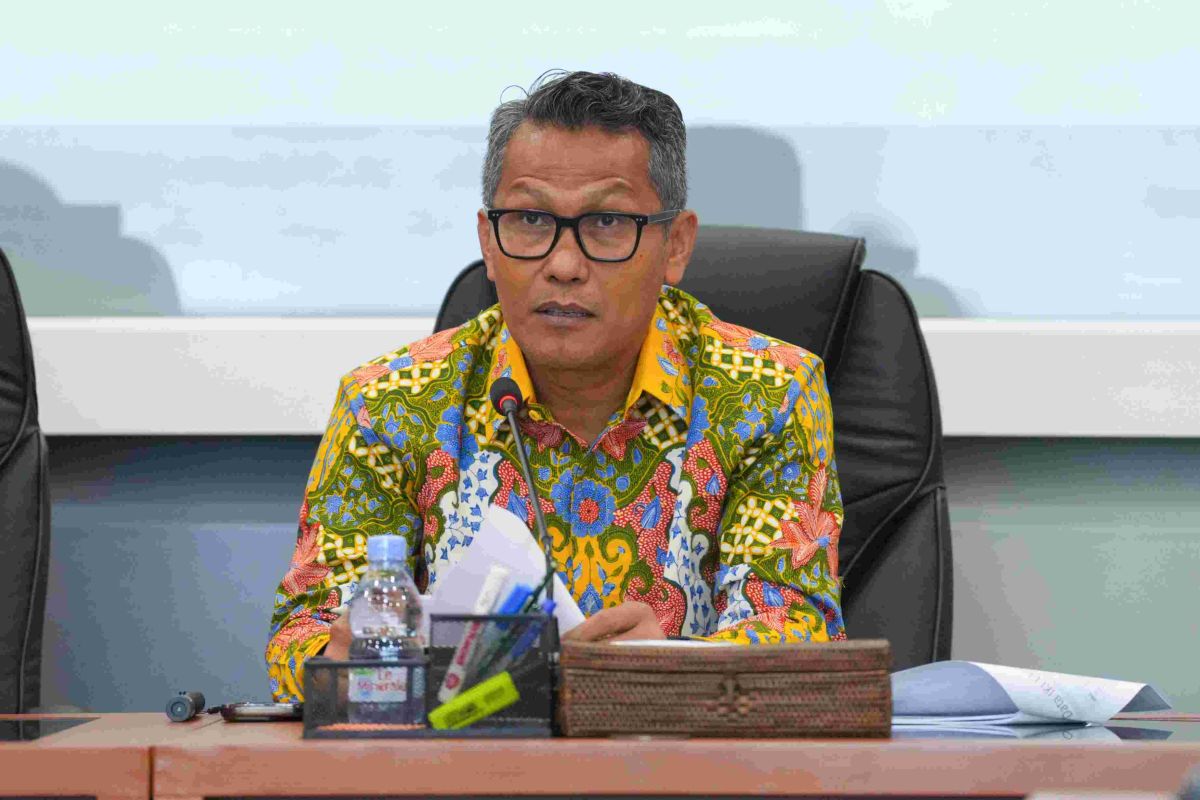
Manufacturing remains capable of maintaining its employment levels through to 2025 and is projected to grow at an average of 2.78 percent per year. In Jakarta, the Ministry of Industry (Kemenperin) emphasised that the manufacturing sector remains the primary driver of the national economy amid a range of global challenges. Febri Hendri Antoni Arif, a spokesperson for Kemenperin, in a statement to reporters in Jakarta on Friday, said the manufacturing sector remains the largest contributor to the national economy.
Based on data from the Indonesia Central Statistics Agency (BPS), the contribution of the Gross Domestic Product (GDP) of the manufacturing sector to national GDP shows an increasing trend from Q2-2022 to Q1-2026, rising from 17.92 percent to 19.20 percent.
Febri noted that those who claim Indonesia is deindustrialising misunderstand the BPS GDP data, particularly the time-series data for manufacturing GDP for 2005-2025. He explained that the concept and definition of manufacturing, or the Indonesia Standard Industrial Classification (KBLI), changed in certain periods. In 2000, the manufacturing sector still included the subsectors of water supply, waste management, and recycling, the information and communications subsector, and other services subsectors. However, in 2010, these three subsectors were separated into their own sectors within the KBLI used by BPS, so manufacturing GDP calculations no longer included those subsectors.
As a result of the separation, the value of manufacturing GDP and its share of national GDP declined statistically. Additionally, the GDP calculation method changed from a 2000 series based on producer prices to a 2010 series based on basic prices. With these changes in concept, definition, and methodology, Febri considers the 2005-2025 manufacturing GDP data not directly comparable.
Beyond GDP contribution, Kemenperin also notes that there has been no shift of labour from the manufacturing sector to other sectors, particularly services. In the post-COVID-19 period from 2021 to 2025, employment in the manufacturing sector rose from 18.7 million to 20.3 million, an 8.63 percent increase. The national labour force also grew by 11.82 percent in the same period. This indicates that manufacturing continues to expand and absorb new workers.
‘The manufacturing industry is still able to maintain its employment levels through to 2025 and even grow at an average rate of 2.78 percent per year. There is no shift or movement of manufacturing labour out of this sector. Jobs in manufacturing remain competitive and sustainable in the eyes of workers and prospective entrants to the sector,’ Febri said.
Kemenperin also notes another important achievement: manufacturing growth has again surpassed national economic growth after 13 years. In 2025, manufacturing growth reached 5.30 percent, higher than the national economy’s growth of 5.11 percent. ‘The growth of manufacturing above national economic growth has been achieved in the last 13 years thanks to the direction of President Prabowo under Astacita, which is supportive of and protects domestic industry and its workers,’ Febri said.
On the investment front, as of 23 April 2026, 633 companies had reported new production facility developments, with total investment valued at Rp418.62 trillion. The investments could absorb up to 219,684 workers.
Source: jawawa.id (https://jawawa.id/newsitem/industry-ministry-stresses-manufacturing-remains-the-main-driver-of-indonesias-economy-1779542082)
Originally published by Antara (Indonesian) (https://www.antaranews.com/berita/5578377/kemenperin-tegaskan-manufaktur-tetap-jadi-penggerak-ekonomi-ri), translated from Indonesian