
Industry Ministry Responds to Plans for Banning Cigarette Additives
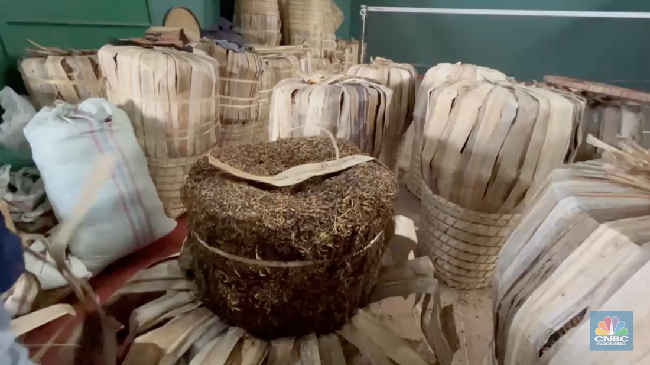
Jakarta, CNBC Indonesia - The government is urged to reconsider various plans to restrict the Tobacco Products Industry (IHT), from bans on cigarette additives to readjustments of nicotine and tar levels. Deputy Minister of Industry (Wamenperin) Faisol Riza believes that policies towards the tobacco industry cannot be decided unilaterally without considering their impact on the business sector and workforce.
“Yes, I think we have already conveyed to the relevant ministries that the tobacco products industry is a rather specific industry that has been running for quite a long time, even possibly older than the age of our Republic. It also absorbs a very large workforce, so things that should not disrupt the production and distribution processes of tobacco products so far should not be regulated in such a way,” Faisol said in Subang, quoted on Thursday (7/5/2026).
He emphasised that every new regulatory plan should be discussed with all stakeholders, including business actors who have been running the industry. Moreover, the tobacco products industry is a sector that has grown for a long time in Indonesia and has significant economic linkages from upstream to downstream.
Faisol reminded that the government already has standards regarding nicotine and tar levels that the industry has been implementing. Therefore, according to him, steps to revise regulations need to be based on clear evaluations.
“We see the rules that have been made, for example, in the Ministry of Industry regarding nicotine and tar standards, which can be referenced. It can be referenced that those rules already exist and have been implemented so far. And if there is an effort or plan to regulate again, it is best to conduct an evaluation,” he said.
He also highlighted the importance of a scientific basis before the government takes policies that could potentially change the governance of the national tobacco products industry.
“So including the additives mentioned earlier, there must be a strong, concrete, scientific evaluation basis. If that exists, go ahead. But do not make policies that could affect governance, especially those concerning millions of tobacco farmers and the governance of the tobacco products industry,” he stressed.
The latest spotlight emerged after the government floated the idea of banning additional flavouring substances in conventional cigarette products as well as electronic cigarettes, along with tightening regulations on nicotine and tar levels. This plan appears in Article 432 of Government Regulation Number 28 of 2024, which mandates the Ministry of Health to regulate the details of prohibited additives.
In the draft of its derivative regulation, several food-grade substances such as menthol, fruit extracts, sugar, and spices are included in the restriction list. This policy is seen as having a major impact on the national kretek industry, which has long relied on mixtures of additives as a characteristic of its products.
“The planned policy of banning additives and restricting tar and nicotine will kill the uniqueness of kretek, which greatly depends on domestic tobacco and cloves,” said Henry Najoan, General Chairman of the Indonesian White Cigarette Manufacturers Association (GAPPRI), in his statement, quoted on Thursday (7/5/2026).
The ban on additives, most of which come from spices, will also eliminate the identity of kretek if implemented. Henry emphasised that if this policy is enforced, the effects will be fatal.
“Without the unique taste, kretek products will be finished. This is not just a matter of technical production, but the loss of livelihoods for millions of tobacco, clove farmers, and hundreds of thousands of hand-rolling workers,” he continued.