
Industry Ministry proposes Rp1.59 T additional budget to boost value-added programmes
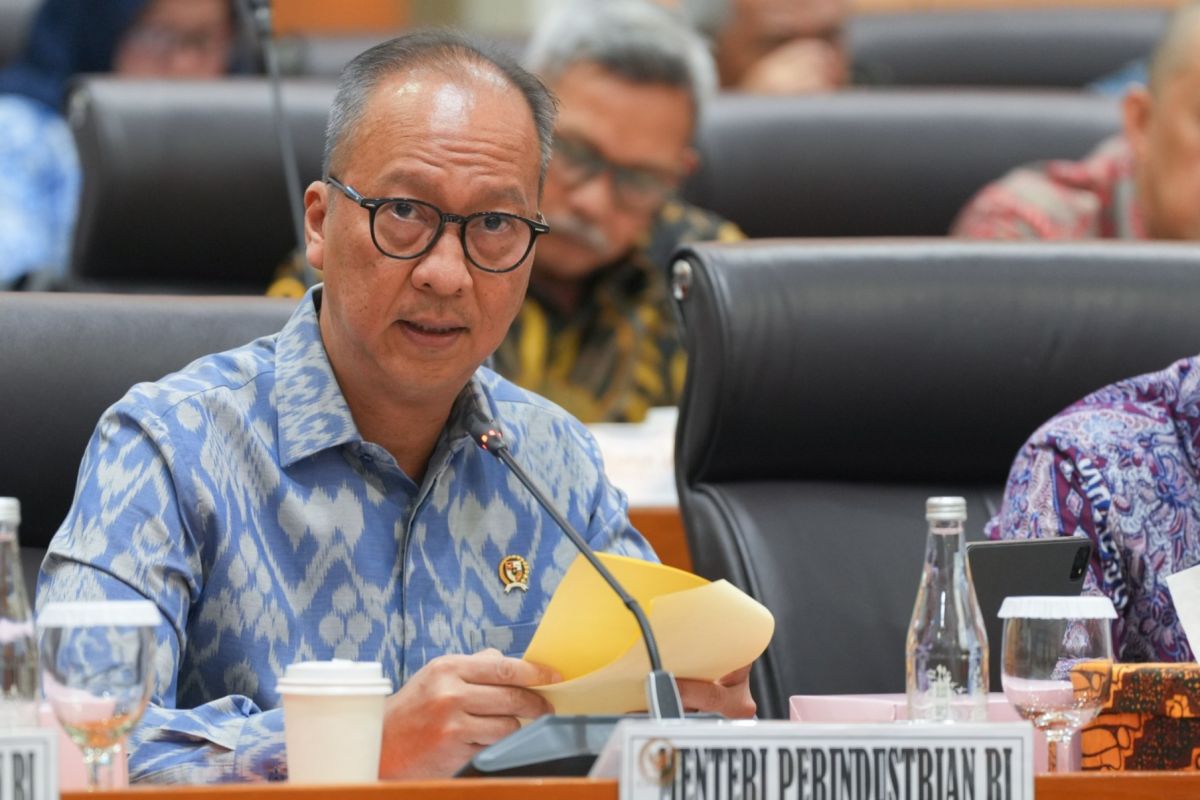
The Ministry of Industry (Kemenperin) has proposed a budget increase of Rp1.59 trillion for 2027, with a primary focus on strengthening programmes that provide added value and boost the competitiveness of the national industry.
Minister of Industry Agus Gumiwang Kartasasmita, in a statement confirmed in Jakarta on Wednesday, stated that the proposed additional budget is a strategic necessity to ensure the manufacturing sector can achieve the national development targets set by the government.
“This additional budget of Rp1.59 trillion is directed entirely towards strengthening programmes that provide added value and increase national industrial competitiveness. The focus includes strengthening small industries, developing industrial human resources, downstreaming, restructuring industrial machinery and equipment, and strengthening the national industrial ecosystem,” said the Minister.
Agus explained that the additional budget proposal is being submitted amidst Kemenperin’s 2027 indicative ceiling of Rp2.01 trillion, which represents a decrease of approximately 19.51 per cent compared to the initial ceiling for 2026.
Meanwhile, the need for basic operational expenditure, including personnel costs and government service operations, continues to rise, thereby limiting the fiscal space available for industrial development programmes.
Nevertheless, Kemenperin remains committed to adjusting policies and budget allocations effectively to ensure national industrial development targets are met.
“Budget politics is dynamic. However, as part of the government, we are obliged to support all of the President’s priority programmes. With the available budget, we must sharpen our programmes and allocations objectively so that industrial development targets can still be achieved optimally,” he said.
According to Agus, the support from Commission VII of the House of Representatives (DPR RI) for strengthening small industries aligns with the government’s policy direction, which places the people’s economy as a national development priority.
Therefore, a large portion of the proposed additional budget will be used to strengthen the small industry sector through empowerment programmes, business capacity building, expansion of market access, and the fostering of new entrepreneurs.
“I strongly agree that the additional budget should be focused on small industry development. This is in line with the President’s direction, which places the people’s economic sector as one of the national development priorities. Small industries are an important engine of the economy that must continue to be strengthened,” he emphasised.
A number of priority programmes proposed in the additional budget include the restructuring of industrial machinery and equipment, facilitating product development and market access for small and medium industries (IKM), fostering new entrepreneurs in small industries, natural resource-based downstreaming, the procurement of testing equipment to support the implementation of Indonesian National Standards (SNI), and strengthening industrial vocational education and training.
Furthermore, Minister Agus also explained the positive developments in the national electric vehicle industry. According to him, several domestically produced electric vehicles now have a Domestic Component Level (TKDN) of over 60 per cent.
“The development of the national electric vehicle industry shows very good progress. Currently, there are domestically produced electric vehicles that have achieved a TKDN of over 60 per cent. This shows that national industrial capacity is continuously increasing and is increasingly capable of meeting domestic market needs,” Agus stated.
However, he acknowledged that the challenge for the national industry still lies in the high dependency on imported industrial machinery and equipment. To address this, Kemenperin is encouraging the development of a ‘machine-making machine’ industry within the country.
“When we look at a factory with high TKDN, the production machinery often still comes from abroad. Therefore, the next challenge is how Indonesia can produce machines for its own industries. This is what we call the development of the machine-making machine industry,” he explained.
As a concrete step, Kemenperin has established the Indonesia Manufacturing Centre (IMC), which will serve as a hub for the development of manufacturing technology, industrial engineering, and national production machine innovation.
“We have prepared a roadmap and institutional framework focused on the development of the machine-making machine industry. Through this Indonesia Manufacturing Centre, we want to build national capability in producing industrial machinery and equipment so that dependency on capital goods imports can be continuously reduced,” the Minister added.
Kemenperin is optimistic that the strengthening of small industries, the increase in TKDN, the development of the electric vehicle industry, and the establishment of the machine-making machine industry will serve as essential foundations for accelerating national industrialisation while supporting the higher economic growth targets directed by President Prabowo Subianto.