
Industry Ministry maintains textile supply-demand balance to protect domestic industry
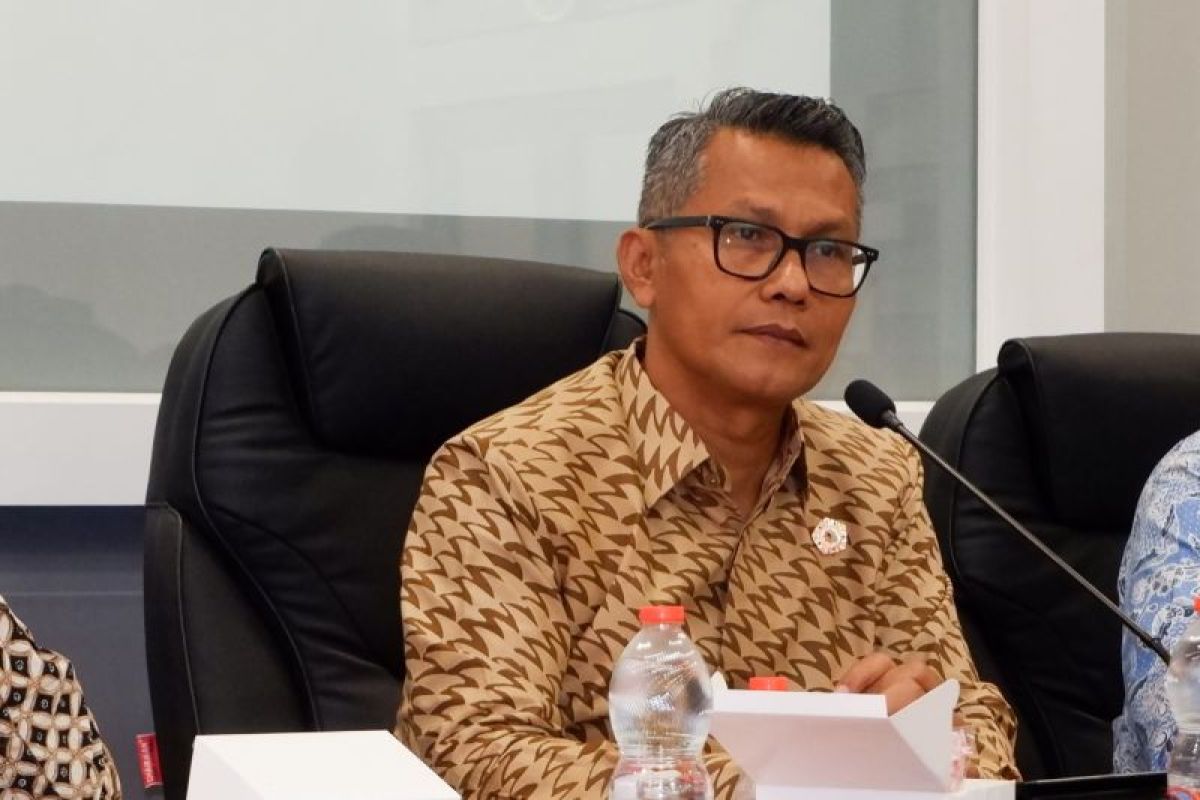
The Ministry of Industry (Kemenperin) has confirmed that its policy on regulating imports of textiles and textile products (TPT) is designed to maintain a balance between supply and demand while protecting the sustainability of domestic production.
Ministry spokesman Febri Hendri Antoni Arif said the prohibition and restriction (lartas) policy is not intended to hamper business activity, but rather to ensure that imported goods flow in line with domestic market needs.
“The principle of the Ministry of Industry is to maintain supply-demand balance — how much domestic demand there is and how much domestic industry is capable of meeting that demand,” Febri said in Jakarta on Monday.
He gave an example: if domestic market demand for downstream products reaches 100, while domestic industry can only supply 80, then the required import volume is just 20.
Import controls are necessary to prevent incoming goods from exceeding demand, which could potentially squeeze national industry.
“If the imports that come in are not 20, but are simply liberalised and 100 come in, making it 120, the domestic market becomes flooded. When the domestic market is flooded, that will depress demand and domestic industrial production,” he said.
According to Febri, the lartas policy is one of the instruments used by the government to maintain that balance. If the authority to regulate lartas is granted to the Ministry of Industry, the instrument will be used to ensure domestic industry retains room to grow.
“That is why the lartas instrument, if it is transferred from the Ministry of Trade to the Ministry of Industry, will be used by Kemenperin to control the supply-demand balance, so as not to burden industry, demand or domestic industrial production,” he explained.
Regarding concerns about restrictions on global textile imports, including premium or luxury goods, Febri stressed that the government continues to encourage the use of products that domestic industry is already capable of producing.
“As long as domestic industry can supply and produce those luxury goods, we invite the domestic market to buy products made in Indonesia,” he said.
According to him, purchasing domestic products delivers a greater economic impact because the added value remains in Indonesia. That added value includes corporate profits, tax revenue and wages for manufacturing workers.
“When we buy a domestic product, we help our brothers and sisters working in domestic manufacturing to keep their jobs and support their families,” Febri said.
In principle, he said, as long as a product — whether finished goods or intermediate goods — can already be produced domestically, the Ministry of Industry will strive to ensure that national industry remains protected.