
Industry Ministry Boosts Food SME Competitiveness Through Agro-Based Downstreaming
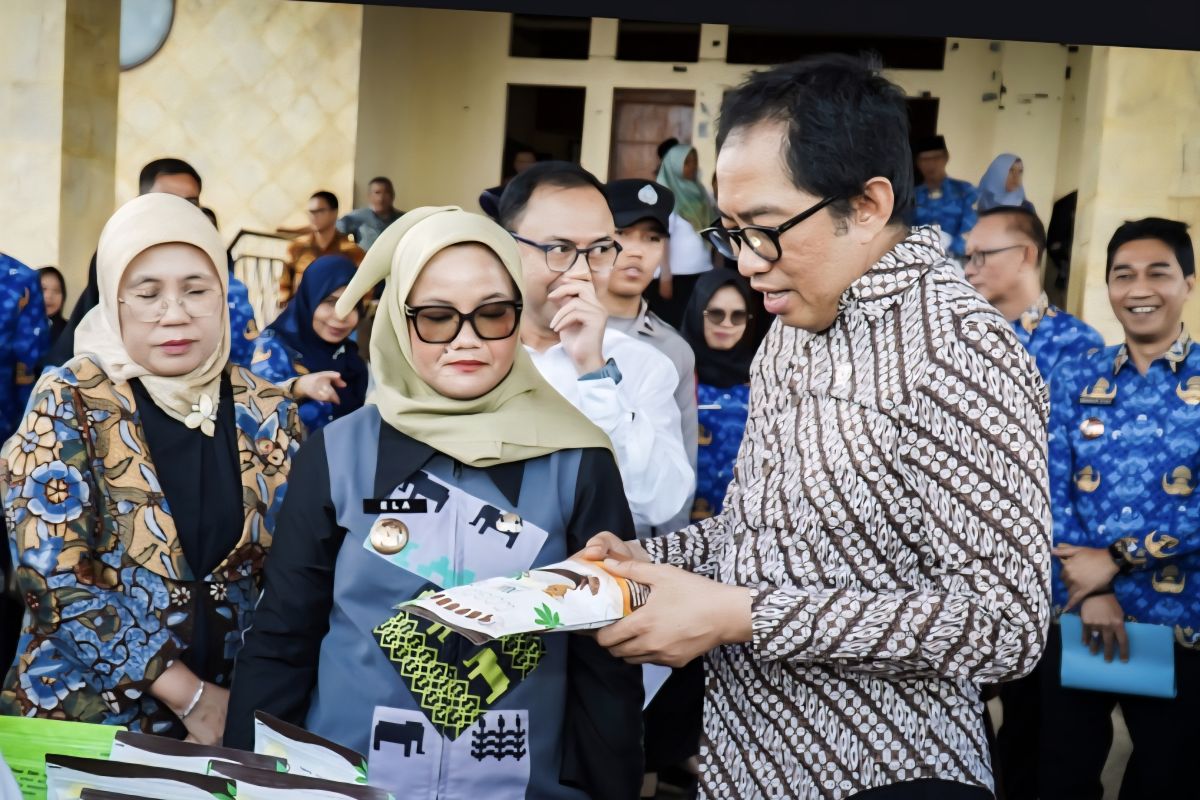
The Ministry of Industry (Kemenperin) is continuously boosting the competitiveness of small and medium industries (IKM) through the development of downstream processing based on agro-commodities into various higher value-added products.
“Among them is the cassava commodity, which serves as an intermediate product for various forward linkages in the downstream industry. Besides tapioca starch, cassava also has the potential to be developed into Modified Cassava Flour (MOCAF), modified starch, glucose, sorbitol, and other processed products,” said Deputy Minister of Industry Faisol Riza in Bandarlampung on Thursday.
He stated that one form of programme activity that has been carried out is the implementation of activities to strengthen agro-based downstream processing and improve the competitiveness of food SMEs in Lampung Province.
Faisol Riza revealed that cassava downstream processing plays an important role in supporting the national food diversification agenda, as mandated in Presidential Regulation Number 81 of 2024 concerning the Acceleration of Food Diversification Based on Local Resource Potential.
“Thus, downstream processing and food diversification are not two separate agendas but rather complement each other in realising a national food industry that is more resilient, competitive, and sustainable,” he explained.
The Deputy Minister also affirmed that to realise downstream processing, the government has prepared several strategic policies as a legal framework. The government has issued Minister of Trade Regulation Number 31 of 2025 concerning Amendments to Minister of Trade Regulation Number 18 of 2025, which specifically regulates and restricts cassava imports and their derivative products, including tapioca flour.
“Through this regulation, cassava imports can only be granted to importers holding a Producer Importer Identification Number, subject to a technical recommendation from the Ministry of Industry,” he added.
The government is committed to continuously strengthening protection for the domestic cassava industry while ensuring the availability of raw materials for the processing industry.
“Furthermore, we also have concrete instruments to protect the growth of the domestic cassava industry, including the implementation of the Indonesian National Standard and import approvals based on technical considerations,” he explained.
He continued that these policies are formulated with an upstream-downstream linkage approach, incorporating backward linkages to the raw material supply side and forward linkages to the processing industry side, by leveraging regional comparative advantages through food production centre zones.
“However, good regulations alone are not enough. Industrial competitiveness is also heavily determined by the ability of business actors to utilise more modern production technology,” he concluded.