
Industry Minister: Strengthening Human Resources Must Be Integral to Boosting Indonesia’s Industry
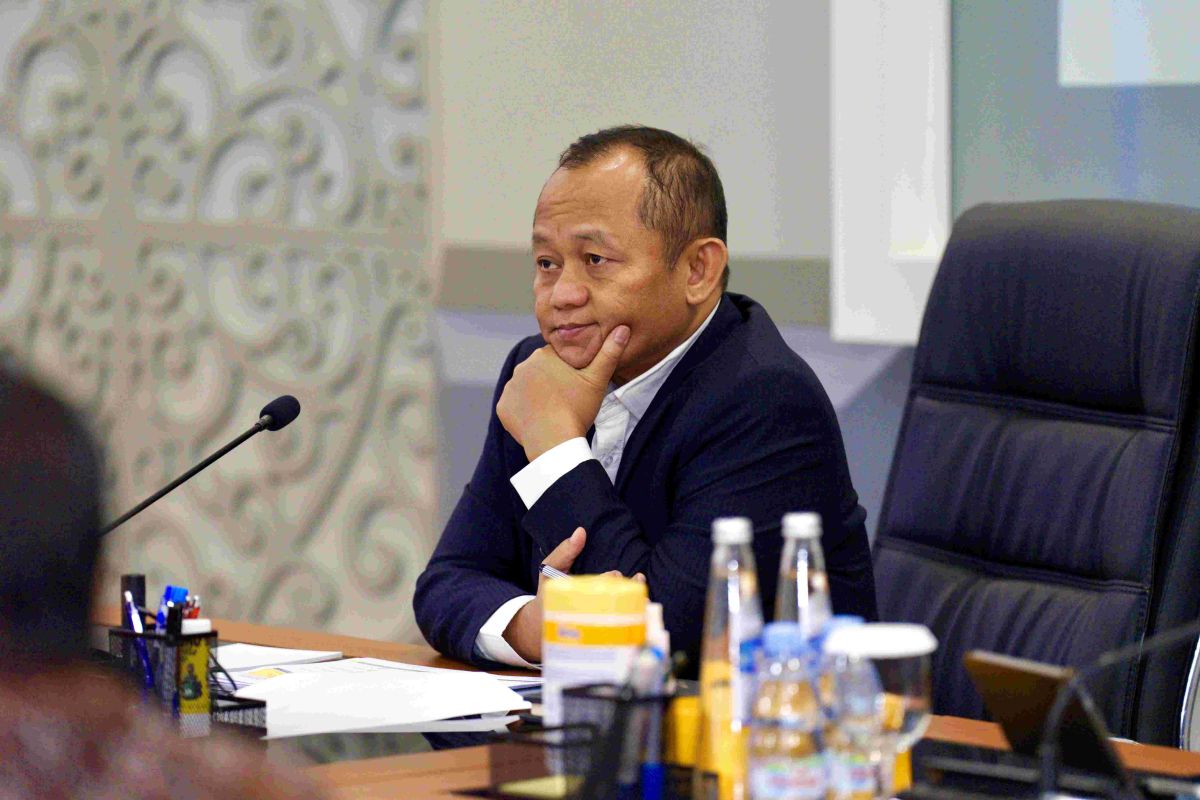
National industrial development requires not only investment and technology, but also a skilled, adaptable workforce whose capabilities match industry needs.
Jakarta (ANTARA) — Industry Minister Muhammad Sarmuji said strengthening human resources must be an integral part of national industrial development to improve labour productivity and manufacturing competitiveness.
“National industrial development requires not only investment and technology, but also a skilled, adaptable workforce whose capabilities match industry needs. Therefore, developing industrial human resources must be integrated into efforts to strengthen the national industrial structure,” Sarmuji said in an official statement confirmed in Jakarta on Monday.
He said improving labour productivity was an important factor in strengthening the competitiveness of national industry. The Ministry of Industry aims to raise manufacturing labour productivity from Rp124.35 million per worker in 2025 to Rp147.7 million per worker by 2029.
To meet that target, vocational education and training need to be aligned with industry requirements. The link-and-match approach and stronger dual-system training are considered important to ensure graduates have skills relevant to technological developments and workplace needs.
“Vocational education needs to be closely connected to the needs of industry. The link-and-match concept and a stronger dual system are important approaches to ensure graduates have skills relevant to technological developments and workplace needs,” he said.
Sarmuji added that industrial workforce skills must keep pace with rapid technological change, including in digital skills, automation, data analysis and cyber security.
“With a more skilled industrial workforce, labour productivity can continue to rise, ultimately strengthening the competitiveness of national manufacturing. The Ministry of Industry will continue to ensure that workforce-development programmes align with industrial-development needs,” he said.
As part of these efforts, the Ministry of Industry’s Industrial Human Resources Development Agency (BPSDMI) runs vocational education and training programmes through 13 vocational higher-education institutions, nine vocational secondary schools and seven Industrial Training Centres (BDI).
The programmes include dual-system vocational education, skills training, certification, business incubation and the development of Industry 4.0 capabilities.
Acting BPSDMI head Adie Rochmanto Pandiangan said the education and training provided was designed to meet the industry sector’s practical needs.
The effort involves strengthening curricula, teaching staff capabilities and educational infrastructure, as well as improving links with businesses and industry.
“BPSDMI continues to ensure that its education and training are relevant to industry needs. Graduates are equipped not only with knowledge, but also with practical skills and certifications required in the workplace,” he said.
Public interest in industrial vocational education is reflected in the number of applicants as of 30 June 2026. Vocational higher-education institutions recorded 61,744 applicants for 4,566 places, while vocational secondary education received 33,592 applicants for 2,749 places.
Adie said the strong interest offered an opportunity to prepare industrial talent from an early stage of education. However, graduate quality still needed to be strengthened to ensure skills matched industry needs and technological developments.
“We are also strengthening the industrial human-resource development ecosystem through skills certification, business incubation and improved Industry 4.0 capabilities. This approach gives graduates the option to work, continue their education or pursue industrial entrepreneurship,” he said.
Under BPSDMI’s medium-term development targets through 2029, the proportion of competent industrial human resources is expected to rise gradually to 89%.
The proportion of education graduates who are employed and have relevant skills is targeted to reach 88% by 2029.
Source: jawawa.id (https://jawawa.id/newsitem/industry-minister-strengthening-human-resources-must-be-integral-to-boosting-indonesias-industry-1791773600)
Originally published by Antara (Indonesian) (https://www.antaranews.com/berita/5781372/menperin-penguatan-sdm-jadi-bagian-terintegrasi-pacu-industri-ri), translated from Indonesian