
Industry Minister Seeks to Use Downstreaming to Create Supporting Industries
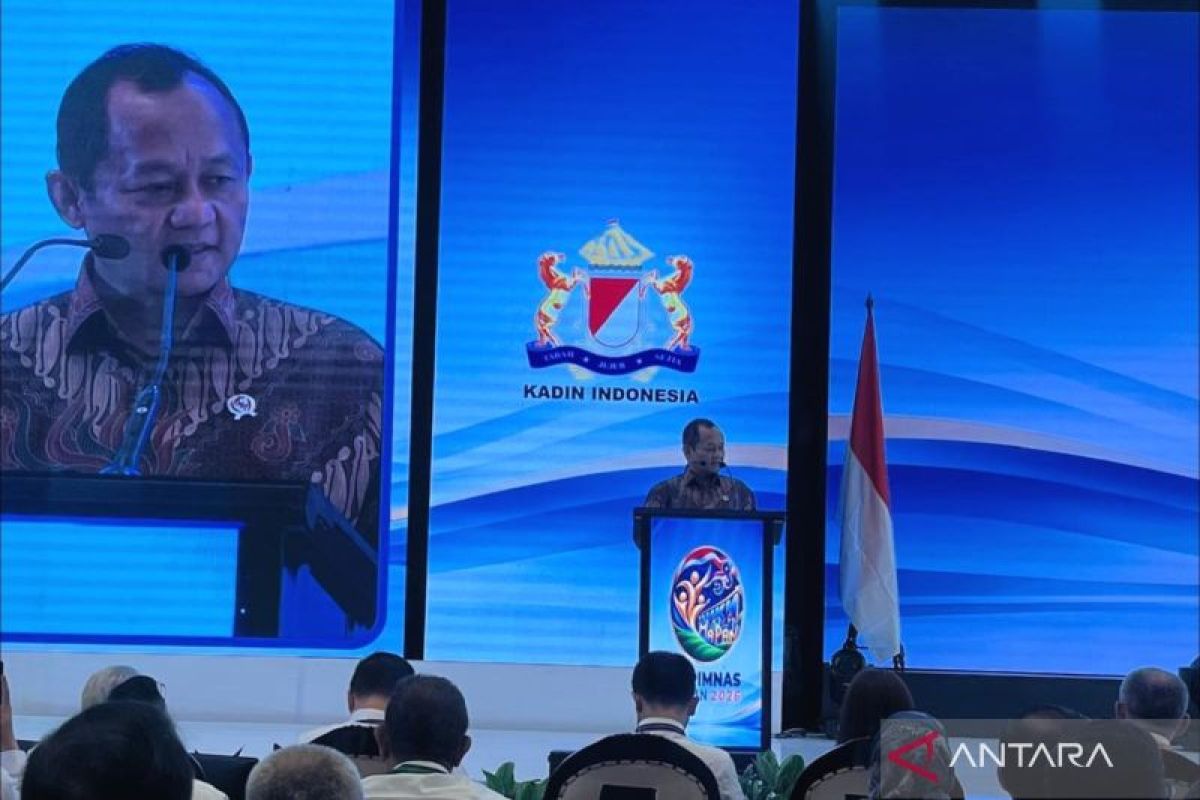
Jakarta (ANTARA) – Industry Minister Muhammad Sarmuji is encouraging the development of downstreaming so that it does not stop at processing raw materials into intermediate products, but grows into a new ecosystem that fosters supporting industries.
Sarmuji said downstreaming natural resources is the starting point of industrialisation and must continue through to the production of finished goods, while also encouraging supporting industries to emerge within the supply chain.
“Downstreaming our natural resources is the starting point of industrialisation. The term ‘downstreaming’ actually refers to the beginning of an industrialisation process that we will continue to develop,” Sarmuji said at the Indonesian Chamber of Commerce and Industry’s (Kadin) national leadership meeting in Jakarta on Friday.
He stressed that industrialisation should not be judged solely by the scale of investment it attracts. It should also be assessed by increases in value added, industrial technological capabilities, employment and the creation of domestic supply chains.
Sarmuji cited the development of the nickel industry, which has progressed from ore processing to intermediate products, battery components and electric vehicles.
The aim, he said, is for this development to produce more than a single type of product and to create a new industrial ecosystem involving a range of supporting sectors.
Stronger links across industries, from upstream to downstream, can also generate multiplier effects, including increased investment and employment, growth in small and medium industries (IKM), and the expansion of machinery, logistics, services and other economic sectors.
Alongside nickel, the government is encouraging the development of other leading commodities that could become sources of Indonesia’s comparative advantage, including palm oil, seaweed, sago and biodiversity.
Sarmuji said Indonesia’s biodiversity offers significant potential for development as a source of raw materials for the pharmaceutical industry through extraction and further development.
He cited plants familiar in traditional use, such as pasak bumi and cat’s whiskers, as potential sources of pharmaceutical ingredients that could be developed further.
“Hopefully, one day we will be able to extract our biodiversity to produce raw materials for medicines, which we currently continue to import in very large quantities,” he said.
The coconut and seaweed industries also have strong prospects. Seaweed, for example, can be processed into a range of raw materials for cosmetics, medicines, food and beverages.
Developing industries based on these commodities is expected to deliver wider economic benefits, particularly for communities in coastal areas.
To strengthen the industrialisation ecosystem, the Ministry of Industry is also promoting greater use of domestically made products through the Domestic Component Level (TKDN) policy.
He said research and simulations by Statistics Indonesia (BPS) indicate that every Rp1 spent on domestic products can generate an impact of Rp2.2 on national economic growth.
In addition, import substitution worth Rp400 trillion could raise national economic growth by 1.71 per cent and generate an additional Rp627.58 trillion in economic output.
The industrial ecosystem is also being strengthened by expanding partnerships between small and medium industries and large manufacturers, enabling smaller businesses to join manufacturing supply chains.