
Industry Minister Says Vietnam Exports Tankers: What About Indonesia?
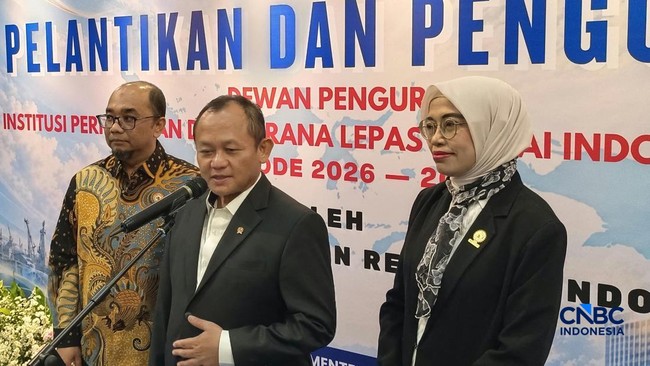
Jakarta, CNBC Indonesia — Industry Minister M Sarmuji has highlighted the difficulty of sourcing vessels with a capacity of 17,800 deadweight tonnes (DWT), amid substantial demand for a maritime fleet. He said this presents an opportunity for the national shipbuilding industry to increase production and meet domestic market demand.
Sarmuji recounted the experience of an associate who was looking for a 17,800-DWT vessel. A ship that had been offered and was close to a deal was ultimately sold to another party because no down payment had been made.
“So this is also an opportunity for Indonesia’s shipping industry. This is real, seriously. My friend was looking for a 17,800-DWT vessel; it had been offered and seemed to be a deal, but it was sold after a week without a down payment,” Sarmuji said at the inauguration and swearing-in of Iperindo’s national board at the Industry Ministry office in Jakarta on Tuesday (20 October 2026).
“So there is actually a very significant opportunity for the shipbuilding industry,” he added.
Sarmuji said strong demand for vessels should be used to strengthen the national shipbuilding industry. Indonesia, an archipelagic country with more than 17,000 islands and a coastline stretching over 99,000 kilometres, needs maritime connections to carry passengers and goods.
However, domestic industry has yet to meet the full potential of that market. Sarmuji acknowledged that Indonesia still needs to catch up with other countries in its ability to build large vessels.
He cited Vietnam, which can produce large tankers, while some of Indonesia’s tanker requirements are still met through imports.
“Vietnam can produce large tankers. A number of our vessel requirements, particularly tankers, are actually imported from Vietnam. They have advanced capabilities and make large vessels,” he said.
Industry Ministry data show that Indonesia imported US$5.30 billion worth of ships, boats and floating structures between 2022 and June 2026. This was higher than exports, which stood at US$4.53 billion over the same period.
The figures point to a domestic market that could be tapped by Indonesia’s shipbuilding industry. The government is encouraging stronger domestic production to reduce dependence on imported vessels.
Sarmuji stressed that import substitution should be pursued in a measured way, while taking account of quality, price and delivery times.
“To me, these figures are not merely a trade-balance issue. They are a signal that we need to strengthen import substitution in a measured way, particularly for products that are already made or can be made domestically, while ensuring that industrial users continue to receive competitive quality, prices and delivery times,” Sarmuji said.
Indonesia’s shipbuilding capacity
Indonesia already has a shipyard industry base spread across many regions. Industry Ministry data show that there are currently 342 shipbuilding companies in more than 29 provinces and 70 regencies and cities. There are also 127 ship-component manufacturers, around 90% of which are small and medium-sized enterprises (SMEs).
The national shipyard industry employs around 37,000 people, while the ship-component industry employs about 6,000. A further 16,620 workers hold welding qualifications.
Anita Puji Utami, chairwoman of the Indonesian Shipbuilding and Offshore Industries Association (Iperindo), said member shipyards have the capacity to build around 1,200 new vessels a year for the government, state-owned enterprises and private sector.
Anita put the industry’s ship-repair capacity at around 36,000 docking spaces.
She said she hoped more of the vessel requirements of the government, state-owned enterprises and private sector could be met by national shipyards. To achieve this, Iperindo is urging the government to provide certainty over orders and incentives to make domestically built vessels more competitive.
One proposed measure is a presidential regulation on domestic shipbuilding. Anita said the policy should favour the domestic component level (TKDN) and offer incentives to shipping companies that order vessels from local shipyards.
Iperindo is also seeking fiscal policy support, including the removal of value-added tax (VAT), as well as stimulus to address rising raw-material costs, which it said had increased by 20% in 2026.
Source: jawawa.id (https://jawawa.id/newsitem/industry-minister-says-vietnam-exports-tankers-what-about-indonesia-1792493467)
Originally published by CNBC Indonesia (https://www.cnbcindonesia.com/news/20261020155647-4-777901/menperin-ungkap-vietnam-jadi-eksportir-kapal-tanker-ri-bagaimana), translated from Indonesian