
Industry Minister Says Indonesia Is Transforming, Responding to Conditions in Neighbouring Countries
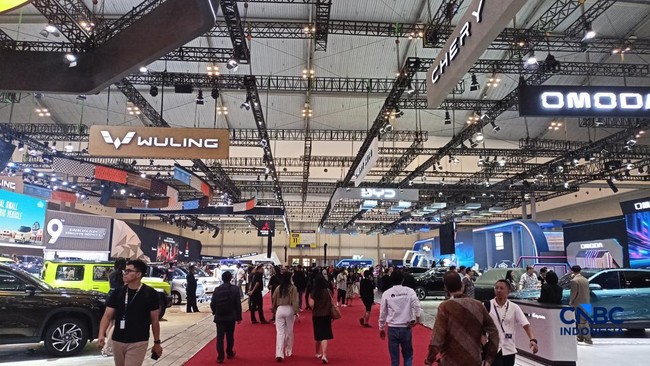
The government is optimistic that the national automotive industry will begin to grow more strongly in 2026. This optimism is driven by improved vehicle production and sales performance throughout the first half of 2026, as well as the staging of the Gaikindo Indonesia International Auto Show (GIIAS) 2026, which is considered an important momentum to drive the market in the second half of this year. The largest automotive exhibition in Indonesia officially opened at the Indonesia Convention Exhibition (ICE) BSD City, Tangerang, on Thursday (30/7/2026) and runs until 9 August 2026. A total of 68 automotive brands are participating, an increase compared to the previous year which was attended by 63 brands. Minister of Industry Agus Gumiwang Kartasasmita said that GIIAS is not just an event for launching new vehicles or sales transactions, but is one of the important drivers for the national automotive industry amidst global economic challenges. “GIIAS 2026 is not just an exhibition or vehicle transaction event, but also an event to revive the national automotive industry. We appreciate that this exhibition is held every year and always creates new history,” said Agus during the opening of GIIAS 2026. In terms of sales, data from the Association of Indonesian Automotive Industries (Gaikindo) shows that wholesale car sales during January-June 2026 reached 436,564 units, an increase of 15.9% year-on-year. Meanwhile, retail sales reached 433,848 units, up 10.5% compared to the same period last year. With the national automotive industry trend showing quite strong improvement, the government considers the national production target of 850,000 units by the end of the year to still be realistic. “Indonesia is in the process of shifting from initially being a market base to becoming a production base,” said Agus. Nevertheless, Agus assessed that the growth space for Indonesia’s automotive industry is still much larger considering the relatively low level of car ownership compared to neighbouring countries. Currently, the car ownership ratio in Indonesia is only around 19 units per 1,000 population. This figure still lags behind Thailand, which reaches 275 units per 1,000 population, and Malaysia, which has reached 490 units per 1,000 population. “That number is almost a third of our entire domestic market today,” said Agus, explaining that every increase of one unit in the car ownership ratio per 1,000 population has the potential to create additional demand of around 280,000 vehicles.