
Industry Minister Sarmuji: Indonesia's Textile Machinery is Outdated, Making Competition Difficult
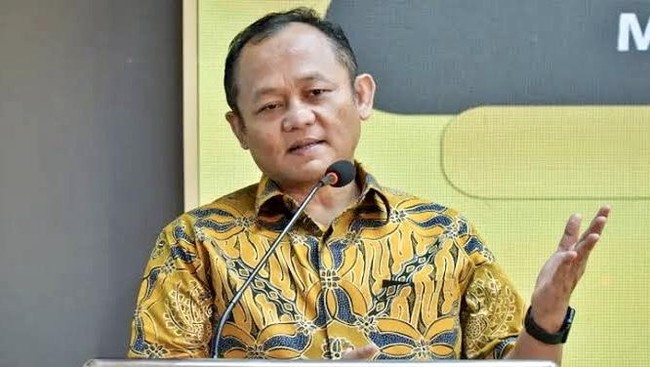
The chemical, pharmaceutical, and textile (IKFT) industry recorded positive trade performance throughout January-July 2026. The sector’s export value reached US$34.2 billion, or approximately Rp611.50 trillion, which is higher than imports, which stood at US$32.75 billion.
As a result, the IKFT sector recorded a trade surplus of around US$1.45 billion. However, these export achievements are still overshadowed by several domestic issues, particularly the competitiveness of the textile industry, which must contend with imported products and the production technologies of competing nations.
The Ministry of Industry (Kemenperin) considers the textile and textile products (TPT), leather, and footwear industries to remain vital sectors, as they not only generate foreign exchange but also employ millions of workers. In the second quarter of 2026, the textile and garment industry grew by 6.36%, while the leather, leather goods, and footwear industry grew by 11.30%.
Minister of Industry Muhammad Sarmuji stated that the government intends to maintain this labour-intensive industry as a pillar of long-term manufacturing development. The number of workers in the TPT industry is even targeted to increase from 3.95 million people in 2026 to 4.07 million people by 2029.
“The issue of outdated textile industry machinery must be addressed immediately. Without modernisation, our industry will find it increasingly difficult to survive and compete with other countries, particularly China, which has utilised more advanced production technology,” said Sarmuji.
The machinery issue is critical because some national textile production facilities are more than two decades old. Without technological updates, the industry faces the risk of losing production efficiency and struggling to match the productivity of competing nations.
The government is preparing several schemes to encourage machinery rejuvenation, including a restructuring programme for TPT machinery and equipment, as well as the Labour-Intensive Industry Credit (KIPK). Access to financing is also being strengthened, alongside efforts to protect the domestic market from the pressure of imported products.
On the other hand, energy costs remain a determining factor in the industry’s ability to survive. The Ministry of Industry is pushing for the optimisation of Certain Natural Gas Prices (HGBT), while simultaneously ensuring that issues regarding volume and supply continuity do not hinder production activities.
Based on a 2026 evaluation, several industries are reported to have received only about 60%-70% of their allocated gas. Deputy Minister of Industry Faisol Riza noted that this issue must be accompanied by clear targets regarding the fulfilment of raw materials and domestic supply.
“Concrete steps and targets must be formulated through to 2029, including the percentage of raw material requirements that must be met by companies or from domestic supplies. Thus, the HGBT policy and the strengthening of raw materials can provide a real impact on industrial productivity and competitiveness,” he said.
Source: jawawa.id (https://jawawa.id/newsitem/industry-minister-sarmuji-indonesias-textile-machinery-is-outdated-making-competition-difficult-1791370413)
Originally published by CNBC Indonesia (https://www.cnbcindonesia.com/news/20261007150828-4-774124/menperin-sarmuji-mesin-mesin-tekstil-ri-sudah-tua-sulit-bersaing), translated from Indonesian