
Industry Minister Requests Additional Rp 1.59 Trillion Budget from Parliament: What For?
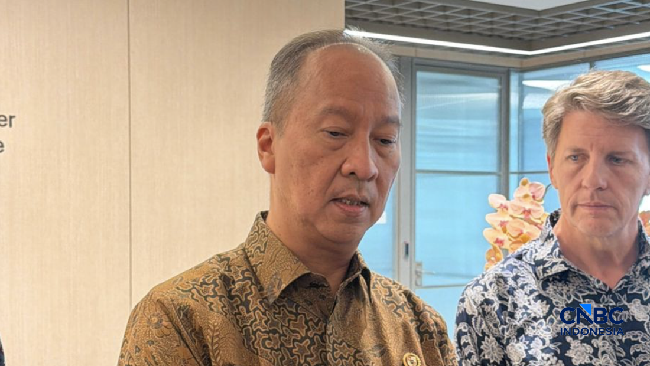
The Ministry of Industry is facing significant challenges for 2027. Amidst the manufacturing industry growth targets set by the government, the ministry’s indicative budget ceiling has instead experienced a significant decrease.
Despite this, the industrial sector remains a key driver in national economic development and downstreaming efforts.
“We support the implementation of national priorities through various main agendas, including the downstreaming of priority commodities, the development of strategic industries, the strengthening of the halal industry and halal MSMEs, digital industrial transformation, resource efficiency, and industrial decarbonisation programmes towards green industry,” stated Minister of Industry Agus Gembwang Kartasasmita during a working meeting with Commission VII of the House of Representatives (DPR RI) on Wednesday (10/06/2026).
The government has set several targets for the manufacturing sector in 2027, covering the growth of the processing industry, increased investment, manufacturing exports, and job creation. However, the available budget is actually tightening.
“For the year 2027, we have received an indicative ceiling of Rp 2.01 trillion, which is a decrease of Rp 488.16 billion, or equivalent to 19.5% compared to the initial ceiling of 2026,” said Agus.
The budget reduction is made even more difficult because the proportion of employee and operational expenditure continues to increase year by year. As a result, the allocation available for industrial development programmes is becoming increasingly limited.
“If we look at 2023, it was only 25%; looking at the 2027 indicative budget, it has increased to 73.19%. This means that non-operational expenditure, which was previously 74.365%, has decreased to around 26.81%,” he explained.
Consequently, the Ministry of Industry has submitted a request for additional budget to the government and the House of Representatives. The additional budget will be used for the restructuring of industrial machinery, the strengthening of Small and Medium Industries (IKM), the downstreaming of natural resources, vocational education, and the development of industrial information systems.
“Therefore, we are proposing an additional budget requirement of Rp 1.59 trillion to strengthen the implementation of priority programmes that have a direct impact on increasing productivity, competitiveness, downstreaming programmes, the strengthening of small and medium industries, industrial human resource development, and national industrial transformation,” Agus clarified.