
Industry Minister prepares solutions for food and beverage raw materials and protection for steel industry
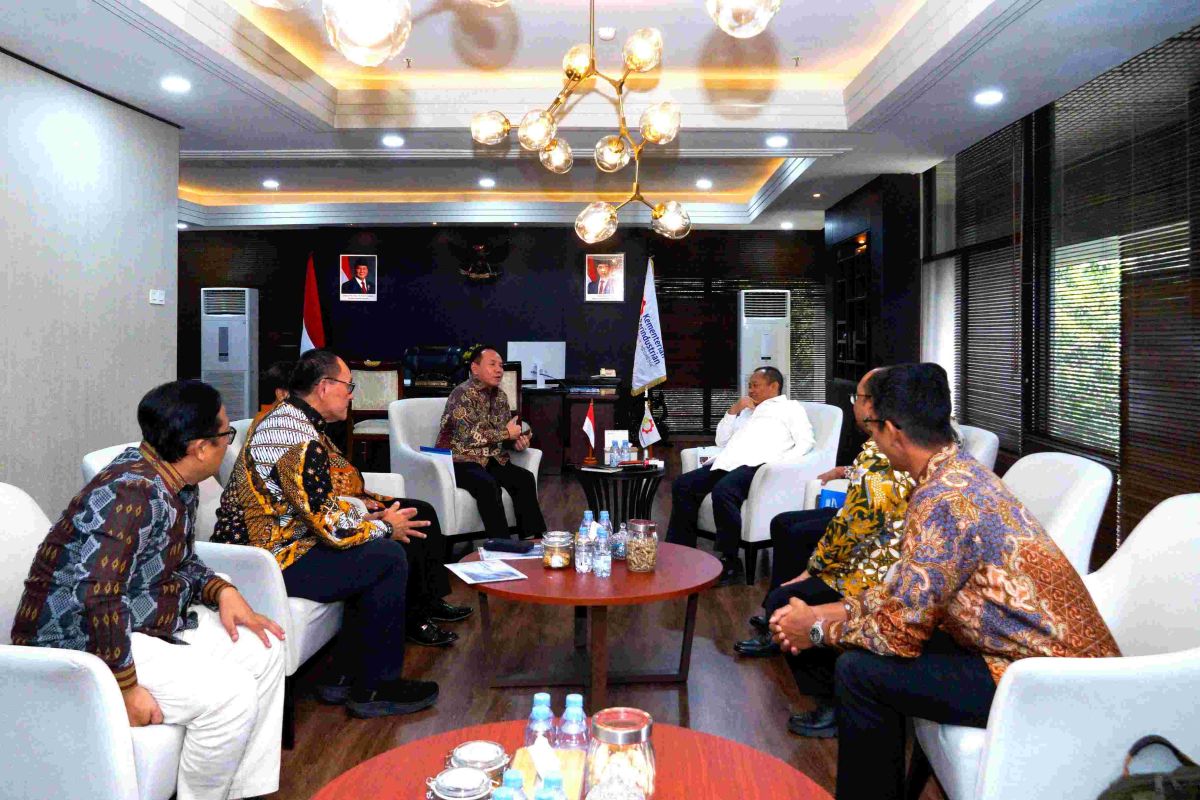
Jakarta (ANTARA) — Industry Minister Muhammad Sarmuji is preparing solutions to address raw-material issues facing the food and beverage industry and strengthen protection for the national steel industry against pressure from imported products, with the aim of improving the competitiveness of domestic manufacturing.
The measures were discussed at a meeting between Sarmuji, the Indonesian Food and Beverage Producers Association (GAPMMI) and the Indonesian Iron and Steel Industry Association (IISIA) in Jakarta on Wednesday.
“We have received various concerns from players in the food and beverage and steel industries. The Ministry of Industry will continue to provide support to strengthen the competitiveness of national industry, including finding solutions to the various problems they face,” Sarmuji said in a statement confirmed by ANTARA.
Regarding the food and beverage industry, he highlighted the high price of broken rice, a raw material used in food processing, including for vermicelli. Imported broken rice costs between Rp5,700 and Rp6,000, while domestic prices are around Rp11,000.
“This price difference is significant and certainly affects the industry’s competitiveness. If raw materials are too expensive, industries such as vermicelli will struggle to compete. We are therefore looking for solutions so that raw materials can be obtained at more competitive prices,” he said.
One option under consideration is using rice stocks held by the state-owned logistics agency Perum Bulog as industrial raw material. The government is also coordinating with the Ministry of Agriculture to discuss the possibility.
“We are looking for a way to use Bulog rice stocks that have been stored for a long time in industry, at a price businesses can tolerate. I have also coordinated with the Ministry of Agriculture to discuss this issue,” he said.
For the steel industry, Sarmuji said protection through tariff and non-tariff measures was needed to address import competition. However, he added, such efforts must be accompanied by improvements in efficiency and productivity.
“For a strategic industry such as steel, protection is certainly needed, through both tariff and non-tariff measures. But protection alone is not enough. We must also improve the industry’s competitiveness so it is better able to withstand global competition,” he said.
GAPMMI chairman Adhi S Lukman said he hoped the setting of commodity balances for raw materials such as sugar, salt, maize and meat could be expedited so that the industry’s needs would be met at the beginning of 2027.
Acting Director General of Agro Industry Putu Juli Ardika said the Ministry of Industry would follow up on GAPMMI’s input. He was optimistic that the food and beverage industry would grow by 6–7 per cent by the end of 2026.
IISIA chairman Willgo Zainar said national steel industry capacity utilisation remained at around 43–57 per cent. He said pressure from imports was intensifying amid global steel oversupply of about 640 million tonnes, including 120 million tonnes from China.
IISIA vice-chairman Ismail Mandry added that steel imports reached around 8 million tonnes a year in 2024 and 2025, while imports had already reached 7 million tonnes by August 2026.
“We hope steel imports can be controlled, particularly for products that can already be produced domestically. We are not against imports, but there needs to be a balance so that national industry can continue to grow and remain competitive,” Ismail said.
Alongside imports, IISIA raised concerns about use of the Special Natural Gas Price (HGBT), which has reached only around 60 per cent of the quota allocated to the steel industry.
Setia Diarta, the Ministry of Industry’s Director General of Metal, Machinery, Transportation Equipment and Electronics, said the ministry would coordinate with relevant ministries and agencies to address the issues.
“We will work with other ministries and agencies to find solutions to the various issues raised by the associations and discussed with the Minister, so that the national steel industry can become more competitive,” Setia said.
Source: jawawa.id (https://jawawa.id/newsitem/industry-minister-prepares-solutions-for-food-and-beverage-raw-materials-and-protection-for-steel-industry-1791982282)
Originally published by Antara (Indonesian) (https://www.antaranews.com/berita/5786345/menperin-siapkan-solusi-bahan-baku-mamin-dan-proteksi-industri-baja), translated from Indonesian