
Industry Minister: P3DN a major strategy to strengthen national industrial structure
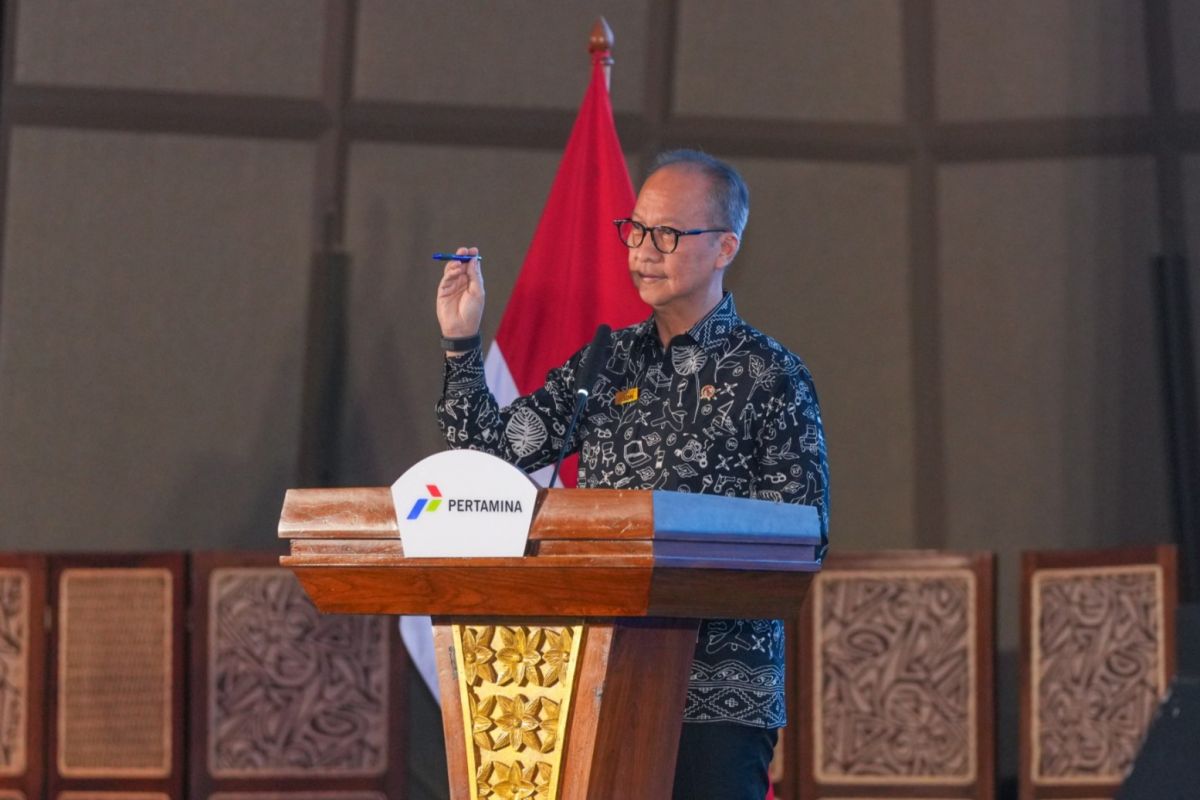
Jakarta (ANTARA) – Minister of Industry Agus Gumiwang Kartasasmita has affirmed that the Programme for Increasing the Use of Domestic Products (P3DN) is a grand strategy to strengthen the national industrial structure.
“P3DN is not merely a goods and services procurement policy, but a grand strategy to strengthen the national industrial structure. Every purchase of domestic products creates a multiplier effect that drives the industrial sector, boosts demand for local raw materials, expands employment opportunities, and raises national economic growth,” the Minister said in a statement in Jakarta on Wednesday.
The Minister noted that Indonesia’s manufacturing industry currently faces increasingly complex challenges stemming from global economic dynamics, ranging from geopolitical uncertainty and disruptions to global supply chains, to climate change and rising competition from imported products in the domestic market.
On the other hand, Indonesia possesses a very large domestic market, which must be harnessed as the main force in driving national industrial growth.
According to him, 78.39 per cent of national manufactured products are still marketed domestically. Therefore, the sustainability of the manufacturing sector depends heavily on the ability to protect the domestic market from pressure by imported products, whilst simultaneously improving the utilisation of national production capacity, which still has considerable room for improvement.
“One of the most effective instruments for strengthening domestic demand is the implementation of P3DN. Government spending must act as a demand creator for national industry, so as to raise production capacity utilisation, strengthen investment, develop supply chains, and create jobs,” he asserted.
Furthermore, speaking at the cross-ministerial P3DN Summit 2026 in Jakarta on Wednesday, Minister Agus said that strengthening national industry requires an integrated development strategy spanning upstream to downstream sectors.
The linkages between the extractive sector, manufacturing industry, and the services and trade sectors must continue to be reinforced so as to create greater added value domestically.
Through strengthening these linkages, national industry is expected to increase the use of domestic raw materials, components, machinery, and supporting services, whilst also broadening product and market diversification.
“The impact will be felt not only by large industries, but also by small and medium industries (IKM), micro, small and medium enterprises (UMKM), the machinery industry, and various other supporting economic sectors,” the Minister said.
Minister Agus also highlighted the importance of strengthening various instruments to protect national industry amid intensifying global trade competition.
According to him, almost all countries have applied various Technical Barriers to Trade (TBT) policies to protect their domestic industries.
He said Indonesia still has considerable room to strengthen such instruments through the application of technical requirements, the enforcement of Indonesian National Standards (SNI), and border control supervision.
Further measures include the application of Import Approvals based on Technical Considerations for products already capable of being produced domestically, optimising the application of Safeguard Import Duties and Anti-Dumping Import Duties (BMAD), and increasing the use of the Domestic Component Level (TKDN) in goods and services procurement.
“By strengthening these instruments, we want to create an increasingly healthy business climate so that national industrial utilisation rises and the competitiveness of Indonesian products grows stronger,” he said.
The Minister revealed that, based on a study by economic researchers working with the Ministry of Industry’s P4DN team, every Rp1 spent on domestic products generates a manufacturing sector multiplier effect of 2.2 on the national economy.
This means, he said, that every Rp1 spent on domestic products has the potential to create Rp2.2 in economic output, delivering a significant impact on industrial growth, employment absorption, and increased added value at home.
Furthermore, based on simulations by Statistics Indonesia (BPS), if Rp400 trillion of government and state-owned enterprise spending on imported products were substituted with domestic products at the same purchase value, the policy could raise national economic growth by as much as 1.71 per cent and generate additional economic output of Rp627.58 trillion.
“This shows that every rupiah spent on domestic products delivers far greater economic benefits for Indonesia than if it were allocated to imported products,” said Minister Agus.
In addition, his ministry continues to pursue reform of the Domestic Component Level (TKDN) policy as part of the implementation of P3DN. As of 21 July 2026, the government has issued 56,555 TKDN certificates covering more than 7,000 industrial companies in Indonesia.
The reform has been reinforced through Minister of Industry Regulation Number 35 of 2025, which simplifies the certification process to make it faster, simpler, easier, and more efficient, without reducing the credibility of the verification process or its oversight.