
Industry Minister Issues Three Directives to Strengthen Indonesia's Startup Ecosystem
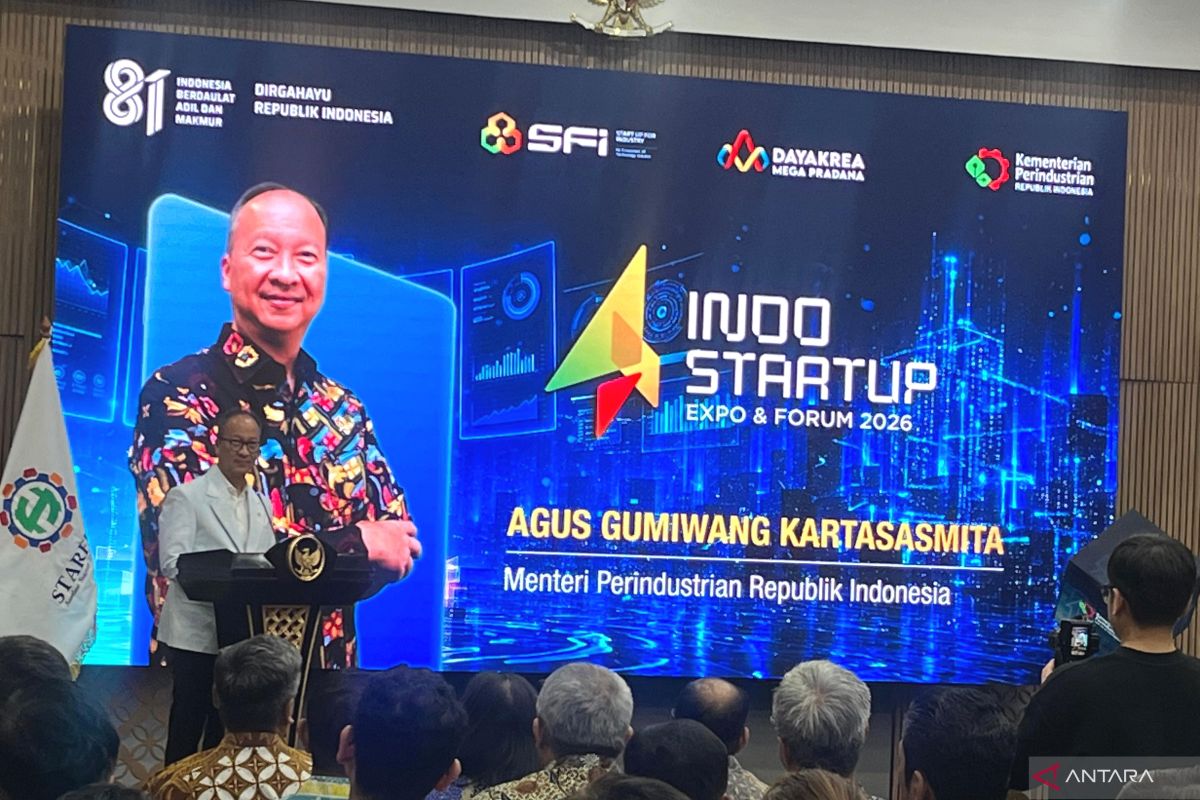
Industry Minister Agus Gumiwang Kartasasmita has issued three directives to strengthen the national startup ecosystem, aiming not only for growth in numbers but also for sustainability, development, and the ability to meet real industrial needs. Speaking at the official launch of the Indo Startup & Expo Forum 2026 in Jakarta on Thursday, he described it as a call for action for the startup world, including for himself, his colleagues, startup players, and the entire ecosystem.
The first directive is to make national industry the primary market for Indonesian startups. Minister Agus has instructed all units within the Ministry of Industry to shift their approach from coaching to demand-driven, by identifying industrial problems that can be solved through technology. The second directive focuses on improving the quality and investment viability of startups, rather than merely chasing numbers. He stated that the future indicator of success should not be the number of new startups, but how many can survive, be utilised by industry, and attract investment.
The third directive is to master key technologies while unifying the currently fragmented startup ecosystem. He stressed that every global technology collaboration must yield measurable benefits, from enhancing human resource capacity to fostering domestic design and production capabilities. Minister Agus noted that based on Startup Ranking, Indonesia is currently the sixth country in the world with the most startups, boasting over 3,100 active ventures, making it the largest startup ecosystem in Southeast Asia. However, the Global Startup Ecosystem Index 2026 places Indonesia 45th globally, with Jakarta ranked 30th among world cities.
He argued that the main challenge to address is no longer the birth rate of startups, but their ability to survive, grow, secure funding, and solve concrete problems faced by national industry. Agus views strengthening startups as part of the industrialisation agenda, as the industrial sector requires technological innovation to boost productivity and added value. In the second quarter of 2026, the processing industry grew by 5.32 percent year-on-year, outpacing national economic growth and remaining the largest contributor to Indonesia’s economy.
In terms of investment, the processing industry sector contributed 39.7 percent of national investment realisation and employed over 20 million workers as of February 2026. During the first six months of 2026, the processing industry contributed to 82 percent of national exports, valued at 115.50 billion US dollars. The Minister asserted that increasing added value cannot rely solely on expanding production capacity but requires technological support, where startups play a strategic role as solution providers for national industry.
He also highlighted the funding challenges facing Indonesian startups. According to the Indonesia Startup Report 2026, startup funding throughout 2025 was recorded at only 355 million US dollars, a 49 percent decline compared to 695 million US dollars in 2024. This condition underscores the need to improve startup quality to make them more attractive to investors. Agus pointed out that Indonesia has a comparative advantage in its large domestic market, with data from the Central Statistics Agency showing 4.43 million Small and Medium Industry units, accounting for 99.79 percent of all national industrial units. For tech startups, this represents a significant opportunity as many small and medium industry players need solutions to improve production efficiency, quality control, inventory management, supply chain tracking, and market access.