
Industry Minister Focuses on Industrialisation to Drive 2027 Economic Growth
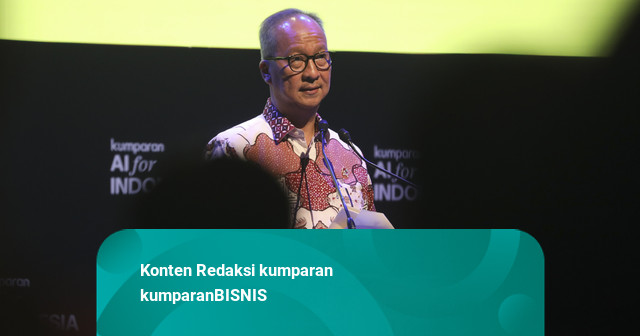
The Ministry of Industry has reaffirmed its commitment to accelerating national industrialisation as a primary instrument for achieving quality economic growth, creating jobs, strengthening economic self-reliance, and improving public welfare. The move aligns with President Prabowo Subianto’s directive in his state address at the 2026 Annual Session of the People’s Consultative Assembly and the Joint Session of the House of Representatives and the Regional Representatives Council on Friday (14/8).
Industry Minister Agus Gumiwang Kartasasmita said the President’s message on the importance of economic growth and investment that delivers real benefits to the public further reinforces the position of the manufacturing sector as the backbone of the national economy.
“The President emphasised that growth and investment are not the end goal, but instruments to improve people’s welfare. Every investment must create jobs and every policy must improve people’s lives. For the Ministry of Industry, this directive further strengthens our resolve to pursue industrialisation that is inclusive, competitive, and delivers maximum added value domestically,” Agus said in a statement on Sunday (16/8).
In his speech, the President said that amid geopolitical conflicts, trade wars, supply chain disruptions, and global economic pressures, Indonesia must increasingly be able to stand on its own feet. The President also noted that investment realisation throughout 2025 reached Rp 1,931 trillion and created more than 2.7 million jobs. In the first half of 2026, investment realisation reached Rp 1,010 trillion and created more than 1.4 million jobs.
According to the Industry Minister, the message on self-reliance is highly relevant to the national industrial development agenda. A strong industrial base will reduce dependence on imported products, deepen the industrial structure, increase technological mastery, strengthen domestic supply chains, and produce high-value-added goods.
“In a global situation full of uncertainty, we must not be overly dependent on other countries to meet our strategic national needs. Therefore, we must build an industrial structure that is increasingly deep and integrated from upstream to downstream. Indonesia must be able to process the resources we possess into high-value-added industrial products domestically,” Agus said.
The Industry Minister assessed that the policy direction has shown positive results. Based on data from Statistics Indonesia, in the second quarter of 2026 the non-oil and gas processing industry grew by 5.32 percent year-on-year. This achievement was higher than the national economic growth of 5.29 percent in the same period.
Besides growing faster than the national economy, the processing industry sector contributed 18.50 percent to gross domestic product, remaining the largest contributor to Indonesia’s economic structure. The processing industry was also the largest source of economic growth with a contribution of 0.90 percent.
“This achievement shows that the President’s policy of providing strong support for the industrial sector has produced concrete results. Manufacturing is not only growing, but its growth has managed to exceed national economic growth. This is a very important asset to continue enlarging the role of industry as the engine of the economy,” the Minister said.
Agus explained that the President’s directive is translated by the Ministry of Industry through the implementation of the Grand National Industrialisation Strategy. This strategy is directed at strengthening the national industrial structure, accelerating downstreaming and value addition, increasing productivity and competitiveness, expanding markets, and creating quality jobs.
According to the Minister, the industrialisation pursued by the government is not only oriented towards increasing growth figures, but also ensuring that more economic added value is created and enjoyed domestically.
“Industrialisation must produce a broad multiplier effect. When an industry grows, it is not only the factory that develops. There are workers absorbed, raw material and component suppliers that grow, small and medium industries that enter the supply chain, logistics activity that increases, technology that develops, and exports that become stronger,” he explained.
The positive performance of national industry is also reflected in a number of manufacturing activity indicators. The Industrial Business Conditions and Prospects Index stood at 52.31, indicating expansionary conditions. Meanwhile, Indonesia’s Manufacturing Purchasing Managers’ Index in July 2026 stood at 50.2, while the Industrial Confidence Index for July 2026 reached 53.10. All three indicators show that national industrial activity remains in the expansionary zone.
“This shows that industry players still have optimism about business prospects. The government must maintain this momentum through policies that provide business certainty, strengthen the domestic market, increase investment, and create an increasingly competitive industrial climate,” Agus said.
Growth in the non-oil and gas processing industry in the second quarter of 2026 was also supported by a number of strategic subsectors. The food and beverage industry grew by 6.51 percent, in line with increased domestic demand and exports.
Meanwhile, the metal goods, computer, electronic, optical, and electrical equipment industry recorded growth of 8.04 percent, supported by increased global demand for electronic components, batteries, and various electrical equipment. The chemical, pharmaceutical, and traditional medicine industry grew by 4.99 percent.
Source: jawawa.id (https://jawawa.id/newsitem/industry-minister-focuses-on-industrialisation-to-drive-2027-economic-growth-1786938617)
Originally published by kumparan.com (https://kumparan.com/kumparanbisnis/menperin-fokus-industrialisasi-untuk-dorong-pertumbuhan-ekonomi-2027-27zqBNjMtXU), translated from Indonesian