
Industry Minister: Diversifying Ulos Products Could Open Up Export Markets
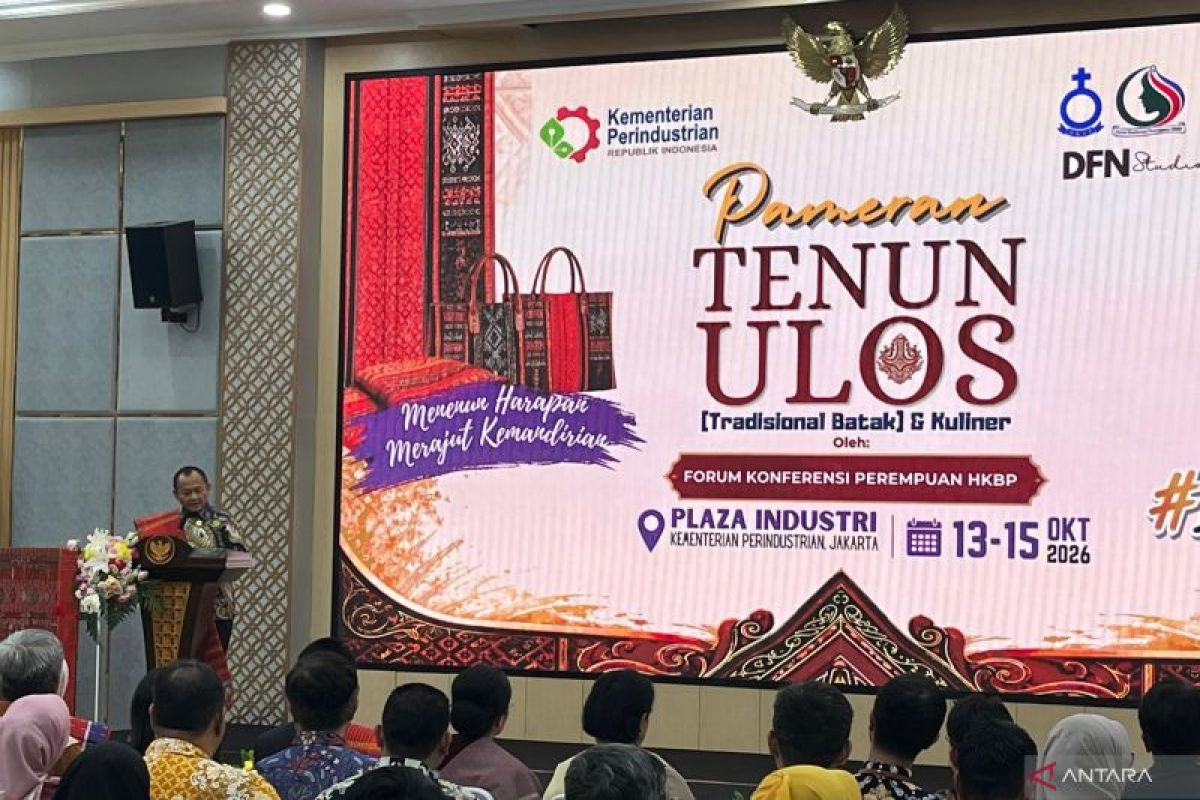
Jakarta (ANTARA) – Industry Minister Muhammad Sarmuji said that diversifying ulos products into ready-to-wear garments, fashion accessories, interior decorations and souvenirs could create opportunities for small and medium-sized ulos-weaving businesses to enter export markets.
Sarmuji said that developing products based on this traditional Batak cloth could broaden the use of ulos while increasing its economic value for artisans.
“We must do more than ensure that ulos continues to exist. We must also ensure it remains a living tradition, is used and developed, and provides economic benefits for the communities that safeguard it,” Sarmuji said in Jakarta on Tuesday.
He said the potential for ulos development was reflected in Indonesia’s ikat-weaving export performance. In the first half of 2026, ikat-weaving exports were valued at US$34,000, a 150 per cent increase from US$13,600 in the same period a year earlier.
On the production side, 2020 data from Statistics Indonesia (BPS) recorded 43 ulos-weaving centres in North Sumatra, including in North Tapanuli, Toba, Samosir and Simalungun.
Sarmuji said these production centres provided a foundation for developing ulos-weaving businesses, particularly to meet domestic demand for fashion items and other derivative products.
He also stressed that preserving ulos could not be separated from sustaining the weaving tradition, which has largely been carried on by women. The activity not only preserves cultural heritage but also supports household and regional economies.
“Ulos is not merely cloth or a cultural product, but an inseparable part of the identity, traditions and livelihoods of the Batak people. Each piece embodies diligence, skill and local wisdom passed down through generations,” he said.
Reni Yanita, the Industry Ministry’s Director General of Small, Medium and Multifarious Industries, said traditional weaving businesses continued to face challenges, including sustaining weaving skills, attracting a new generation of artisans, innovating in design and improving product quality.
“The Industry Ministry is fully committed to continuing to strengthen the ulos industry ecosystem through various development and mentoring programmes, including strengthening human resources and entrepreneurship through training, webinars, talk shows and the creation of new small and medium-sized businesses,” Reni said.
She added that the government also supported the protection of distinctive regional products through geographical-indication certification.
“Ulos Ragidup Silindung, from North Tapanuli, is the ulos product that has received geographical-indication certification. This is an asset for the people of North Tapanuli and, in particular, for ulos artisans,” she said.