
Industry Is Like the Kitchen in a Home
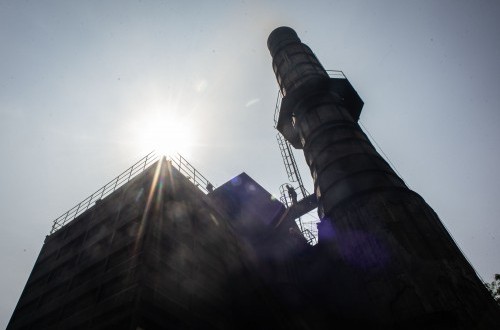
Amid global competition, almost every country is racing to develop industrial estates. The reasons are clear: industry creates jobs, increases added value, strengthens exports and drives economic growth. Yet one question is rarely asked: how large should industrial estates be in a country?
The question matters because development often follows the same logic: find as much land as possible for industry, then adjust the surrounding spatial plan. Forests are converted, rice fields shrink and water catchment areas diminish, while environmental solutions are sought only after development is under way.
Perhaps we need a simpler analogy. Imagine a house with a floor area of 1,000 square metres. It has a living room, bedrooms, bathrooms, a garden, a yard, a family room and a kitchen. The kitchen is certainly important. It is where food is prepared and turned into energy for everyone in the house. Without a kitchen, the home would not function properly.
But would it make sense to turn half the house into a kitchen? Of course not.
A comfortable home is not one with the largest kitchen, but one in which space is apportioned in a balanced way. The kitchen has an important function, but it remains only one part of the overall household system.
This analogy, in fact, illustrates the place of industry in a country.
Industry is the “kitchen” that turns resources into products with added value. Agriculture is the food store. Forests regulate water cycles and the climate. Rivers are the circulatory system of life. Settlements provide space for communities to grow. Each has a different function, but all depend on one another.
Problems arise when the “kitchen” starts taking over other spaces. When industrial estates continue expanding without regard for environmental carrying capacity, farmland shrinks, water catchment areas diminish, river quality declines and the risk of disasters rises. The economy may grow in the short term, but the costs to be paid in the long term will be far greater.
The Intergovernmental Panel on Climate Change has stated that human-induced climate change is increasing the frequency of extreme weather, floods and droughts (IPCC AR6 Synthesis Report, 2023).
Meanwhile, the Intergovernmental Science-Policy Platform on Biodiversity and Ecosystem Services has warned that ecosystem degradation threatens around one million species worldwide (IPBES Global Assessment Report, 2019). These facts show that economic development cannot be separated from environmental health.
It may therefore be time to change the development paradigm. Ecosystems have often been treated as servants of industry. Forests provide timber, rivers supply water, mountains provide minerals, and seas serve as logistics routes. Nature is viewed primarily as a supplier of raw materials.
In reality, the opposite is true. Industry cannot survive without sufficient water, stable land, clean air, energy and healthy people. In other words, industry depends entirely on ecosystems, not the other way round. From this perspective, industry should serve ecosystems, not dominate them.
That means industry should develop in line with nature’s capacity. Conservation areas, water catchment zones, food-producing land and riverbanks should first be designated as the foundations of life. Only then should the space available for industrial activity be determined.
This principle is consistent with the concept of planetary boundaries, introduced by Johan Rockström and his colleagues. They show that the Earth has ecological limits that must not be exceeded if the life-support system is to remain stable (Rockström et al., Nature, 2009; Richardson et al., Science Advances, 2023).
This shift in thinking also changes how development success is measured. So far, the main indicators have been investment value, economic growth and exports. All are important, but they are not enough. In future, measures of success should also include maintaining water quality, keeping agricultural land productive, preserving adequate forest cover and reducing disaster risks. Economic growth that sacrifices ecological foundations ultimately shifts the burden to future generations.
As with a home, a country does not need the biggest kitchen. It needs a kitchen that is efficient and productive, and can meet the household’s needs without eliminating its garden, bedrooms or living spaces. Industry should indeed continue to grow.
But that growth should not be measured by the size of the industrial estate, but by the added value it creates without diminishing nature’s ability to sustain life.
A country is not a factory that happens to be inhabited by people. It is a shared home that happens to have a kitchen called industry.
A developed nation is not one with the biggest kitchen, but one that understands the kitchen is built to serve the home—not take it over.