
Industrial Zone Bill Working Committee Uncovers Licensing Issues
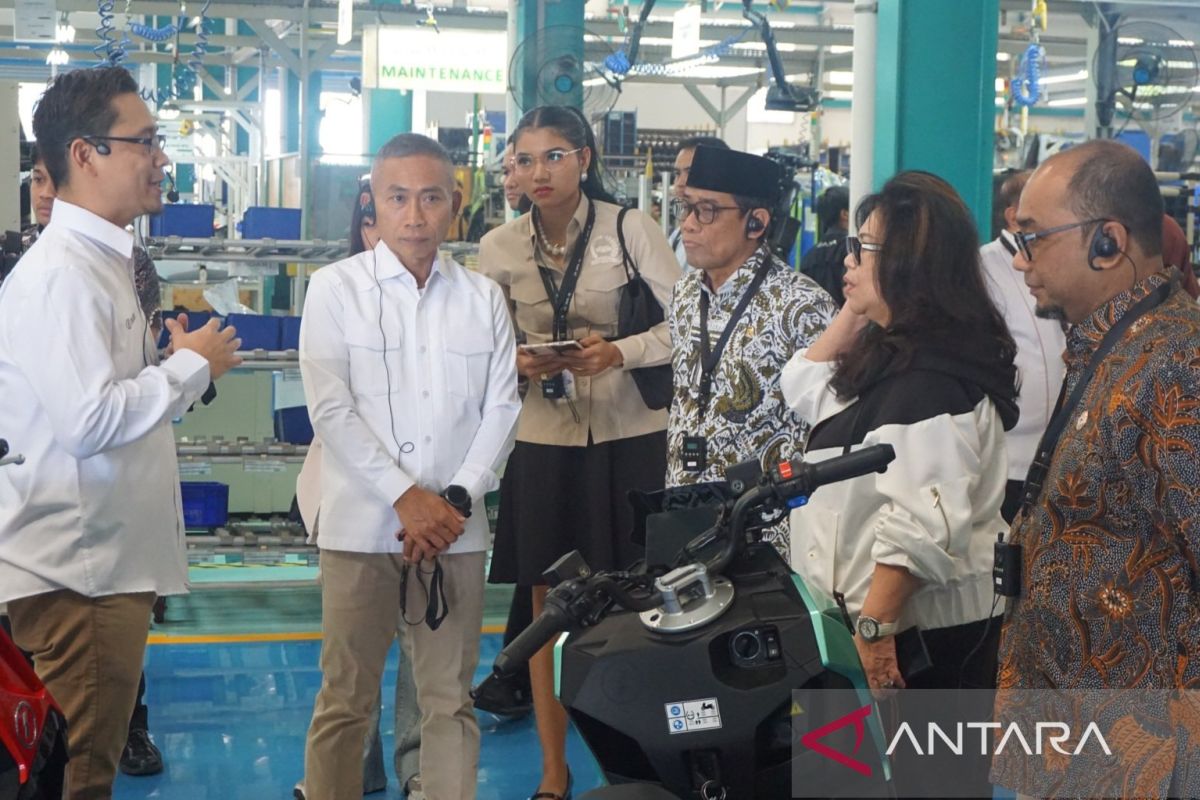
There is still a long way to go before the plenary session, especially as many classic field issues must serve as evaluations and input during the drafting of this Industrial Zone Bill.
ekasi Regency (ANTARA) - The Vice Chairperson of Commission VII of the Indonesian House of Representatives (DPR RI), Evita Nursable, stated that the Working Committee for the Industrial Zone Bill (Panja RUU Kawasan Industri) has discovered several field issues that must be evaluated during the regulatory drafting process.
“There is still a long way to go before the plenary session, especially since there are many classic issues on the ground that must serve as evaluation and input when drafting this Industrial Zone Bill,” said Evita during a working visit to the Lippo Cikarang Industrial Estate, Bekasi Regency, on Wednesday.
She noted that the identified issues include unstable gas and energy supplies, limited port access, waste management, and overlapping policies between the central and regional governments.
Evita also highlighted the lengthy licensing chain, which she believes is a significant obstacle to the development of industrial zones and investment.
“Such lengthy licensing causes us to lose momentum. Investors are fleeing to Vietnam or Thailand because obtaining permits there is very easy. This is already happening, not just a potential risk,” she asserted.
Evita stated that the simplification of licensing is necessary to support downstreaming programmes and to provide certainty to zone managers and the companies operating within them.
“If the President wishes to encourage downstreaming, industrial licensing should be under a single roof. Entrepreneurs should no longer be passed from one office to another, which consumes a vast amount of time. Accessibility, adequate water, energy, and legal certainty are the fundamental requirements sought by both zone managers and their tenants,” she said.
Commission VII member Yoyok Riyo Sudibyo also urged the government to unify licensing authority and industrial zone management to overcome cross-sectoral bureaucratic issues.
“I feel ashamed because these critical issues in industrial zones have persisted for decades and remain unchanged: overlapping land permits, basic licensing problems, and disruptions in infrastructure and energy supplies, such as electricity and gas,” he remarked.
He assessed that the Online Single Submission (OSS) system has not yet fully resolved bureaucratic issues on the ground, necessitating stronger institutional reinforcement in industrial zone management.
“I want the government to take charge and unify this under a new single agency to regulate industrial zones. We must not allow foreign investors to have to deal with local, provincial, and central levels. They are told permits are completed in three days or one month, but in reality, they cannot be,” he explained.
“There are many other issues, including the performance of the country with the world’s largest nickel reserves, which has yet to maximally realise green transport independence to support the electric vehicle ecosystem. Local Content Requirement (TKDN) achievements are stuck at 40 per cent due to import dependency, even though the raw materials for manufacturing electric motorcycles and cars are all available in our country,” he added.