
Industrial Sovereignty as the Fruit of Downstreaming
Jakarta (ANTARA) - Abundant natural resources do not automatically make a country economically strong. History shows that mineral-rich nations can remain on the periphery of global value chains if their wealth leaves the land primarily in the form of raw materials.
Indonesia faces a similar challenge as a nation with abundant natural resources. In this country, the question should increasingly evolve beyond how much mineral can be mined and sold. We should instead move towards asking how far the wealth within the earth can be transformed into industrial capacity, jobs, state revenue, technological mastery, and public welfare.
In practice, the nation must also realise that merely building mineral processing facilities does not mean downstreaming has been achieved. Beyond that, downstreaming is a path to changing Indonesia’s position in the economic chain, from a supplier of raw materials to a country increasingly capable of processing, producing, and creating value.
For years, much of Indonesia’s mineral wealth has flowed into global markets as raw materials with relatively limited added value. While the country benefits from mining activities, much of the subsequent value creation takes place in other nations. Downstreaming policies aim to reverse this pattern. Restrictions and bans on the export of several raw minerals have encouraged the development of domestic processing facilities. Minerals no longer stop as extractive commodities but begin to serve as raw materials for the next links in the industrial chain.
This change is vital because mining holds a significant position in the economy. Based on data from the Indonesian Central Bureau of Statistics (BPS), the mining and quarrying sector was a contributor to Indonesia’s Gross Domestic Product (GDP) in the second quarter of 2026, with a value reaching Rp229.9 trillion, or approximately 8.87 per cent. However, the magnitude of the contribution to GDP is not the ultimate measure of success in natural resource management. The mandate of Article 33 of the 1945 Constitution provides the perspective that natural resources must be utilised for the greatest prosperity of the people. This means every economic activity utilising natural resources should generate the maximum possible economic benefit for the state and society through taxes, non-tax state revenue, profit sharing, employment, business growth, and the development of domestic industry.
Measuring the success of downstreaming must now be expanded. Success should not be determined solely by how many smelters are built or the export value of processed products, but also by how long the value chain built in Indonesia becomes. The longer minerals are processed into products needed by other domestic industries, the greater the opportunity for economic value to remain within the national economy.
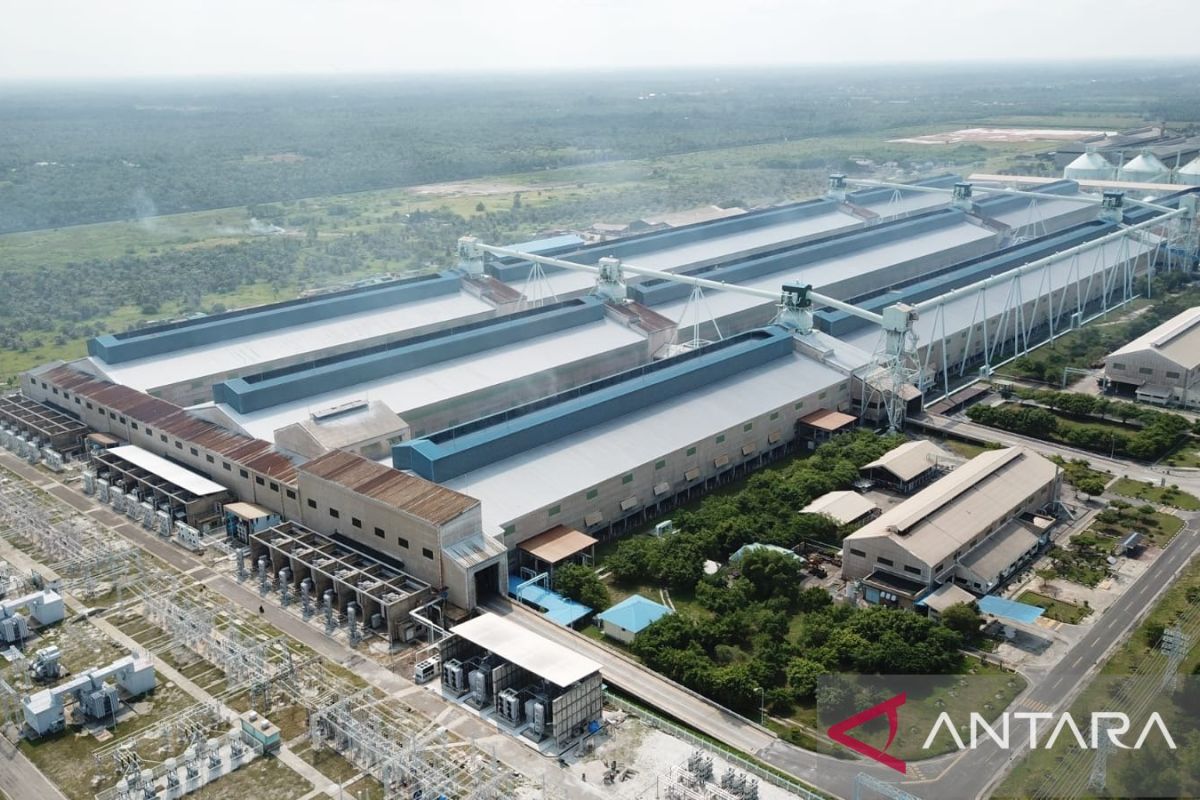
Bauxite, for example, in the processing chain, is worth approximately US$40 per metric ton, but it can actually be processed into alumina and subsequently aluminium, which can reach a value of around US$3,400 per ton. This surge in value is not merely a matter of price. Between bauxite and aluminium, there are investments, energy, technology, labour, logistics services, financing, technical knowledge, and various other economic activities. More importantly, aluminium is a strategic raw material for construction, transport, electricity, and even renewable energy industries such as solar panels. Therefore, the ability to produce aluminium domestically can serve as an entry point to the next layer of industrialisation.
This is the stage that truly determines the future of Indonesia’s downstreaming. The nation must not feel its mission is complete after successfully transitioning from an ore exporter to a semi-finished product exporter. Downstreaming should continue to move until Indonesia’s minerals meet Indonesia’s manufacturing industries. In this way, mining policy can be directly linked to the industrialisation agenda. The availability of domestic raw materials can provide supply certainty for industry, create opportunities for cost efficiency, and reduce vulnerability to global supply chain disruptions.
Such an ecosystem requires integrated management. The Indonesian Mining Industry Holding, MIND ID, for instance, recorded a generated economic value of Rp185.16 trillion throughout 2025, with a distributed economic value of Rp180.30 trillion flowing to the state, workers, business partners, investors, and the community. This figure demonstrates an important point: the economic value of mineral resources has many channels to return to the economy. The challenge is to make these channels wider, deeper, and more connected to national productive activities.
Downstreaming must not become an isolated industrial island. Mineral processing industries need to be linked with local suppliers, educational institutions, research centres, technology companies, manufacturing industries, and even MSMEs that can enter their supply chain. Thus, the expected economic multiplier effect can be realised. A processing facility may create significant economic value, but its impact will be far broader if its presence fosters new industries, increases labour competence, creates domestic suppliers, and opens new economic growth centres. At the same time, downstreaming must be carried out with sustainability discipline. Economic added value must not be paid for with environmental and social costs inherited by future generations. Mineral-based industrialisation should, in fact, be an opportunity to improve standards of governance and efficiency.
Source: jawawa.id (https://jawawa.id/newsitem/industrial-sovereignty-as-the-fruit-of-downstreaming-1790827222)
Originally published by Antara (Indonesian) (https://www.antaranews.com/berita/5765908/kedaulatan-industri-sebagai-buah-dari-hilirisasi), translated from Indonesian