
Industrial Productivity Threatened by High Humidity; Dehumidifier Offers Solution
Humidity is often overlooked as a minor concern in industrial operations, yet excessively humid conditions can create serious risks, ranging from machinery damage to product quality deterioration.
In factories and warehouses, high humidity can accelerate corrosion on production machinery. These conditions also promote fungal growth on raw materials and finished products, ultimately degrading product quality before reaching consumers.
Similar problems affect other facilities storing sensitive materials. In laboratories, excessive humidity can destabilise research samples and compromise the accuracy of measuring instruments. In archives, libraries, and document storage rooms, high humidity causes documents to develop mould, become brittle, and suffer permanent damage.
Generally, relative humidity (RH) levels above 60% are sufficient to trigger such problems. Beyond accelerating material deterioration, these conditions support microorganism growth that can damage materials and products.
For export-oriented industries, the consequences are even more severe. Products contaminated with mould during storage may be rejected in international markets, causing financial losses and damaging company reputation.
Uncontrolled humidity also increases operational costs. Machinery that corrodes more quickly requires more frequent maintenance, whilst raw materials and finished products face greater damage risk. To address these challenges, many industries are adopting specialised humidity control systems. One commonly used device is the industrial dehumidifier, designed to absorb large quantities of moisture so that room conditions remain stable according to required standards.
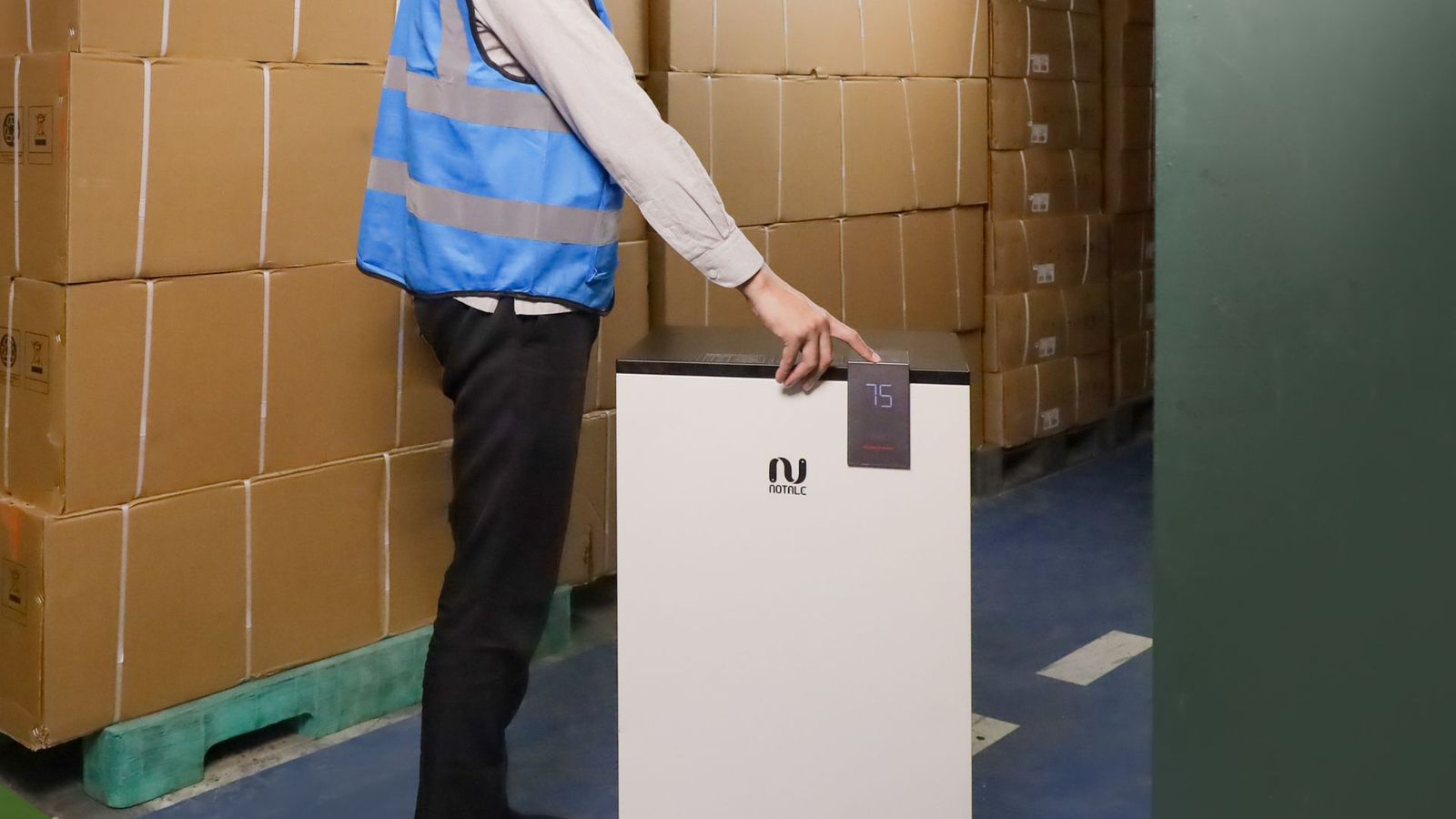
One solution available in the market is the industrial dehumidifier from Notale, designed for various industrial needs ranging from warehouses, factories, laboratories, to storage rooms.
“Industrial dehumidifier units typically have large-capacity moisture absorption capabilities to remain effective in expansive production areas. For example, the Notale Dehumidifier Drymax series can absorb up to 110 litres of moisture daily with coverage of approximately 350 square metres. This capacity makes it suitable for large warehouses, logistics facilities, and large-scale production lines with high humidity levels,” said Andri Sutanto, Brand Marketing Manager of Notale Indonesia, in a statement received on Friday (13 March).
For smaller to medium-sized areas, the Notale Dehumidifier Xentra series is available, with absorption capacity of up to 60 litres daily and coverage of approximately 180 square metres. This capacity is deemed sufficient to maintain humidity stability in production areas, raw material storage sections, and processing rooms.
“With such absorption capabilities, air humidity can be controlled consistently so that risks of corrosion, fungal growth, and material damage can be reduced,” Andri added.
Beyond large capacity, industrial dehumidifiers come equipped with features supporting operations in industrial environments. Some devices, such as Notale products, feature touchscreen control panels facilitating device adjustment. The system also includes real-time humidity indicators enabling users to monitor room air conditions more accurately. The device offers flexible operating modes that can be adapted to user needs and workplace environmental conditions.
Additionally, the machine construction is designed robustly to operate continuously over extended periods, given that these devices are often used in production facilities operating almost non-stop.
With more controlled environmental conditions, companies can minimise potential losses from material damage, production disruptions, and failure to meet quality standards. Consequently, air humidity management has increasingly become recognised as an essential component of efforts to maintain operational efficiency whilst protecting product quality across various industrial sectors.