
Industrial Gas Restrictions Threaten Factory Operations
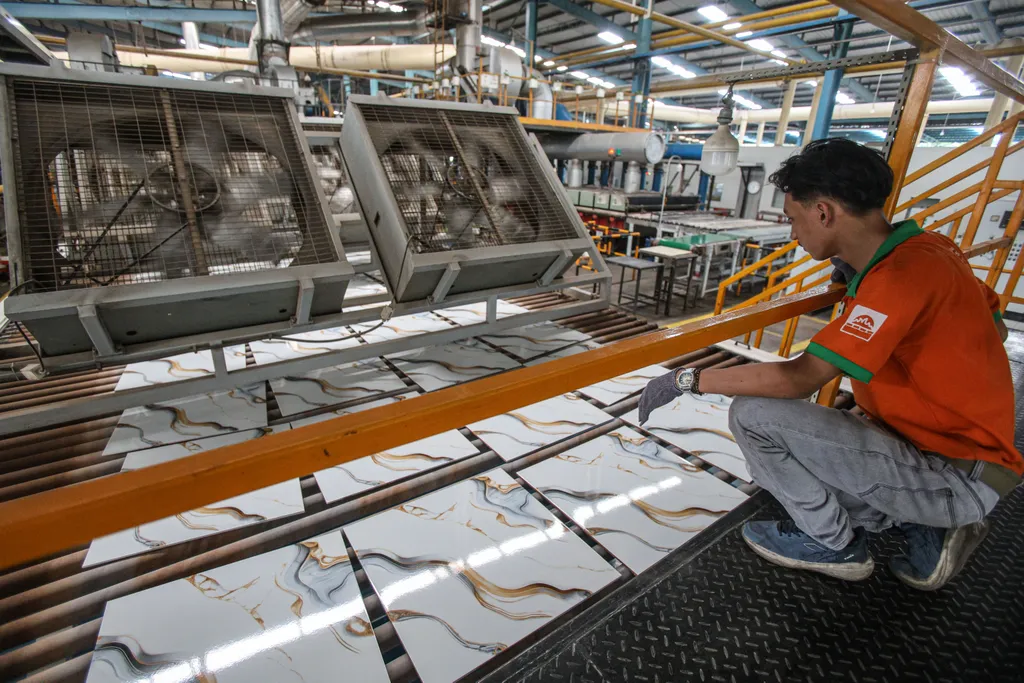
Industrial players using natural gas are complaining about policies restricting gas usage, a condition that is increasing the cost burden on the industry.
Industrial users of natural gas are requesting that the government ensure gas supplies for industry align with the established allocations. The gas supply restrictions occurring in September 2/026 have begun to disrupt production, increase cost burdens, and threaten the manufacturing workforce.
The General Chairman of the Forum of Natural Gas Users Industry (FIPGB), Yustinus Gunawan, stated that industrial players are concerned and distressed by the implementation of gas usage restrictions. The supply restrictions by Perusahaan Gas Negara (PGN) began in September 2026. From 1–13 September, the supply received by industry was approximately 80 per cent of requirements. From 14 September until the end of September, supply was further restricted to around 78 per cent of the minimum contract.
“This decrease in natural gas supply is creating a chain reaction that is hitting the industry very hard,” Yustinus said on Tuesday (22/9/2026) in Jakarta.
He added that the government had already issued a policy through the Decree of the Minister of ESDM Number 281 K/2026, which regulates the adjustment of the list of recipients and the volume allocation of Certain Natural Gas Prices (HGBT) for specific industrial sectors.
“According to the rules of Ministerial Decree ESDMX 281, PGN should be supplying 100 per cent of natural gas. However, we are facing restrictions. Ministerial Decree 281 has not been able to accommodate industrial needs,” he said.
This condition impacts the energy costs borne by the industry. According to Yustinus, gas requirements exceeding the HGBT allocation are subject to a higher gas price scheme, which can reach 15.6 US dollars per million British thermal units (MMBTU). Given the weakening of the rupiah against the US dollar, industrial players are facing multi-layered pressure that threatens industrial sustainability. “The supply shortage ultimately has to be covered by industrial players. Anything exceeding the PGN quota is charged at LNG (liquefied natural gas) prices. This certainly increases the industrial cost burden,” he said.
The restrictions have also begun to disrupt production activities. Yustinus mentioned that several FIPGB members have reduced smelting, shut down parts of production lines that could be stopped, and laid off some workers. The glass, ceramics, and silicate industries, for example, use furnaces that must operate continuously for 24 hours. Stopping a furnace suddenly risks damaging production assets, meaning industries cannot easily adjust production processes to changes in gas supply.
If the supply does not return to normal by the end of September, Yustinus estimates that the threat of layoffs (PHK) will grow. “If there is no improvement regarding industrial gas supply by the end of September, layoffs could be imminent; they are already looming,” he said.
According to Yustinus, under current conditions, it will be difficult for industry to contribute to Indonesia’s 8 per cent economic growth target. He likened the situation to industry being told to run to contribute to the economy, while their legs are chained or shackled.
“How can we contribute maximally if the gas supply, which is crucial for industry, is still being restricted? The gas is available. There are many factors like geopolitics and others, but those factors cannot be controlled. Now, the government should focus on what can be controlled. The Ministerial Decree should be implemented, and industrial gas needs should be met at 100 per cent,” said Yustinus.
Contacted separately, the General Chairman of the Indonesian Ceramic Industry Association (ASAKI), Edy Suyanto, said the national ceramics industry is starting to feel the pressure due to limited natural gas supplies, which directly impacts production capacity. Some companies have been forced to cut capacity by 40–50 per cent.
“Gas is a vital component in the ceramic production process, especially for spray dryers and kilns. For the ceramics industry, gas is the lifeblood. The survival of the ceramics industry depends entirely on the availability and smooth supply of gas,” said Edy.
From 14–30 September 2026, several gas-using industries faced daily quota restrictions from PT PGN, resulting in some ASAKI members only being able to use approximately 78 per cent of their minimum gas contract. This condition is expected to raise the average gas price borne by the ceramics industry in September 2026 to around 12 US dollars per MMBTU, up from the previous 8–8.5 US dollars per MMBTU.
According to Edy, this increase means that gas costs, which were previously around 35 per cent of total production costs, have ballooned to over 45 per cent, even approaching 48 per cent. The impact is already being felt in factory operations. “If capacity drops by 40–50 per cent, employees will automatically be laid off or sent home,” said Edy. He also warned that if restrictions continue into next month without a solution, the threat of layoffs will increase.
While the issue of industrial gas supply in the West Java region remains unresolved, industries must face heavy pressure with plans for partial shutdowns to total shutdowns for several industries in the East Java region. Based on notification letters from PT PGN received by industry players, a temporary shutdown is scheduled for 26–27 September, pending approval from SKK Migas.
Furthermore, the gas supplier has scheduled a temporary shutdown from 1–14 October 2026, followed by a total shutdown from 24–30 October 2026. This means that during that period, no gas supply will flow to the industry at all. Maintenance is also planned for December 2026 for six days under a temporary shutdown scheme. “It is a case of being hit by a falling object after already being struck by a ladder. This is what is happening to the national ceramics industry. The issue in West Java is not yet resolved.”
Source: jawawa.id (https://jawawa.id/newsitem/industrial-gas-restrictions-threaten-factory-operations-1790157106)
Originally published by kompas.id (https://www.kompas.id/artikel/pembatasan-gas-tekan-industri?open_from=Nasional_Page), translated from Indonesian