
Industrial Estate Holding Urged to Become National Logistics Hub
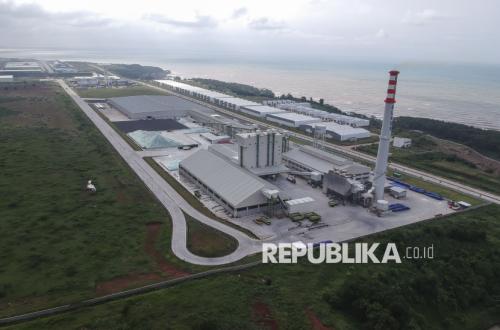
The formation of the Indonesian Industrial Estate Holding is deemed to require the integration of logistics and transport systems to enhance the competitiveness of national industrial zones. The consolidation of state-owned industrial estates is considered insufficient if it only unites assets and land management; it must also strengthen supply chain connectivity.
Setijadi, Founder & CEO of Supply Chain Indonesia (SCI), stated that the holding formed by the government through Danantara needs to be developed into an industrial ecosystem connected to logistics services, warehousing, transport, and goods distribution. “This need is relevant to the scale of national industrial estates,” Setijadi said in a statement on Tuesday (2/6/2026).
The government is currently completing the restructuring of state-owned industrial estates through the formation of the Indonesian Industrial Estate Holding. The legal process is targeted for completion in 2026, so that the holding’s operations can commence in 2027.
According to Setijadi, the consolidation of industrial estates has the potential to increase management efficiency, strengthen investment, and open new business models that do not rely solely on land sales or leasing. Based on data from the Ministry of Industry, Indonesia has 175 licensed industrial estates with a total area of 98,235.5 hectares. These areas accommodate 11,970 companies, employ approximately 2.35 million workers, and have recorded investments of Rp6,744.5 trillion.
Prior to the restructuring, several state-owned industrial estates were part of the Danareksa Industrial Park ecosystem, including PT Kawasan Industri Medan, PT Kawasan Berikat Nusantara, PT Jakarta Industrial Estate Pulogadung, PT Surabaya Industrial Estate Rungkut, PT Kawasan Industri Makassar, PT Kawasan Industri Wijayakusuma, and PT Kawasan Industri Terpadu Batang, with a total land area of approximately 7,855 hectares.
Setijadi believes the benefits of the holding will be felt not only by the estate managers but also by the companies operating within them. Integrated services are expected to accelerate infrastructure provision, strengthen connectivity, and reduce logistics costs. “Improving logistics efficiency is crucial given its contribution to product prices,” he noted.
Data from Bappenas shows that domestic logistics costs still reach approximately 14.1 per cent of goods prices, while export logistics costs are around 8.98 per cent of the value of goods shipped.
Consequently, SCI recommends that the holding develop a masterplan for logistics parks in priority areas. Facilities to be developed include shared warehousing, container depots, truck terminals, cold storage, customs services, and integrated distribution centres. Setijadi added that industrial estate development must also be integrated with multimodal transport. Connectivity with motorways, ports, cargo airports, container terminals, dry ports, as well as river transport and Ro-Ro vessels, needs to be designed within a single connected logistics system.
He also emphasised the importance of integration with freight rail networks to increase transport capacity, reduce dependence on long-haul trucks, and alleviate congestion around industrial estates and ports. Beyond physical infrastructure, the digitalisation of logistics flows must be strengthened through truck scheduling systems, automated estate gates, and integrated logistics control towers. With this approach, the Indonesian Industrial Estate Holding is expected to function not just as an estate manager, but as a national logistics hub supporting industrial efficiency and export competitiveness.
Source: jawawa.id (https://jawawa.id/newsitem/industrial-estate-holding-urged-to-become-national-logistics-hub-1780879613)
Originally published by Republika (https://ekonomi.republika.co.id/berita/tfzkm1416/holding-kawasan-industri-didorong-jadi-simpul-logistik-nasional), translated from Indonesian