
Indramayu Regency Government: PM-AAS boosts rice productivity to 10.45 tonnes per hectare
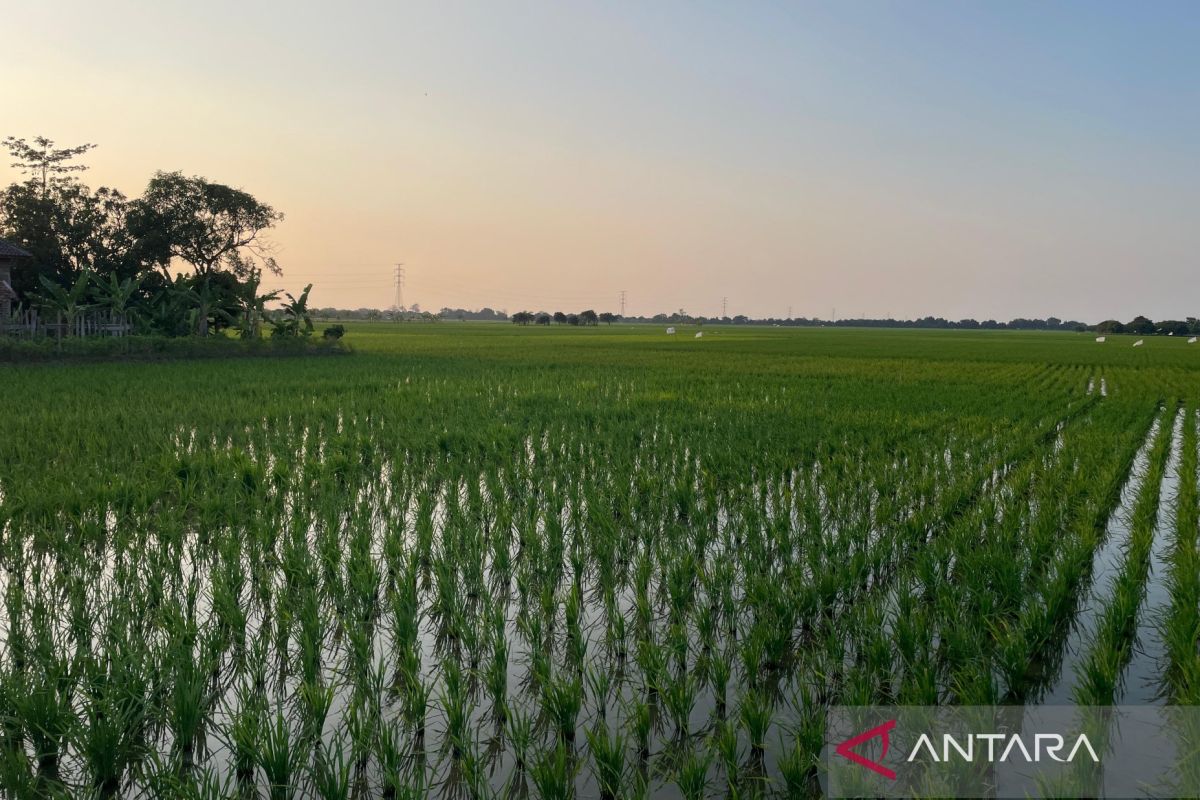
The Indramayu Regency Government in West Java has stated that the implementation of the Modern Agriculture-Advanced Agricultural System (PM-AAS) programme has succeeded in raising rice productivity to an average of 10.45 tonnes per hectare.
Indramayu Regent Lucky Hakim said the achievement was reflected in the results of calculations by the Indramayu Regency Central Statistics Agency (BPS) based on the ubin method during the first PM-AAS harvest in Blok Suket Baju, Plosokerep Village, Terisi District.
“Initially, productivity was around five to six tonnes per hectare, then it was targeted at eight tonnes. It turned out that the BPS measurement results had already reached more than 10 tonnes,” said Lucky in his statement in Indramayu, West Java, on Thursday.
According to him, the results show that the application of technology and agricultural modernisation has had an impact on increasing rice production in the region.
Lucky assessed that the PM-AAS productivity achievement is proof that the use of technology can provide opportunities for increased yields while building optimism among farmers.
He is optimistic that this success can encourage farmers in Indramayu Regency to become more open to the application of technology in food crop cultivation activities.
Meanwhile, Head of the Indramayu Regency BPS Januarto Wibowo said that measurement results at five points showed an average rice productivity of 10.45 tonnes per hectare.
His office recorded that measurements were carried out on land with different varieties and farmer groups. The highest result was recorded by the Tani Makmur Farmer Group with the Ciherang variety at 12.35 tonnes per hectare.
“Meanwhile, the Bina Tani 2 Farmer Group with the Inpari 32 variety produced 8.44 tonnes per hectare, while Bina Tani 3 recorded 9.09 tonnes and 11.74 tonnes per hectare respectively,” he said.
Januarto said the ubin method is used by BPS to measure harvest productivity in the field. In addition, monitoring is carried out through the area sample framework (KSA).
KSA monitoring, he said, covers crop development from the vegetative to generative phases as well as harvested area to support the availability of agricultural data.
Head of the West Java Agricultural Assembly and Modernisation Agency (BRMP) Detia Tri Yunandar said that PM-AAS land productivity was previously in the range of three to six tonnes per hectare.
“Now, the productivity of the land can increase to around 10 tonnes per hectare. The increase is supported by 11 pump units, eight pumping irrigation units, one combine harvester, and one drone sprayer,” he said.
He said planting began in May 2026, while harvesting was carried out in stages starting from 19 August 2026, and in terms of costs, production expenditure rose from around Rp15 million to Rp20 million per hectare.
“However, the increase in production is estimated to provide additional income of around Rp24 million per hectare at a grain price of Rp6,500 per kilogram and around Rp32 million if the price reaches Rp8,500 per kilogram,” he said.