
Indopol Survey: Environmental Quality Gap Between Regions Yawning
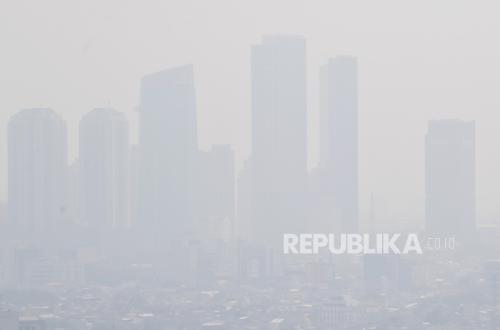
Indonesia’s environmental quality in 2026 remains generally in the good category. However, this achievement conceals a serious problem: environmental quality is highly uneven between regions and residents’ experiences have not fully aligned with development data showing improvement.
The findings emerged from the National Survey of Public Perception of Environmental Quality in Indonesia conducted by Indopol Survey & Consulting from 26 May to 1 June 2026. The survey involved 1,230 respondents across 38 provinces.
Executive Director of Indopol Survey & Consulting, Ratno Sulistiyanto, said the national environmental quality index (IKL) stood at 67.54, placing it in the B (good) category. Nevertheless, the score remains relatively close to the lower bound of the good category, which sits at 61.
“This means we are indeed in the good category, but the room for improvement remains very large,” Ratno said during the presentation of the survey results held with the Politics and Policy Engineering Laboratory (LAPORA) at the Faculty of Social and Political Sciences, Universitas Brawijaya, Malang.
The survey measured environmental quality through three main dimensions: clean water, air quality, and waste management. Of the three, air quality received the lowest score at 66.8. Waste management followed with a score of 67.2, and clean water at 68.7.
However, the most striking problem emerged when the national score was broken down by region. Five provinces recorded a very good category.
West Kalimantan became the province with the highest score at 91.65. The next positions were occupied by Bengkulu at 88.00, East Nusa Tenggara at 85.62, Aceh at 82.67, and the Special Region of Yogyakarta at 80.37.
On the other hand, 11 provinces remained in the adequate category. North Kalimantan recorded the lowest score at 53.33, followed by Papua at 55.97, East Kalimantan at 56.07, West Papua at 57.67, and Bali at 59.47.
This condition shows that the national ‘good’ predicate does not yet reflect the environmental experience felt by all Indonesian people.
Agglomeration areas such as DKI Jakarta, West Java, Banten, and East Java also tended to be in the lower group of the good category. According to Indopol, this condition indicates significant urban environmental pressure.
Residents Feel Things Are Just the Same
Beyond regional disparities, the survey found a paradox in environmental development. Improvements in infrastructure indicators have not automatically made people feel the same changes in daily life.
For example, BPS data shows access to clean water has exceeded 90 percent. However, in the Indopol survey, around 50 to 58 percent of people assessed various environmental indicators in their surroundings as still being in the moderate category or not much changed compared to two years earlier.
This finding indicates a gap between administrative data and the direct experience of the public.
“Interestingly, people do not always see infrastructure improvements as improvements in the environmental quality they feel daily,” Ratno said.
On the other hand, public attention to environmental issues proved quite high. A total of 52.4 percent of respondents considered environmental issues important to very important for their family’s lives.
This figure is far greater than the proportion of people who assessed the environmental conditions around their residences as poor, which was only 6.6 percent.
Thus, public concern does not appear to arise solely because they are directly facing a poor environment. Awareness of long-term risks also drives public attention to environmental issues.
When respondents were asked about the most pressing environmental problems around their residences, waste and refuse occupied the top position at 29.2 percent.
This was followed by water pollution at 21.2 percent, climate change and extreme weather at 15.5 percent, and air pollution at 15.4 percent.
According to Indopol, several issues need to be strengthened in future measurements, particularly climate change and land conversion. Both issues have not been explicitly included in the three IKL dimensions used in this survey.
The survey findings show that the environmental problems closest to the public are related to everyday issues. Waste, refuse, water pollution, and air quality are the issues most easily felt by residents.
Therefore, Indopol recommends the government strengthen pollution control of water sources, while transforming waste management from conventional landfill patterns towards more sustainable systems, including sanitary landfills and waste-to-energy.
Emission controls in densely populated areas are also considered necessary to tighten. At the same time, the central government needs to provide budget affirmation to provinces still in the adequate category.
Climate change adaptation policies and control of land conversion are also considered necessary to expand.
Meanwhile, from the community side, participation through household waste management with the reduce, reuse, recycle (3R) principle, joint monitoring of water sources, and support for climate adaptation policies are important parts of improving environmental quality.
The survey was conducted using face-to-face interviews with respondents aged at least 17 years or already married. Samples were drawn using a multistage random sampling method in stages from province to regency/city, sub-district, village, and neighbourhood unit.
Respondents were distributed proportionally across 38 provinces based on BPS 2025 data. The survey has a margin of error of ±2.8 percent at a 95 percent confidence level, with quality control through spot checks, respondent call backs, and GPS-tagged photo documentation.
The release of the survey results was carried out in cooperation with LAPORA at the Faculty of Social and Political Sciences, Universitas Brawijaya, and coincided with the soft launch of the Integrated Social & Policy Intelligence (ISPI) Dashboard at FISIP UB.