
Indonesia’s Vice-President Refused to Serve Again, Citing Desire for Greater Freedom
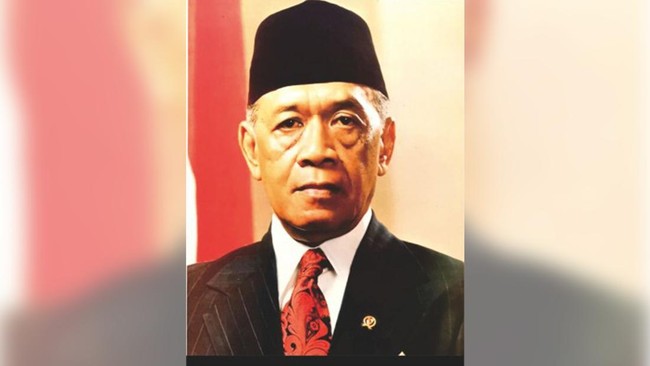
Jakarta, CNBC Indonesia — Amid the diploma controversy involving Indonesia’s current vice-president, the country’s history includes a vice-president who refused to be nominated for another term.
Sultan Hamengkubuwono IX made a surprising decision ahead of the 1978 general election. Although he was the strongest prospective candidate to serve alongside President Soeharto again, the Sultan refused nomination for the 1978–1983 term. He said he wanted to live more freely.
He announced the decision as his term was coming to an end. Soeharto even asked whether the refusal stemmed from a problem or disagreement between them. In Soeharto’s autobiography, Pikiran, Ucapan dan Tindakan Saya (1988), he recalled that the Sultan replied simply: “No.”
The Sultan then said he wanted greater freedom and no longer wished to be bound by the demands of life as a senior state official. “In his view, it would be better for him to be outside the country’s highest institutions, so that he could help unite the nation. In that way, he believed, ‘it would be better; it would be more flexible’,” Soeharto recalled.
The Sultan’s wish to escape the constraints of high office is also recorded in the memoir Sang Demokrat Hamengku Buwono IX: Dokumen Setelah Sri Sultan (1988). The account says he disliked palace protocol.
“That could only be achieved if I freed myself from the ‘official constraints’ attached to the position of vice-president,” the Sultan said.
His decision was not merely talk. The Sultan remained firm in refusing to return to the vice-presidential office. Foreign Minister Adam Malik, a close friend, repeatedly tried to persuade him to remain willing to stand as a vice-presidential candidate, but without success.
“However, it seems he held to the principle of ‘Sabda Pandita Ratu’: once a vow has been made, it will not be withdrawn,” Adam Malik said.
A distinguished record in the New Order government
The Sultan’s refusal to serve again as vice-president was surprising given his record in the New Order government. During his 1973–1978 term, he was considered to have helped restore and stabilise domestic and international confidence in Soeharto’s government.
Sultan Hamengkubuwono IX, whose birth name was Dorojatun, was an important figure in the early New Order administration. Before becoming vice-president, Soeharto appointed him as the era’s first Coordinating Minister for Economy, Finance and Industry.
Soeharto chose the Sultan as vice-president partly to counter the impression that his government was militaristic. This was described by Finance Minister Frans Seda, another close friend of the Sultan.
“[…] Above all, Pak Sultan’s role included dispelling the impression of militarism in the New Order leadership, an impression being promoted by the PKI’s Gestapu and its supporters at home and abroad,” Frans Seda said, as quoted in the memoir Takhta Untuk Rakyat: Celah-Celah Kehidupan Sultan Hamengku Buwono IX (2011).
Given that record, as his 1973–1978 term neared its end, the Sultan again emerged as the strongest prospective candidate to serve alongside Soeharto in the next term. But rather than retain his position, he chose to withdraw from consideration.
Other reasons suspected
The Sultan said he wanted to live more freely. However, his decision also prompted speculation that other considerations lay behind his refusal.
One theory is that the Sultan was no longer fully aligned with Soeharto.
John Monfries, in Raja di Negara Republik: Kehidupan Sultan Hamengku Buwono IX dari Yogyakarta (2015), writes that while serving as vice-president, the Sultan was given little responsibility and wielded little power, as authority remained in Soeharto’s hands.
The Sultan is also thought to have viewed Soeharto as having moved away from democratic values and become increasingly authoritarian.
However, without clear historical evidence confirming those motives, the political explanation cannot be established as the actual reason. Sultan Hamengkubuwono IX never returned to the vice-presidency after his term ended in 1978. He died on 2 October 1988.
Source: jawawa.id (https://jawawa.id/newsitem/indonesias-vice-president-refused-to-serve-again-citing-desire-for-greater-freedom-1794030624)
Originally published by CNBC Indonesia (https://www.cnbcindonesia.com/news/20261107094035-4-783151/wapres-ri-tolak-menjabat-lagi-alasannya-mengejutkan-teori-bermunculan), translated from Indonesian